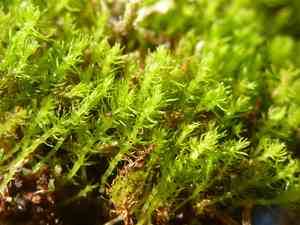
Atrichum moss (Atrichum crispum)
Also known as: Fountain smoothcap
Atrichum moss, often found in moist, shaded areas like forest floors, is known for its adaptability. It typically grows in dense, upright clusters of dark green leaves. These leaves have a slightly wavy or crisped texture and are pointed at the tips, which aids in moisture retention. This moss becomes particularly vibrant after rainfall, showcasing its rich green color.
In This Article
Attributes of Atrichum moss
Lifespan
Perennial
Plant Height
2-5 cm
Spread
N/A
Leaf Color
Bright green
Flower Size
N/A
Flower Color
N/A
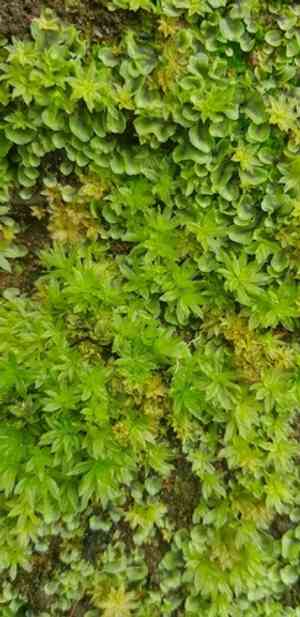
Images of Atrichum moss


Quickly Identify Atrichum moss
1
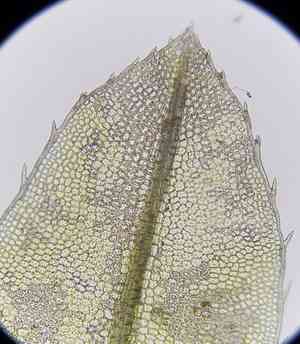
Look for characteristic wavy or crisped leaf margins and the bright green color of the leaves. The plant forms tufts or small mats on the substrate. Examining leaf structure under a microscope can further confirm the identification as Atrichum crispum.
Scientific Classification of Atrichum moss
Phylum
Bryophyta
Class
Polytrichopsida
Order
Polytrichales
Family
Polytrichaceae
Genus
Atrichum
Planting and Growing of Atrichum moss
Care Difficulty
Easy
Watering Schedule
Every 4 days
Sunlight Requirements
Partial sun
Sunshine Duration
4-8 hours
Ideal Temperature
60-75℉
Soil Type
Potting Mix, Peat Mix
Soil pH
6.5-7.5
Fertilizer Type
Balanced
Pruning Season
Spring, Summer
Pruning Area
Branches, Leaves
Pruning Frequency
2 times a year
Repotting Season
Spring
Pot Type
Plastic, Ceramic
 How to Water Atrichum moss?
For Atrichum crispum, watering should be done with a moderate amount of water, around 200ml each time. The soil should be moist but not soggy, ensuring adequate hydration without waterlogging. Always allow the top layer of soil to dry out slightly before the next watering.
What are the symptoms of an underwatered Atrichum moss?
›
What should I do if my Atrichum moss is not getting enough water?
›
What are the symptoms of an overwatered Atrichum moss?
›
How to save an overwatered Atrichum moss?
›
 What Are the Sunlight Requirements for Atrichum moss?
Atrichum crispum is best suited for environments with partial sun or full shade. The ideal light promotes robust foliage, encourages healthy photosynthesis, and maintains the plant's natural resilience and vitality.
Understanding Atrichum crispum's Light Needs
›
Solutions for Ideal Lighting
›
Benefits of Ideal Lighting
›
 What Is the Ideal Temperature Range for Atrichum moss?
Atrichum crispum thrives best within a temperature range of 60°F to 75°F. This range provides the optimal environment for photosynthesis and nutrient uptake, ensuring the moss flourishes and remains healthy.
 What Soil is Best for Atrichum moss?
Atrichum crispum prefers moist environments; therefore, maintaining the right level of soil moisture is crucial. Well-aerated loam ensures efficient water drainage while retaining essential moisture without causing root rot. This plant thrives in soil enriched with organic matter, which provides essential nutrients for growth. Adding compost or natural fertilizers can significantly enhance soil fertility, promoting robust foliage. Ensuring a slightly acidic to neutral pH range of 6.5 to 7.5 creates the perfect environment for nutrient absorption, enhancing the plant's vigor and preventing nutrient lockout.
 How to Fertilize Atrichum moss?
For Atrichum crispum, it's best to use half-strength liquid fertilizers to avoid burning the delicate moss. Use about 20% of the recommended dose on the fertilizer package. Always dilute the fertilizer to prevent salt buildup, which can be detrimental to this species.
 How to Prune Atrichum moss?
Begin by inspecting your Atrichum crispum for any brown, discolored, or damaged sections. These parts will not recover on their own and should be prioritized for removal during pruning. When cutting, make your snip about a quarter inch above a node or where leaf growth emerges. This encourages optimal regrowth and maintains the aesthetic appearance of the plant. After removing damaged segments, look at the shape of your Atrichum crispum. Trim strategically to maintain its natural form, ensuring that the light and air can circulate throughout the plant.
More About Pruning Techniques→
 How to Propagate Atrichum moss plant?
1
Collect Atrichum crispum spores from mature capsules in late spring. Ensure seeds are fully dry before sowing. Sprinkle them lightly over the surface of a moistened, sterile potting mix.
2
Place the seed trays in a warm area with indirect light. Keep the environment moist but not waterlogged, using a spray bottle to avoid disturbing the small seeds.
3
Once the spores germinate, maintain consistent moisture and gradually introduce seedlings to stronger light. When large enough to handle, transplant them to individual pots.
 How to Repot Atrichum moss plant?
1
Repot Atrichum crispum in early spring or autumn, when the plant is relatively dormant. Look for signs like overcrowding roots or compacted soil. These indicators suggest it's time to give your plant a fresh start in a new pot. Repotting during these seasons minimizes stress and enhances root development.
2
Select a pot slightly larger than the current one, with excellent drainage. The new pot should offer space for growth but avoid excessive size to prevent water stagnation. A terracotta pot is ideal, providing aeration and reducing root rot risk. Proper pot choice ensures a balanced environment for healthy root expansion.
3
Use a well-draining, sandy soil mix to replicate its natural habitat. The mix should support moisture retention without waterlogging. A combination of peat, perlite, and coarse sand works well. This composition ensures the right aeration and drainage, crucial for thriving and preventing root-related issues.


