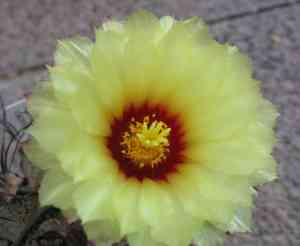
Goat's horn (Astrophytum capricorne)
Also known as: Goat's-horn cactus
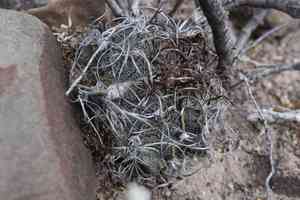
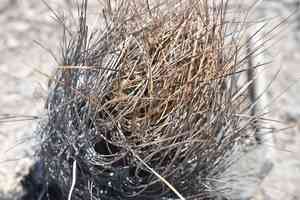
The cactus in question is the Astrophytum capricorne, commonly known as Goat's Horn. It can reach heights between 61 to 122 cm and has a trunk diameter of about 15 cm. This cactus is distinguished by its soft, upward-curving spines that resemble goat horns. During the summer, it produces fragrant yellow flowers with bright red centers and must be shielded from cold temperatures.
In This Article
Attributes of Goat's horn
Lifespan
Perennial
Plant Type
Succulent
Plant Height
45 cm
Spread
25 cm
Leaf Color
Green with white speckles
Flower Size
2.5 cm to 5 cm
Flower Color
Yellow
Images of Goat's horn
Quickly Identify Goat's horn
1
This cactus can be identified by its distinctive curved spines that resemble a goat's horns, star-shaped arrangement of woolly areoles, and bright yellow flowers with a red throat that bloom in summer.
Scientific Classification of Goat's horn
Phylum
Vascular plants
Class
Dicotyledons
Order
Pinks, cacti, and allies
Family
Cactuses
Genus
Astrophytum
Species
Goat's horn
Planting and Growing of Goat's horn
Care Difficulty
Easy
Watering Schedule
Every day
Sunlight Requirements
Full sun
Sunshine Duration
6-10 hours
Ideal Temperature
60-75℉
Soil Type
Potting Mix, Peat Mix
Soil pH
6.5-7.5
Fertilizer Type
Balanced
Pruning Season
Spring, Summer
Pruning Area
Branches, Leaves
Pruning Frequency
2 times a year
Repotting Season
Spring
Pot Type
Plastic, Ceramic
 How to Water Goat's horn?
For Astrophytum capricorne, the watering principle is simple yet crucial. The soil should be completely soaked but allowed to dry out entirely before the next watering. This mimics their natural arid habitat, ensuring the roots aren't constantly wet, which could lead to rot.
What are the symptoms of an underwatered Goat's horn?
›
What should I do if my Goat's horn is not getting enough water?
›
What are the symptoms of an overwatered Goat's horn?
›
How to save an overwatered Goat's horn?
›
 What Are the Sunlight Requirements for Goat's horn?
Astrophytum capricorne excels in environments where full sun or partial sun conditions are maintained. This balance encourages vibrant growth and flowering, helping it maintain its unique silhouette and ornamental beauty.
More About Sunlight Requirements Techniques→
How much sunlight does Astrophytum capricorne prefer?
›
What are the solutions for achieving ideal lighting?
›
What are the benefits of ideal lighting for Astrophytum capricorne?
›
 What Is the Ideal Temperature Range for Goat's horn?
Astrophytum capricorne thrives best in temperatures ranging from 60 to 75°F. This range ensures optimal growth and photosynthesis, as the plant is adapted to warm environments. Maintaining temperatures within this range helps prevent stress and promotes healthy development.
 What Soil is Best for Goat's horn?
Astrophytum capricorne demands well-draining soil to prevent root rot conditions. Sandy and sandy loam soils perfectly cater to this requirement by ensuring quick drainage, thus supporting healthy root growth and minimizing water logging. This cactus thrives in nutrient-poor soil, which mimics its native desert environment. Over-fertilizing can harm the plant, so the soil should be low in nutrients, reflecting its natural habitat and enabling the plant's adapted survival strategy. Maintaining a slightly acidic to neutral pH range between 6.5 and 7.5 is crucial for Astrophytum capricorne. This range assists in nutrient absorption while maintaining ideal soil health conducive to desert plant species.
 How to Fertilize Goat's horn?
For Astrophytum capricorne, it is recommended to use a diluted liquid fertilizer once every two weeks during the growing season. Use a balanced cactus fertilizer diluted to 1/4 strength to avoid any root burn.
 How to Prune Goat's horn?
Carefully examine your Astrophytum capricorne for any browned, shriveled, or completely dead sections. These parts can hinder the plant’s overall health and appearance. Using your clean cutting tool, make your cuts at the base of the affected area. Ensure you cut at a slight angle to prevent water from pooling on the cut surface, which can cause rot.
 How to Propagate Goat's horn plant?
1
Begin by soaking the seeds in warm water for 24 hours to enhance germination. This helps thin the seed coat, making it easier for the seedling to break through. Use seeds from a reputable source to ensure high viability.
2
Once ready, sow the seeds on the surface of the fine potting mix in the seed tray. Do not bury them too deeply as this could prevent proper germination. Lightly cover them with a thin layer of sand or grit.
3
Maintain humid conditions by covering the tray with a plastic lid or placing it in a humidity dome. Water gently using a spray bottle to avoid disturbing the seeds. Ensure the mix stays moist but not waterlogged.
 How to Repot Goat's horn plant?
1
Astrophytum capricorne often requires repotting when you notice the roots protruding from the drainage holes or the soil loses its ability to drain effectively. The optimal time for repotting is during its growing season, in spring or early summer, as it allows the roots to adapt quickly and minimize transplant shock.
2
Selecting an appropriate pot is crucial for the healthy growth of the plant. Astrophytum capricorne thrives best in a pot that allows ample drainage, typically with drainage holes at the bottom. A ceramic or terracotta pot helps in maintaining a stable temperature and moisture level, ensuring a breathable environment that prevents root rot.
3
A well-draining soil mix is essential for Astrophytum capricorne. The ideal soil consists of a cactus mix supplemented with coarse sand or perlite. This composition enables excellent aeration and prevents water retention, emulating the plant's natural habitat conditions and reducing the risk of root decay.



