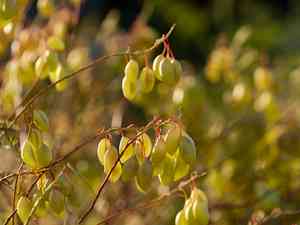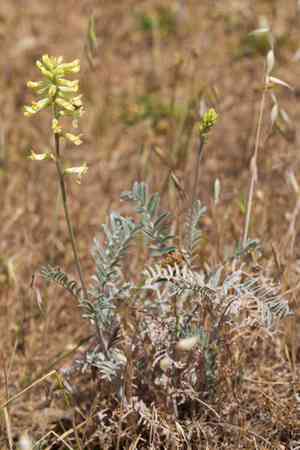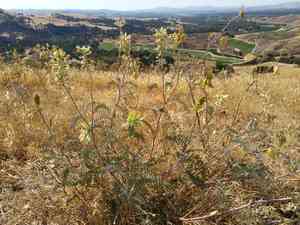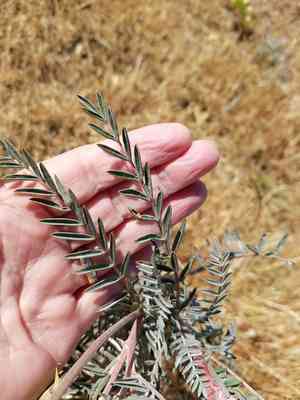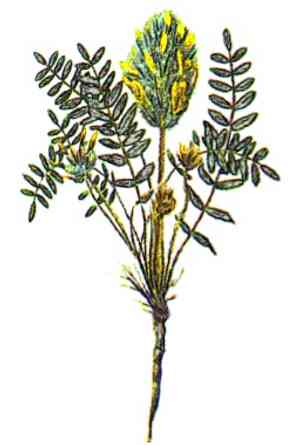
San joaquin milkvetch(Astragalus asymmetricus)

San joaquin milkvetch (Astragalus asymmetricus)

Also known as: no known aliases

The San Joaquin milkvetch (Astragalus asymmetricus) is a notable perennial herb renowned for its distinctive asymmetrical flowers, which contribute to its unique identity within its genus. These flowers are often vividly colored and have a unique shape that facilitates efficient pollination. To thrive in arid environments, the plant has developed several adaptations:

1. **Extensive Root System**: It features deep roots that penetrate the soil to reach underground water sources.
2. **Moisture-Conserving Foliage**: The leaves are designed to minimize water loss, helping the plant survive in dry conditions.

These characteristics enable the San Joaquin milkvetch to endure and flourish in the challenging, dry landscapes it inhabits.

Attributes of San joaquin milkvetch

Lifespan
Perennial
Plant Type
Herb
Plant Height
50-100 cm
Spread
N/A
Leaf Color
Green
Flower Size
0.5-1 cm
Flower Color
Pink, Purple

ForwardPlant - Identify plants with a snap

Identify and diagnose plants, get toxicity alerts, and explore safety guides for all types of fungi.

Try for Free

Images of San joaquin milkvetch

San joaquin milkvetch(Astragalus asymmetricus)

Quickly Identify San joaquin milkvetch

1
Astragalus asymmetricus can be identified by its asymmetrical leaflets, usually 11-25 pairs per leaf, and small pink to purple pea-like flowers. It typically grows in dry, open habitats.

Scientific Classification of San joaquin milkvetch

Phylum
Vascular plants
Class
Dicotyledons
Order
Fabales
Family
Legume
Genus
Milkvetch
Species
San joaquin milkvetch

Planting and Growing of San joaquin milkvetch

Care Difficulty
Moderate
Watering Schedule
Every day
Sunlight Requirements
Partial sun
Sunshine Duration
10-14 hours
Ideal Temperature
60-75℉
Soil Type
Potting Mix, Peat Mix
Soil pH
6.5-7.5
Fertilizer Type
Balanced
Pruning Season
Spring, Summer
Pruning Area
Branches, Leaves
Pruning Frequency
2 times a year
Repotting Season
Spring
Pot Type
Plastic, Ceramic

water icon How to Water San joaquin milkvetch?

When watering Astragalus asymmetricus, ensure you provide approximately 250 milliliters per session. This amount is optimal to moisten the soil without causing waterlogging. Aim for a thorough soaking where the water reaches the roots but doesn't pool excessively at the surface.
What are the symptoms of an underwatered San joaquin milkvetch?
What should I do if my San joaquin milkvetch is not getting enough water?
What are the symptoms of an overwatered San joaquin milkvetch?
How to save an overwatered San joaquin milkvetch?

sunlight icon What Are the Sunlight Requirements for San joaquin milkvetch?

Sunlight Requirements: Partial sun
Duration of light: 4-6 hours
Astragalus asymmetricus prospers under partial sun conditions, benefitting from filtered light. This assists in proper photosynthesis, ensuring vigorous growth and preventing stress-related ailments.
What is the ideal lighting condition for Astragalus asymmetricus?
How can I achieve the ideal lighting condition for this plant?
What are the benefits of maintaining ideal lighting?

temperature icon What Is the Ideal Temperature Range for San joaquin milkvetch?

Ideal Temperature: 60 ~ 75℉
The ideal temperature range for cultivating Astragalus asymmetricus effectively is between 60°F to 75°F. This range provides the plant with enough warmth to encourage healthy growth and development without causing heat stress or cold shock.

soil icon What Soil is Best for San joaquin milkvetch?

Soil type: Loam, Sandy loam
Soil PH: 6.5 ~ 7.5
Astragalus asymmetricus thrives best in well-drained soil. This prevents root rot, allows oxygen to reach plant roots, and ensures nutrient transport. A well-drained environment ensures healthier growth and prevents waterlogged conditions. While not extremely nutrient-demanding, Astragalus asymmetricus prefers soil with moderate fertility to ensure robust growth. Providing the right balance of nutrients helps in maintaining its unique asymmetrical structure and vibrant leaf coloration. Maintaining a slightly alkaline pH assists in optimal plant function. Astragalus asymmetricus performs well in soil pH between 6.5 and 7.5, supporting metabolic processes and efficient nutrient uptake, resulting in enhanced health and resilience.

fertilize icon How to Fertilize San joaquin milkvetch?

Fertilizer type: Balanced
For Astragalus asymmetricus, using a balanced 10-10-10 NPK fertilizer is recommended. When applying liquid fertilizer, use a diluted concentration, approximately half the recommended dose, to avoid overwhelming the plant.

prune icon How to Prune San joaquin milkvetch?

Pruning Time: Spring, Summer
Begin by identifying any dead or diseased branches. These should be removed first to prevent the spread of pathogens and to redirect the plant's energy towards healthy growth. Prune branches selectively to maintain an attractive shape. Aim to create an open canopy that allows light and air to penetrate, which is essential for the plant's health. If the plant has become too tall for your space, trim back the upper branches. This should be done incrementally to avoid shocking the plant and to encourage a bushier growth. After major pruning, trim lightly around the entire plant to maintain uniformity and remove any protruding twigs that disrupt the overall appearance. More About Pruning Techniques

propagate icon How to Propagate San joaquin milkvetch plant?

Propagate Time: Spring, Early spring
1
Gather mature seeds from the plant by waiting until the seed pods have turned brown and can easily be opened. Carefully extract them to avoid damage, and store them in a cool, dry place until planting.
2
Select healthy, non-flowering stems, and cut them about 4-6 inches long. Remove any leaves from the bottom half of the cutting to prevent rotting and to encourage root formation.
3
Plant the seeds in a seed tray filled with a seed-starting mix. Lightly cover them with soil and water gently to ensure good seed-to-soil contact. Keep the soil consistently moist but not waterlogged.
More About Propagating Techniques

repot icon How to Repot San joaquin milkvetch plant?

Repotting frequency: Every 2-3 years
1
Astragalus asymmetricus should be repotted when its roots outgrow the pot, or when the soil becomes compact or nutrient-depleted. Early signs include slower growth and reduced vitality. Look for roots poking through the bottom of the pot or visible on the soil surface. By repotting during spring or autumn, you ensure optimal conditions for recovery and growth.
2
Selecting a pot for Astragalus asymmetricus should be based on size, material, and drainage. Choose a pot an inch larger in diameter than the current one to give the roots room to spread without overwhelming the plant. A clay or ceramic pot with good drainage holes is ideal because it helps to prevent waterlogging, which this plant is sensitive to.
3
Opt for a well-draining, sandy mix to mimic the plant's natural habitat and prevent root rot. A mix that combines garden soil, sand, and some organic compost will work wonders. This composition ensures sufficient aeration and proper drainage while providing the necessary nutrients for growth.

ForwardPlant - Identify plants with a snap

Find the best spots for them to optimize their health, simply using your phone.

Try for Free