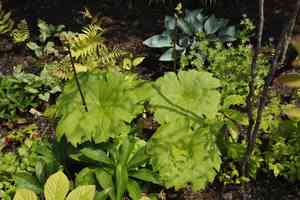
Shieldleaf rodgers flower (Astilboides tabularis)
Also known as: Shield-leaf Rogersia, Table-leaved Rodgersia
An example of an ornamental plant renowned for its enormous leaves is the Giant Taro (Alocasia macrorrhizos). This plant can produce leaves up to 1.5 meters in length, adding a dramatic and exotic flair to gardens. Despite its popularity in horticulture, the Giant Taro is considered endangered in some of its native regions.
In This Article
Attributes of Shieldleaf rodgers flower
Lifespan
Perennial
Plant Type
Herb
Plant Height
91 cm to 1.2 m
Spread
1.5 m
Leaf Color
Green
Flower Size
15 cm to 20 cm
Flower Color
White Cream Green
Images of Shieldleaf rodgers flower
Quickly Identify Shieldleaf rodgers flower
1
Identify Astilboides tabularis by its large, circular, lobed leaves that resemble a shield. The plant also produces tall, plume-like clusters of small white flowers in the summer.
Scientific Classification of Shieldleaf rodgers flower
Phylum
Vascular plants
Class
Dicotyledons
Order
Saxifrages, stonecrops and allies
Family
Saxifrage
Genus
Astilboides
Species
Shieldleaf rodgers flower
Planting and Growing of Shieldleaf rodgers flower
Care Difficulty
Easy
Watering Schedule
Every 4 days
Sunlight Requirements
Partial sun
Sunshine Duration
6-12 hours
Ideal Temperature
60-75℉
Soil Type
Potting Mix, Peat Mix
Soil pH
6.5-7.5
Fertilizer Type
Balanced
Pruning Season
Spring, Summer
Pruning Area
Branches, Leaves
Pruning Frequency
2 times a year
Repotting Season
Spring
Pot Type
Plastic, Ceramic
 How to Water Shieldleaf rodgers flower?
Astilboides tabularis, also known as the Shield Leaf, demands a generous amount of water to thrive. Each watering session should provide about 500 ml, sufficient to saturate the soil thoroughly. This plant enjoys a consistently moist environment, so ensure the water penetrates deep into the root zone without causing waterlogging.
What are the symptoms of an underwatered Shieldleaf rodgers flower?
›
What should I do if my Shieldleaf rodgers flower is not getting enough water?
›
What are the symptoms of an overwatered Shieldleaf rodgers flower?
›
How to save an overwatered Shieldleaf rodgers flower?
›
 What Are the Sunlight Requirements for Shieldleaf rodgers flower?
Astilboides tabularis prospers in partial sun to full shade environments. Ideal light ensures healthy leaf color and robust growth, avoiding both sunburn and etiolation, and maintaining its structural strength.
More About Sunlight Requirements Techniques→
Question: What is the best light condition for Astilboides tabularis?
›
Solution: How can I ensure my plant gets ideal light?
›
Effect: What benefits does ideal light have for the plant?
›
 What Is the Ideal Temperature Range for Shieldleaf rodgers flower?
Astilboides tabularis thrives best in temperatures ranging from 60°F to 75°F. In this range, the plant can uptake nutrients efficiently and photosynthesize optimally, ensuring robust growth and healthy foliage. Maintaining this temperature range promotes resilience against pests and diseases.
 What Soil is Best for Shieldleaf rodgers flower?
Astilboides tabularis thrives in soils that offer high moisture retention. Such soils ensure the plant remains hydrated, leading to lush and large decorative foliage. Rich, nutrient-laden soils support the optimal growth of Astilboides tabularis, providing necessary elements for vibrant green leaves and flower production. While it likes moisture, the soil must drain well to prevent waterlogging. Efficient drainage prevents root rot, maintaining healthy root systems.
 How to Fertilize Shieldleaf rodgers flower?
Astilboides tabularis, also known as the Shieldleaf plant, requires a balanced approach to fertilization. Utilize a half-strength liquid fertilizer during the growing season, typically in the spring and summer. Ensure the soil stays moist to avoid nutrient burn.
 How to Prune Shieldleaf rodgers flower?
Start by inspecting your Astilboides tabularis for any leaves that are yellow, brown, or damaged. Use sharp, sterilized scissors or pruning shears to cut these leaves off at the base, ensuring not to harm the remaining healthy foliage. To keep the plant's unique, large foliage looking its best, trim back any overgrown or sprawling leaves that may disrupt its symmetry. This is also an opportunity to thin out crowded areas, aiding in increased airflow and preventing disease.
More About Pruning Techniques→
 How to Propagate Shieldleaf rodgers flower plant?
1
To propagate by division, carefully excavate the plant, ensuring minimal root disturbance. Wash the root system to observe natural divisions in the clump.
2
Use your hands or a sharp knife to split the clump into smaller sections. Each section should have healthy roots attached. Replant these immediately at the same depth.
3
For seed propagation, fill a tray with seed-starting mix, placing seeds on top, and lightly covering them with a thin layer of soil. Keep the soil moist until germination.
 How to Repot Shieldleaf rodgers flower plant?
1
Astilboides tabularis shows signs of needing repotting when its roots start circling the pot or emerging through drainage holes. Additionally, if the plant's growth slows despite good watering and feeding, it's likely time for a larger pot. Repot in spring or early summer for best results, giving the plant a fresh start during its growing season.
2
Select a pot that is 1-2 inches larger in diameter than the current one. Ensure it has adequate drainage holes to prevent waterlogging, which Astilboides tabularis, with its water-loving but not waterlogged requirement, appreciates. A larger pot provides space for root expansion, promoting healthier foliage and blooms.
3
Opt for a soil mix that retains moisture but drains well, such as one with loam, peat, and perlite. This blend offers essential nutrients while avoiding waterlogging, providing a perfect balance of hydration and aeration that helps prevent root rot.
Learn More About Shieldleaf rodgers flower Diseases
Anthracnose
Bacterial Leaf Spot
Bacterial Soft Rot
Damping-off
Downy Mildew
Drought Stress
Fusarium Wilt
Gray Mold
Leaf Spot
Mosaic
Nutrient Deficiency
Nutrient Toxicity
Powdery Mildew
Root Rot
Root-knot Nematode
Rusts
Sooty Mold
Spider Mites
Temperature Stress
Thrips Damage
White Mold
Chemical Injury



