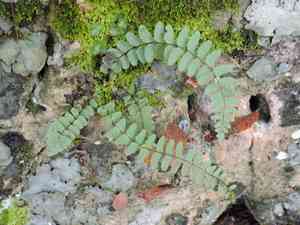
Blackstem spleenwort (Asplenium resiliens)
Also known as: Resilient spleenwort
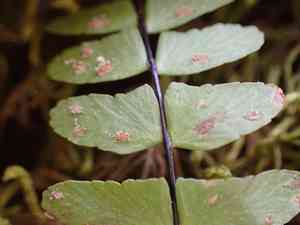
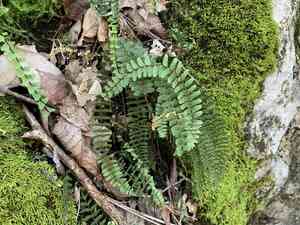
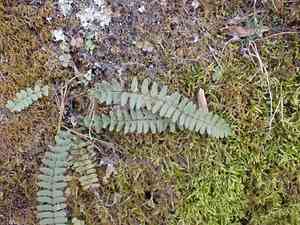
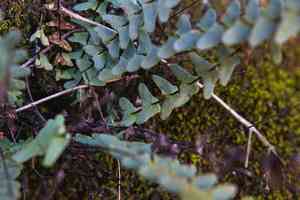
Small ferns often feature pinnate fronds that grow in compact, erect clusters. These fronds are supported by a glossy black stipe and rachis. Both sterile and fertile fronds look alike. Their roots are thin and wiry, not typically involved in forming new plants. The rhizome is short, erect, and about 2 millimeters thick, and can be either branched or unbranched.
In This Article
Attributes of Blackstem spleenwort
Lifespan
Perennial
Plant Type
Herb
Plant Height
8-12 inches
Spread
N/A (ferns typically do not have a crown)
Leaf Color
Dark green
Flower Size
N/A (ferns do not produce flowers)
Flower Color
N/A (ferns do not produce flowers)
Images of Blackstem spleenwort
Quickly Identify Blackstem spleenwort
1
This plant can be identified by its small, dark green fronds that are slightly leathery in texture. The stipes (stems) are dark, almost black, and smooth. The blades are pinnate with finely divided leaflets.
Scientific Classification of Blackstem spleenwort
Phylum
Vascular plants
Class
Ferns
Order
Polypodiales
Family
Spleenwort
Genus
Spleenworts
Species
Blackstem spleenwort
Planting and Growing of Blackstem spleenwort
Care Difficulty
Easy
Watering Schedule
Every 3 days
Sunlight Requirements
Partial sun
Sunshine Duration
4-6 hours
Ideal Temperature
60-75℉
Soil Type
Potting Mix, Peat Mix
Soil pH
6.5-7.5
Fertilizer Type
Balanced
Pruning Season
Spring, Summer
Pruning Area
Branches, Leaves
Pruning Frequency
2 times a year
Repotting Season
Spring
Pot Type
Plastic, Ceramic
 How to Water Blackstem spleenwort?
For Asplenium resiliens, it's crucial to maintain a balance in watering. The soil should be consistently moist but not waterlogged. Water thoroughly until about 250 ml is absorbed by the soil, allowing for excess water to drain off, ensuring the roots have access to necessary moisture without drowning.
What are the symptoms of an underwatered Blackstem spleenwort?
›
What should I do if my Blackstem spleenwort is not getting enough water?
›
What are the symptoms of an overwatered Blackstem spleenwort?
›
How to save an overwatered Blackstem spleenwort?
›
 What Are the Sunlight Requirements for Blackstem spleenwort?
The ideal light range for Asplenium resiliens falls within partial sun to full shade. This range ensures the plant receives enough light for photosynthesis while avoiding the stress of direct sunlight, resulting in vibrant and healthy foliage.
How much light does Asplenium resiliens need?
›
What solutions help achieve ideal lighting?
›
What benefits do ideal lighting conditions provide?
›
 What Is the Ideal Temperature Range for Blackstem spleenwort?
Asplenium resiliens thrives best within a temperature range of 60°F to 75°F. This range helps maintain stable physiological functions, supporting photosynthesis and nutrient uptake. Deviations may lead to stress and slow growth, impacting its overall health and vitality.
 What Soil is Best for Blackstem spleenwort?
Asplenium resiliens thrives in well-drained soil that prevents waterlogging and encourages healthy root development. This characteristic is crucial because consistent drainage helps avoid root rot, ensuring the fern maintains its resilience and lush greenery. The plant prospers in soil with moderate fertility, which provides essential nutrients without overwhelming the roots. This balance assists in maintaining robust growth and vibrant foliage, as excessive nutrients can lead to weakened structures and susceptibility to pests. Good aeration in the soil allows for ample oxygen flow to the roots of Asplenium resiliens. This property supports metabolic processes vital for growth and prevents the build-up of harmful pathogens that thrive in compacted, low-oxygen environments.
 How to Fertilize Blackstem spleenwort?
For Asplenium resiliens, it’s crucial to use a balanced fertilizer, ensuring not to overwhelm this delicate plant. Generally, a diluted liquid fertilizer with a nutrient ratio of 10-10-10 can be applied. Use about half the recommended strength for liquid fertilizers to avoid any potential harm and to ensure consistent growth.
 How to Prune Blackstem spleenwort?
Start by examining the plant to identify any dead or yellowing fronds. These should be the focus of your pruning efforts. Using clean, sharp scissors, carefully snip these fronds at their base, close to where they meet the rootstock. Avoid cutting into healthy tissue. After removing the unwanted fronds, step back to assess the plant's overall shape and make additional cuts for shape or balance if necessary. After pruning, ensure you gather and dispose of all discarded plant material. Leaving dead or decomposing fronds around the plant can attract pests or foster mold growth. Clean up your workspace, sterilize your tools, and give the plant a gentle watering to help it recover quickly from the pruning.
More About Pruning Techniques→
 How to Propagate Blackstem spleenwort plant?
1
Collect mature spores from a healthy Asplenium resiliens plant. Spores are typically found on the underside of the fronds and should be brown or black in color.
2
Use a sterilized potting mix to fill your propagation trays. The mix should be light and well-draining, allowing for optimal air and moisture flow for the developing plant.
3
Sprinkle the collected spores over the prepared soil surface. Do not cover them with soil, as they require light to germinate. Mist gently with water to ensure even moisture.
 How to Repot Blackstem spleenwort plant?
1
Repotting Asplenium resiliens is necessary when you notice roots emerging from the drainage holes, indicating that the plant has outgrown its current pot. Another key signal is when the growth appears to have slowed down significantly despite optimal care. Ideally, repotting should be done in the growing season, such as spring or summer when the plant is actively growing and can recover more quickly from the stress of relocation.
2
Select a pot that is only slightly larger than the current one, about 1-2 inches wider in diameter. This helps prevent water from becoming trapped and ensures better root health. Ensure the pot has proper drainage holes to facilitate water escape and prevent root rot, which is essential for maintaining healthy Asplenium resiliens growth.
3
Opt for a well-draining potting mix that retains moisture but doesn't become waterlogged. A mix enriched with organic matter such as peat moss, added with some perlite or coarse sand, ensures good aeration while providing the necessary nutrients. This combination helps mimic the plant's natural environment, promoting robust growth and disease resistance.



