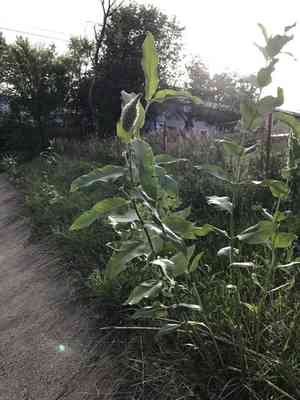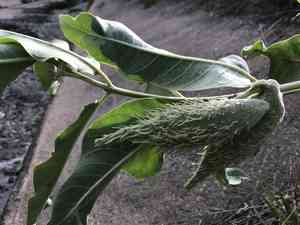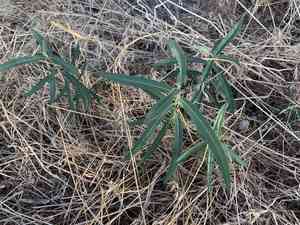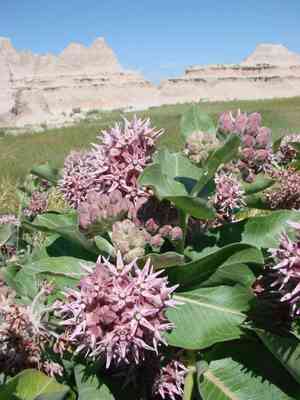
Showy milkweed(Asclepias speciosa)

Showy milkweed (Asclepias speciosa)

Also known as: Showy milkweed, Beautiful milkweed

Despite being toxic to cats, dogs, and horses, milkweed plays a crucial role as a food source for monarch butterflies and other species. Although it is often labeled as an invasive weed, the plant's silky floss is now being harvested as a cost-effective alternative to goose down for insulating jackets and sleeping bags.

Attributes of Showy milkweed

Lifespan
Perennial
Plant Type
Herb
Plant Height
46 cm to 1.3 m
Spread
1 m
Leaf Color
Green Blue Gray
Flower Size
2.5 cm
Flower Color
Pink Purple White

PlantJoy - Identify plants with a snap

Identify and diagnose plants, get toxicity alerts, and explore safety guides for all types of fungi.

Try for Free

Images of Showy milkweed

Showy milkweed(Asclepias speciosa)

Quickly Identify Showy milkweed

1
Robust perennial up to 3 feet (91 cm) tall forming clumps through rhizomes.
2
Large, hairy, oval gray-green leaves in opposite pairs up to 5 inches (13 cm) long.
3
Spherical clusters of pale pinkish-purple star-shaped flowers with reflexed calyces.
4
Drought-tolerant and thrives in full sun with minimal watering requirements.

Scientific Classification of Showy milkweed

Phylum
Vascular plants
Class
Dicotyledons
Order
Gentianales
Family
Dogbane
Genus
Milkweeds
Species
Showy milkweed

Planting and Growing of Showy milkweed

Care Difficulty
Easy
Watering Schedule
Every 3 days
Sunlight Requirements
Full sun
Sunshine Duration
6-10 hours
Ideal Temperature
65-80℉
Soil Type
Potting Mix, Peat Mix
Soil pH
6.5-7.5
Fertilizer Type
Balanced
Pruning Season
Spring, Summer
Pruning Area
Branches, Leaves
Pruning Frequency
2 times a year
Repotting Season
Spring
Pot Type
Plastic, Ceramic

water icon How to Water Showy milkweed?

Asclepias speciosa, commonly known as showy milkweed, should be watered with approximately 500 milliliters at each watering. The key principle is to water thoroughly but to ensure the soil dries out between waterings to mimic its native environment. This balance prevents root rot and promotes healthy growth.
What are the symptoms of an underwatered Showy milkweed?
What should I do if my Showy milkweed is not getting enough water?
What are the symptoms of an overwatered Showy milkweed?
How to save an overwatered Showy milkweed?

sunlight icon What Are the Sunlight Requirements for Showy milkweed?

Sunlight Requirements: Full sun
Duration of light: 6 to 8 hours
This plant prefers full sun conditions. Ideal lighting enables robust growth and an abundance of flowers, essential for pollinator support and ecological benefits in garden ecosystems.
Optimal Sun Exposure
Strategic Plant Placement
Sunlight Duration Management

temperature icon What Is the Ideal Temperature Range for Showy milkweed?

Ideal Temperature: 65 ~ 80℉
The ideal temperature range for growing Asclepias speciosa is between 65°F and 80°F. Within this range, the plant can optimally photosynthesize and grow, ensuring vibrant foliage and robust development of its iconic flowers. Consistency in temperature helps the plant maintain a stable growth rate and maximize its potential in both foliage and flowering.

soil icon What Soil is Best for Showy milkweed?

Soil type: Sandy loam, Loam
Soil PH: 6.5 ~ 7.5
The Asclepias speciosa thrives best in well-draining soil because it prevents root rot by allowing excess water to drain away efficiently. This promotes healthy root growth and strong plant development. While this plant is adaptable, it prefers soil with a moderate nutrient level to support its growth and flowering. Ensuring the soil is not overly rich helps control foliar growth, contributing to more blooms. Since Asclepias speciosa loves basking in the sun, planting it in areas where the soil receives ample sunlight ensures optimal photosynthesis, leading to healthier and more vigorous growth.

fertilize icon How to Fertilize Showy milkweed?

Fertilizer type: Balanced
The ideal amount of fertilizer for Asclepias speciosa should be modest; avoid heavy fertilization. Using a balanced NPK ratio like 10-10-10 is recommended. For liquid fertilizer, dilute it to half-strength to prevent root burn, applying approximately 1-2 tablespoons per gallon of water.

prune icon How to Prune Showy milkweed?

Pruning Time: Spring, Summer
Before you begin pruning, make sure all tools are sterilized using rubbing alcohol or a bleach solution. This will help prevent any potential spread of plant diseases. Carefully inspect the plant to spot any dead or diseased stems as well as those which are overly long or unsightly. Focus on these areas for pruning to maintain the plant's shape and health. When making cuts, ensure you're cutting at a 45-degree angle. This allows water to run off easily, reducing the risk of disease while promoting effective healing and growth post-pruning.

propagate icon How to Propagate Showy milkweed plant?

Propagate Time: Spring, Late spring, Early spring
1
For seed propagation, start by soaking the seeds in water for 24 hours to soften their hard seed coat. This step is fundamental to ensure better germination rates, as it allows the emerging shoot to break through the seed coat more easily.
2
When using cutting propagation, select a healthy parent plant and use pruning shears to cut 4-6 inch segments from a non-flowering stem. These cuttings should be taken during the plant's active growth phase and should include at least one node for best results.
3
For division propagation, carefully dig up the plant when it is dormant. Divide the root clump into sections, ensuring each section has at least one healthy shoot. This technique promotes both vegetative growth and the rejuvenation of older plants.
More About Propagating Techniques

repot icon How to Repot Showy milkweed plant?

Repotting frequency: Every two to three years
1
Asclepias speciosa, also known as Showy Milkweed, signals its need for repotting when roots are circling the pot's base or growing out of drainage holes. Spring is ideal because active growth supports recovery. Repot during growth spurts for optimal results.
2
Select a pot that is one size larger than the current one, with ample drainage holes. This ensures good drainage and prevents waterlogging, which protects the roots from rot. A terracotta pot can also help in regulating soil moisture levels.
3
Opt for a well-draining, sandy soil mix to replicate Asclepias speciosa's natural environment. This tolerates water without compacting, allowing roots to breathe. A balanced blend of potting soil, sand, and perlite works excellently.

PlantJoy - Identify plants with a snap

Find the best spots for them to optimize their health, simply using your phone.

Try for Free

Toxicity of Showy milkweed

Is Showy milkweed toxic to humans?

Poisoning due to showy milkweed primarily occurs from the unintentional consumption of its sap. While there are currently no recorded instances of human poisoning caused by this plant, various species within the milkweed genus possess toxic properties. Every component of the milkweed plant harbors harmful compounds, with the sap being the most hazardous portion. Consuming showy milkweed in significant amounts can lead to toxicity, and its sap may even result in fatal outcomes, causing death or severe health complications. Individuals are most likely to encounter showy milkweed in prairie regions, where it thrives in damp soil.

Is Showy milkweed toxic to cat?

Showy milkweed contains moderate levels of toxicity for cats and presents a health hazard if any portion of the plant is consumed. When ingested, cats may display signs of physical distress including gastrointestinal disturbances or respiratory issues. Given that every component of showy milkweed can be harmful, cat owners should take precautions to keep their pets away from this plant. If there is a suspicion of cat poisoning, seeking immediate veterinary assistance is crucial, as timely treatment is essential for the well-being and recovery of the impacted feline.

Is Showy milkweed toxic to dog?

Showy milkweed represents a moderate toxicity risk for dogs. Poisoning is most commonly triggered when a dog consumes any portion of the plant, since all of its parts are deemed toxic. Signs of poisoning can manifest as vomiting, diarrhea, weakness, respiratory difficulties, and dilated pupils. Therefore, it is imperative for dog owners to remain alert and prevent their pets from eating any part of showy milkweed. Should there be any suspicion that a dog has ingested showy milkweed, prompt veterinary attention is critical to securing the best potential recovery for the affected pet.

Identify toxic plants for your safety

Learn which plants are harmful to you and your pets, and make informed choices for a safer home!

Try for Free
WARNING
The judgment on toxicity and danger is for reference only. We DO NOT GUARANTEE any accuracy of such judgment. Therefore, you SHALL NOT rely on such judgment. It is IMPORTANT TO SEEK PROFESSIONAL ADVICE in advance when necessary.
More About Toxic Techniques