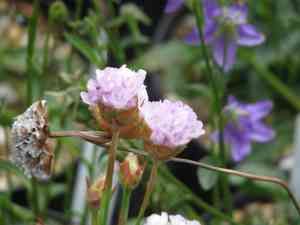
Armeria welwitschii (Armeria welwitschii)
Also known as: Welwitsch's Thrift
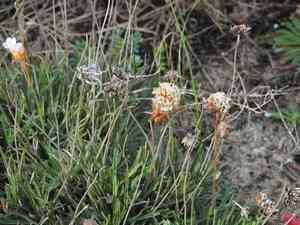
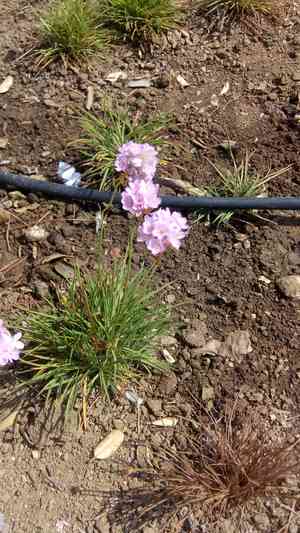
Armeria welwitschii, also known as Welwitsch's thrift, is a perennial plant distinguished by its dense, cushion-like formations of slender, needle-shaped leaves. The plant features eye-catching, globe-shaped clusters of pink to purple flowers that bloom on rigid, upright stems, lending a tufted look to the plant. Adapted to thrive in rocky coastal environments, its compact growth and dense foliage are well-suited to withstand harsh winds and challenging conditions.
In This Article
Attributes of Armeria welwitschii
Lifespan
Perennial
Plant Type
Herb
Plant Height
15-30 cm
Spread
10-20 cm
Leaf Color
Green
Flower Size
1-2 cm
Flower Color
Pink
Images of Armeria welwitschii
Quickly Identify Armeria welwitschii
1
Armeria welwitschii can be identified by its dense clumps of grass-like foliage and clusters of pink flowers that bloom from late spring to early summer. The leaves are linear, and the flower stems are slender and rise above the foliage.
Scientific Classification of Armeria welwitschii
Phylum
Vascular plants
Class
Dicotyledons
Order
Caryophyllales
Family
Leadwort
Genus
Thrifts
Species
Armeria welwitschii
Planting and Growing of Armeria welwitschii
Care Difficulty
Moderate
Watering Schedule
Every 3 days
Sunlight Requirements
Full sun
Sunshine Duration
6-10 hours
Ideal Temperature
60-75℉
Soil Type
Potting Mix, Peat Mix
Soil pH
6.5-7.5
Fertilizer Type
Balanced
Pruning Season
Spring, Summer
Pruning Area
Branches, Leaves
Pruning Frequency
2 times a year
Repotting Season
Spring
Pot Type
Plastic, Ceramic
 How to Water Armeria welwitschii?
For Armeria welwitschii, ensure that the soil remains slightly moist, but not waterlogged. Water approximately 300 ml each time, which generally corresponds to providing enough moisture to permeate the upper layer of soil without saturating the deep roots. The goal is to mimic its natural habitat where it would receive moisture from dew and occasional rain, but also experience dry periods.
What are the symptoms of an underwatered Armeria welwitschii?
›
What should I do if my Armeria welwitschii is not getting enough water?
›
What are the symptoms of an overwatered Armeria welwitschii?
›
How to save an overwatered Armeria welwitschii?
›
 What Are the Sunlight Requirements for Armeria welwitschii?
Armeria welwitschii prefers a sunlight range of full sun. Optimizing light conditions greatly enhances blooming, reinforces healthy foliage development, and ensures vigorous, balanced growth.
What is the best lighting condition for Armeria welwitschii?
›
How to achieve the ideal lighting for Armeria welwitschii?
›
What benefits does Armeria welwitschii gain from proper lighting?
›
 What Is the Ideal Temperature Range for Armeria welwitschii?
The ideal temperature range for Armeria welwitschii, which typically thrives in temperate climates, is between 60°F and 75°F. This temperature range provides the optimal environment for photosynthesis, growth, and flowering.
 What Soil is Best for Armeria welwitschii?
Armeria welwitschii thrives best in well-drained soil as it prevents root rot by allowing excess water to escape easily. This condition mimics its natural habitat and ensures healthy plant growth. This plant prefers soil with moderate nutrient levels. It ensures the plant gets sufficient nutrients without leading to over-fertilization, which can harm the plant's delicate system. Armeria welwitschii can tolerate slightly alkaline conditions, which suits the calcareous soils of its native environment. This helps the plant maintain its characteristic flowering and growth.
 How to Fertilize Armeria welwitschii?
Armeria welwitschii requires a balanced fertilization approach. Use a diluted liquid fertilizer, at half the recommended strength, twice a month during the growing season. For slow-release fertilizers, apply a light layer around the base of the plant, ensuring not to overwhelm its root system.
 How to Prune Armeria welwitschii?
Begin by cleaning your tools to prevent disease transfer. Cut back any spent flowers, known as deadheading, to encourage more blooms. Trim old and damaged leaves gently while ensuring not to harm the central rosette, as this part is crucial for new growth development. Armeria welwitschii tends to form clumps. Lightly trim the sides to maintain a desirable, rounded shape. This not only keeps the plant looking neat but also promotes air circulation, reducing the risk of fungal outbreaks. Always make cuts just above a healthy leaf node.
More About Pruning Techniques→
 How to Propagate Armeria welwitschii plant?
1
Fill the seed tray with a well-draining potting mix, lightly water it, and then sprinkle Armeria welwitschii seeds on top. Cover them with a thin layer of soil, and place the tray in a bright, but not directly sunlit location.
2
Carefully dig up the plant and gently shake off excess soil. Using a sharp knife, divide the clump into smaller sections, making sure each section has a robust root system. Replant each new clump immediately in a prepared site.
3
After propagation, water the seeds or divided clumps thoroughly. Ensure the soil remains moist but not waterlogged during the initial rooting and growth stages.
 How to Repot Armeria welwitschii plant?
1
Look for signs like roots emerging from drainage holes or soil compactness. These indicate that Armeria welwitschii might have outgrown its container. Repotting ensures the plant has room for growth and helps maintain robust health and blooming.
2
Opt for a pot that is 1-2 inches larger in diameter than the current one. It should have ample drainage holes. A slightly larger pot provides space for growth while preventing waterlogging, a common issue when using excess space.
3
A sandy, well-draining soil mix is ideal. This type of soil mimics the plant's natural habitat, preventing root rot by ensuring excess water drains quickly, while still providing the necessary nutrients for growth.
Learn More About Armeria welwitschii Diseases
Anthracnose
Bacterial Leaf Spot
Bacterial Soft Rot
Bacterial Wilt
Black Spot
Chemical Injury
Crown Gall
Cyst Nematode
Damping-off
Downy Mildew
Drought Stress
Fusarium Wilt
Gray Mold
Leaf Curl
Leaf Spot
Mosaic
Nutrient Deficiency
Nutrient Toxicity
Powdery Mildew
Root Rot
Root-knot Nematode
Rusts
Sooty Mold
Spider Mites
Temperature Stress
Thrips Damage
White Mold



