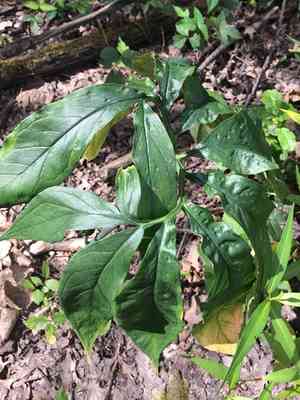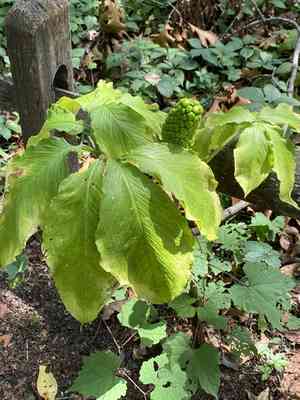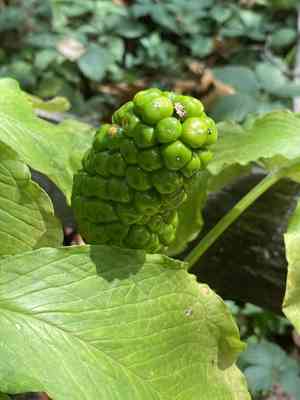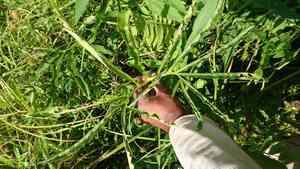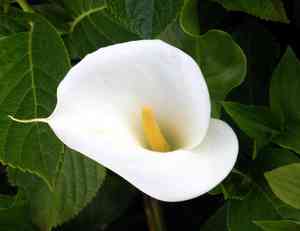
Green dragon(Arisaema dracontium)

Green dragon (Arisaema dracontium)

Also known as: Dragon-root, Jack-in-the-pulpit

The green dragon (*Arisaema dracontium*) is a perennial herb found in Eastern and Central Canada. It features red-orange berries that attract birds, and its distinctive flower spike looks similar to a lizard's tongue. The genus name *Arisaema* comes from the Greek words "aris," meaning arum, and "aima," meaning red, alluding to the red patches seen on the leaves of some species.

Attributes of Green dragon

Lifespan
Perennial
Plant Type
Herb
Plant Height
20 cm to 1 m
Spread
30 cm to 45 cm
Leaf Color
Green
Flower Size
3 cm to 12 cm
Flower Color
Yellow White Green

PlantJoy - Identify plants with a snap

Identify and diagnose plants, get toxicity alerts, and explore safety guides for all types of fungi.

Try for Free

Images of Green dragon

Green dragon(Arisaema dracontium)

Quickly Identify Green dragon

1
Tall spadix exceeding green spathe, may grow up to 4 feet (120 cm) in height.
2
Leaves divided into numerous leaflets, giving a feathery appearance.
3
Distinct flower with a slender, greenish-white spadix exceeding the spathe length.
4
Cluster of berries transitioning from vibrant green to dark red, forming a dense spike.
5
Compound leaf with 7-13 lanceolate to ovate leaflets in a horizontal spread.

Scientific Classification of Green dragon

Phylum
Vascular plants
Class
Monocotyledons
Order
Alismatales
Family
Arum
Genus
Jack-in-the-pulpit
Species
Green dragon

Planting and Growing of Green dragon

Care Difficulty
Moderate
Watering Schedule
Every 2 days
Sunlight Requirements
Partial sun
Sunshine Duration
4-8 hours
Ideal Temperature
65-75℉
Soil Type
Potting Mix, Peat Mix
Soil pH
6.5-7.5
Fertilizer Type
Balanced
Pruning Season
Spring, Summer
Pruning Area
Branches, Leaves
Pruning Frequency
2 times a year
Repotting Season
Spring
Pot Type
Plastic, Ceramic

water icon How to Water Green dragon?

When watering Arisaema dracontium, aim to soak the soil thoroughly until water starts to drain from the bottom of the pot. This ensures that the roots receive adequate moisture. It is important to avoid overwatering, as the plant prefers a well-drained environment where the soil dries out slightly between waterings.
What are the symptoms of an underwatered Green dragon?
What should I do if my Green dragon is not getting enough water?
What are the symptoms of an overwatered Green dragon?
How to save an overwatered Green dragon?

sunlight icon What Are the Sunlight Requirements for Green dragon?

Sunlight Requirements: Partial sun, Full shade
Duration of light: 2 to 4 hours
Arisaema dracontium benefits most from a lighting range of partial sun, around 2 to 4 hours a day. This lighting ensures healthy growth, vibrant leaf color, and optimal soil moisture levels.
What is the ideal lighting level for Arisaema dracontium?
How can you achieve partial sun conditions effectively?
Why is this lighting condition beneficial for Arisaema dracontium?

temperature icon What Is the Ideal Temperature Range for Green dragon?

Ideal Temperature: 65 ~ 75℉
Arisaema dracontium grows best between 65°F and 75°F. This range provides an optimal balance of warmth without causing heat stress. Maintaining this temperature ensures proper metabolism, optimal photosynthesis, and vigorous growth.

soil icon What Soil is Best for Green dragon?

Soil type: Loam, Sandy loam, Peat soil
Soil PH: 6.5 ~ 7.5
Arisaema dracontium thrives in moist soils, which provide consistent water availability to support its growth. A loamy soil with good drainage helps maintain the necessary moisture without waterlogging, promoting healthy root development. This plant benefits from soil rich in organic matter, which supplies essential nutrients for vigorous growth. Peat soils naturally contain high levels of organic materials, enhancing soil fertility and supporting the plant's nutritional needs. Choosing soils with a neutral pH range between 6.5 and 7.5 ensures that Arisaema dracontium can efficiently absorb nutrients. A balanced pH prevents nutrient lock-up, fostering optimal plant health and growth.

fertilize icon How to Fertilize Green dragon?

Fertilizer type: Balanced
For Arisaema dracontium, use a balanced liquid fertilizer diluted to half strength. Apply around 1/4 to 1/2 cup per plant during the growing season, ensuring even distribution to avoid nutrient burns.

prune icon How to Prune Green dragon?

Pruning Time: Spring
Begin by identifying any damaged or dead leaves, stems, or flower parts on your Arisaema dracontium. Using clean, sharp pruning shears, carefully cut away these parts to prevent disease spread. Then, trim back any excessively long or misshapen stems to maintain a balanced appearance and ensure adequate airflow between the plant structures. After the initial clearing of dead or diseased plant material, consider trimming a small amount of healthy growth at the top. This practice stimulates the plant to produce new shoots, leading to a fuller plant with lush foliage. Make sure to leave plenty of healthy growth to facilitate photosynthesis and support the plant’s energy needs.

propagate icon How to Propagate Green dragon plant?

Propagate Time: Late spring, Early summer
1
Gather seeds from ripe berries in late summer. Berries should be soft and easily remove seeds when squeezed. Wash seeds thoroughly to remove pulp, which can prevent disease during germination.
2
Sow seeds on the surface of the potting mix, gently pressing them into the soil without burying them. Cover the tray with a thin layer of grit to maintain moisture levels and prevent algae growth.
3
Place the seed tray in a warm environment with indirect sunlight. Maintain a temperature around 70°F (21°C) to ensure optimal germination rates. Water lightly to keep the soil consistently moist but not waterlogged.
More About Propagating Techniques

repot icon How to Repot Green dragon plant?

Repotting frequency: Every two to three years
1
Arisaema dracontium, or the Green Dragon Plant, signals it's time for repotting when you see roots emerging from the drainage holes or if the plant's growth has noticeably slowed. Another telltale sign is when the soil becomes compacted and water drainage is poor. Repotting during active growth seasons like spring or summer ensures a smooth transition and minimal stress on the plant.
2
Select a pot that is one size larger than the current one, ensuring it has ample drainage holes. This prevents waterlogging, thereby reducing the risk of root rot. A terracotta pot is a great choice as it is porous, allowing air exchange and aiding in moisture control which Arisaema dracontium appreciates.
3
Opt for a well-draining potting mix composed of equal parts peat moss, perlite, and pine bark. This blend provides excellent aeration and nutrients, mimicking the plant's natural forest floor habitat. It helps in maintaining moderate moisture levels without becoming overly soggy.

PlantJoy - Identify plants with a snap

Find the best spots for them to optimize their health, simply using your phone.

Try for Free

Toxicity of Green dragon

Is Green dragon toxic to humans?

The risk of poisoning from the green dragon plant primarily arises from the accidental consumption of its roots, which are the most poisonous section of this plant. All components of the green dragon, including its flowers, roots, leaves, fruits, stems, sap, and seeds, can be harmful to humans when eaten raw. Symptoms of poisoning can be quite severe and may include irritation, burning sensations, and swelling of the lips, tongue, and throat. This plant is frequently found in moist woodlands, coastal areas, and mountainous regions, heightening the likelihood that children might inadvertently ingest the berries or other parts of this species.

Is Green dragon toxic to cat?

The green dragon plant presents a significant toxicity hazard to cats. Felines may suffer poisoning from inadvertently ingesting any portion of the plant. Following consumption, a cat might display signs of physical distress, warranting urgent veterinary care. It is essential for cat owners to be aware of the dangers associated with the green dragon and to keep it safely out of their pets' access. Should poisoning be suspected, it is vital to act swiftly by obtaining treatment from a veterinary clinic to safeguard the cat's health and well-being.

Is Green dragon toxic to dog?

The green dragon is a highly toxic plant for dogs, representing a serious health threat upon ingestion. When dogs accidentally consume any part of this plant, they are at risk of poisoning since all portions are harmful. Following ingestion, dogs may show a range of symptoms that point to poisoning. These symptoms can range from vomiting and diarrhea to excessive drooling, oral irritation, and even more severe reactions, depending on the quantity ingested. It is essential for dog owners to restrict their pets' access to green dragon and remain vigilant when in areas where this plant may be present. Should a dog ingest any part of the green dragon, it is crucial to seek veterinary assistance immediately to ensure the best possible care for the affected pet.

Identify toxic plants for your safety

Learn which plants are harmful to you and your pets, and make informed choices for a safer home!

Try for Free
WARNING
The judgment on toxicity and danger is for reference only. We DO NOT GUARANTEE any accuracy of such judgment. Therefore, you SHALL NOT rely on such judgment. It is IMPORTANT TO SEEK PROFESSIONAL ADVICE in advance when necessary.
More About Toxic Techniques