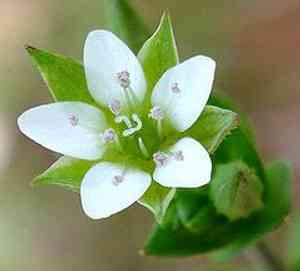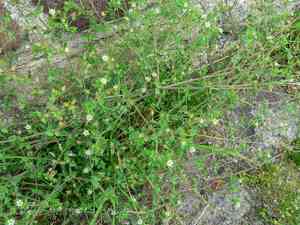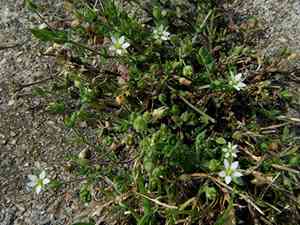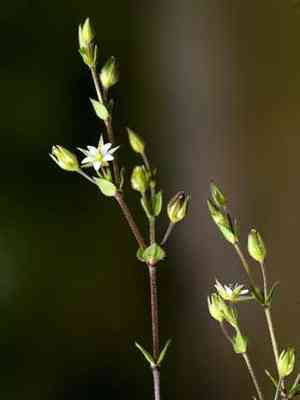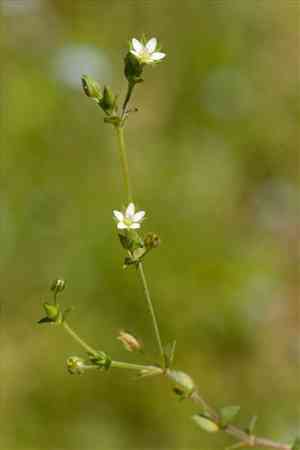
Thyme-leaf sandwort(Arenaria serpyllifolia)

Thyme-leaf sandwort (Arenaria serpyllifolia)

Also known as: Thyme-leaved Sandwort

Thyme-leaf sandwort, often overlooked due to its small size, is commonly found in well-drained, rocky, or sandy soils. It typically thrives in grasslands, meadows, and open woodlands, especially in areas where the soil has been disturbed.

Attributes of Thyme-leaf sandwort

Lifespan
Annual, Biennial
Plant Type
Herb
Plant Height
2.5 cm to 25 cm
Spread
30 cm to 45 cm
Leaf Color
Green Blue
Flower Size
5 mm
Flower Color
White

ForwardPlant - Identify plants with a snap

Identify and diagnose plants, get toxicity alerts, and explore safety guides for all types of fungi.

Try for Free

Images of Thyme-leaf sandwort

Thyme-leaf sandwort(Arenaria serpyllifolia)

Quickly Identify Thyme-leaf sandwort

1
This plant can be identified by its small, white flowers with five petals and its hairy stems and leaves. The leaves are oppositely arranged and are linear to lanceolate in shape.

Scientific Classification of Thyme-leaf sandwort

Phylum
Vascular plants
Class
Dicotyledons
Order
Caryophyllales
Family
Pink
Genus
Sandworts
Species
Thyme-leaf sandwort

Planting and Growing of Thyme-leaf sandwort

Care Difficulty
Easy
Watering Schedule
Every 4 days
Sunlight Requirements
Full sun
Sunshine Duration
4-6 hours
Ideal Temperature
60-75℉
Soil Type
Potting Mix, Peat Mix
Soil pH
6.5-7.5
Fertilizer Type
Balanced
Pruning Season
Spring, Summer
Pruning Area
Branches, Leaves
Pruning Frequency
2 times a year
Repotting Season
Spring
Pot Type
Terracotta, Plastic

water icon How to Water Thyme-leaf sandwort?

Arenaria serpyllifolia prefers a moderate amount of water. It's important to water until the soil is evenly moist but not waterlogged. You should be able to feel the moisture to a depth of about two inches when you check with a finger. This ensures the plant's roots get enough water without risking root rot.
What are the symptoms of an underwatered Thyme-leaf sandwort?
What should I do if my Thyme-leaf sandwort is not getting enough water?
What are the symptoms of an overwatered Thyme-leaf sandwort?
How to save an overwatered Thyme-leaf sandwort?

sunlight icon What Are the Sunlight Requirements for Thyme-leaf sandwort?

Sunlight Requirements: Full sun, Partial sun
Duration of light: 4 to 8 hours
Arenaria serpyllifolia ideally needs semi-to-full sunlight to maintain its vibrant growth and flowering. Adequate light ensures photosynthetic processes are optimized, resulting in lush, thriving plants.
What is the best location for Arenaria serpyllifolia to receive optimal light?
What setup ensures Arenaria serpyllifolia receives the right amount of light?
What are the benefits if Arenaria serpyllifolia gets optimal light?

temperature icon What Is the Ideal Temperature Range for Thyme-leaf sandwort?

Ideal Temperature: 60 ~ 75℉
For optimal growth, Arenaria serpyllifolia thrives in temperatures ranging from 60°F to 75°F. This range allows the plant to photosynthesize efficiently while maintaining its metabolic processes. At these temperatures, the plant is less prone to stress, which can promote healthier foliage and flowering.

soil icon What Soil is Best for Thyme-leaf sandwort?

Soil type: Sandy soil, Loam
Soil PH: 6.5 ~ 7.5
Arenaria serpyllifolia thrives in well-drained soil that prevents waterlogging. This characteristic ensures the roots receive adequate air, reducing the chances of root rot and promoting healthy growth. This plant benefits from soils with moderate nutrient levels. Excessive nutrients can lead to overly lush growth, making it vulnerable to pests, whereas limited nutrition keeps the plant resilient and hardy. Arenaria serpyllifolia does not require soil rich in organic matter. A substrate with low organic content mimics its natural habitats, supporting its typical growth patterns and helping to maintain its ecological balance.

fertilize icon How to Fertilize Thyme-leaf sandwort?

Fertilizer type: Balanced
For Arenaria serpyllifolia, the application of fertilizer should be minimal. Use a diluted liquid fertilizer at half the recommended strength, ensuring the soil is only mildly enriched. It's essential not to overwhelm the plant with nutrients due to its natural habitats’ low-nutrient needs.

prune icon How to Prune Thyme-leaf sandwort?

Pruning Time: Spring, Summer, Autumn, Winter
Begin by using clean, sharp pruning shears to trim back any overgrown or scraggly branches. Focus on cutting just above a leaf node to encourage new growth. Remove any dead or diseased stems to ensure plant health. Keep the plant's shape in mind to maintain its aesthetic appeal.

propagate icon How to Propagate Thyme-leaf sandwort plant?

Propagate Time: Spring, Early spring
1
Fill seed trays with a fine potting mix, making sure it is evenly distributed. Lightly press the soil to create a smooth surface. Ensure the trays have drainage holes to prevent waterlogging.
2
Scatter the seeds evenly over the surface of the soil. Due to their small size, it's unnecessary to cover them with soil. Instead, lightly press them onto the soil surface to ensure they make contact.
3
Water the seeds gently with a fine mist to avoid dislodging them. Maintain a consistent level of moisture by watering whenever the soil surface begins to dry out without saturating the soil completely.

repot icon How to Repot Thyme-leaf sandwort plant?

Repotting frequency: Once every two years
1
Arenaria serpyllifolia shows signs for repotting when you notice its roots start spiraling inside the pot. Additionally, if the soil becomes compacted and drains poorly, or if growth slows significantly, it's time to repot. These indicators suggest that the plant needs more space or fresh soil to thrive.
2
Select a pot that provides at least one inch of extra space all around the current root ball. An unglazed clay pot allows for better moisture evaporation, which helps prevent root rot. Ensure the pot has proper drainage holes; this prevents water from pooling at the bottom, which could lead to root diseases.
3
Opt for a well-draining sandy mix that mimics the natural habitat of the plant. The right soil helps prevent waterlogging and promotes healthy root growth. An ideal mix is light yet nutrient-rich, balancing moisture retention with excellent drainage capabilities.

ForwardPlant - Identify plants with a snap

Find the best spots for them to optimize their health, simply using your phone.

Try for Free

Toxicity of Thyme-leaf sandwort

Is Thyme-leaf sandwort toxic to humans?

Thyme-leaf sandwort exhibits a low degree of toxicity to humans, with all parts of the plant capable of inducing poisoning if ingested. Consumption may lead to various symptoms that reflect its toxic characteristics. These symptoms may encompass gastrointestinal issues like nausea, vomiting, and diarrhea, and could also involve irritation in the mouth and throat. The mild toxicity indicates that while the symptoms could be quite uncomfortable, they are generally not fatal. It is crucial for individuals, particularly foragers and gardeners, to understand the potential dangers linked to the accidental ingestion of thyme-leaf sandwort in order to avoid any unintentional exposure to its toxic effects.

Is Thyme-leaf sandwort toxic to cat?

Thyme-leaf sandwort poses a slight toxicity threat to cats. Felines might accidentally consume portions of thyme-leaf sandwort, potentially leading to poisoning because the entire plant harbors toxic compounds. Following exposure, a cat may exhibit symptoms of physical discomfort or distress. It is crucial for cat owners to remain alert and, in case of suspected ingestion, to quickly seek veterinary assistance to mitigate any health concerns that could result from exposure to thyme-leaf sandwort.

Is Thyme-leaf sandwort toxic to dog?

Thyme-leaf sandwort is recognized for its low toxicity level to dogs. If dogs inadvertently consume this plant, it can lead to poisoning, which is quite likely due to their naturally inquisitive personalities and their habit of nibbling on various types of vegetation. All parts of the plant, including its leaves, stems, and flowers, contain toxic substances that can endanger canine health. Signs of ingestion in dogs could manifest as gastrointestinal distress or other mild health issues. Therefore, it is essential for dog owners to keep a close watch on their pets and restrict their access to thyme-leaf sandwort in order to prevent accidental consumption. Should a dog ingest any part of this plant, seeking immediate veterinary assistance is vital to ensure the best possible health outcome for the animal.

Identify toxic plants for your safety

Learn which plants are harmful to you and your pets, and make informed choices for a safer home!

Try for Free
WARNING
The judgment on toxicity and danger is for reference only. We DO NOT GUARANTEE any accuracy of such judgment. Therefore, you SHALL NOT rely on such judgment. It is IMPORTANT TO SEEK PROFESSIONAL ADVICE in advance when necessary.
More About Toxic Techniques