Stanford's manzanita(Arctostaphylos stanfordiana)

Stanford's manzanita (Arctostaphylos stanfordiana)

Also known as: Raiche's manzanita

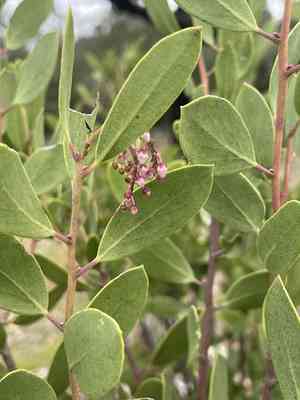
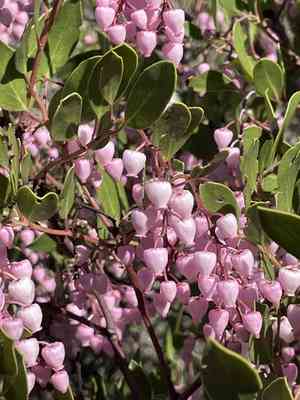
Stanford's manzanita (Arctostaphylos stanfordiana) is a resilient shrub characterized by its evergreen, leathery leaves and clusters of pink to white, urn-shaped flowers that bloom in winter and spring. Its distinctive red, smooth-to-peeling bark and gnarled branches make it easily identifiable. This plant is well-suited to the dry, rocky soils of California's coastal chaparral.

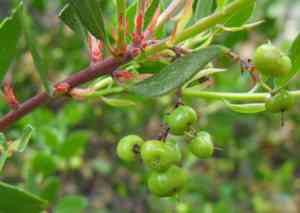
Ecologically, Stanford's manzanita is significant in preventing soil erosion with its extensive root system. It is often one of the first plants to reestablish after fires, aiding in the recovery of the chaparral landscape. Additionally, its small, berry-like fruits are a vital food source for local wildlife, thus supporting the ecosystem's food web.

Attributes of Stanford's manzanita

Lifespan
Perennial
Plant Type
Shrub
Plant Height
4 to 16 feet (1.2 to 4.9 meters)
Spread
4 to 8 feet (1.2 to 2.4 meters)
Leaf Color
Glossy green
Flower Size
0.5 inches (1.3 cm)
Flower Color
White to deep pink

ForwardPlant - Identify plants with a snap

Identify and diagnose plants, get toxicity alerts, and explore safety guides for all types of fungi.

Try for Free

Images of Stanford's manzanita

Stanford's manzanita(Arctostaphylos stanfordiana)

Quickly Identify Stanford's manzanita

1
Look for a shrub with twisted branches, smooth, reddish bark, and glossy green leaves. In spring, it produces clusters of bell-shaped flowers that can range in color from white to deep pink.

Scientific Classification of Stanford's manzanita

Phylum
Vascular plants
Class
Dicotyledons
Order
Ericales
Family
Heath
Genus
Arctostaphylos
Species
Stanford's manzanita

Planting and Growing of Stanford's manzanita

Care Difficulty
Moderate
Watering Schedule
Every day
Sunlight Requirements
Full sun
Sunshine Duration
4-8 hours
Ideal Temperature
60-75℉
Soil Type
Potting Mix, Peat Mix
Soil pH
6.5-7.5
Fertilizer Type
Balanced
Pruning Season
Spring, Summer
Pruning Area
Branches, Leaves
Pruning Frequency
2 times a year
Repotting Season
Spring
Pot Type
Plastic, Terracotta

water icon How to Water Stanford's manzanita?

The ideal watering amount for Arctostaphylos stanfordiana is around 500 milliliters once a month. This species prefers well-draining soil that is not overly saturated. Watering should aim to moisten the soil moderately without causing it to become waterlogged, as excess moisture can lead to root rot.
What are the symptoms of an underwatered Stanford's manzanita?
What should I do if my Stanford's manzanita is not getting enough water?
What are the symptoms of an overwatered Stanford's manzanita?
How to save an overwatered Stanford's manzanita?

sunlight icon What Are the Sunlight Requirements for Stanford's manzanita?

Sunlight Requirements: Full sun, Partial sun
Duration of light: 6 to 8 hours
Arctostaphylos stanfordiana thrives best with full to partial sun, ideally receiving 6-8 hours of light daily. Optimal light exposure ensures vigorous growth, robust flowering, and reduced susceptibility to disease.
What is the best lighting for Arctostaphylos stanfordiana?
How can I ensure my Arctostaphylos stanfordiana receives ideal lighting?
What are the benefits of ideal lighting for Arctostaphylos stanfordiana?

temperature icon What Is the Ideal Temperature Range for Stanford's manzanita?

Ideal Temperature: 60 ~ 75℉
The ideal temperature range for Arctostaphylos stanfordiana is between 60°F and 75°F. This range allows the plant to undergo efficient photosynthesis and maintain healthy growth. Consistent temperatures within this range ensure robust flowering and fruit production, contributing to the plant's vitality and aesthetic appeal.

soil icon What Soil is Best for Stanford's manzanita?

Soil type: Sandy loam, Loam, Sandy soil
Soil PH: 6.5 ~ 7.5
Arctostaphylos stanfordiana thrives in well-drained soils where water doesn't accumulate. This prevents root rot, allowing the plant to develop a robust root system that contributes to overall health and vigor. While not overly demanding, this plant benefits from a nutrient-rich substrate that supports its growth and flowering. Proper nutrients maintain leaf coloration and promote vibrant blooms, enhancing the plant's aesthetic appeal. This plant prefers moderately moist soils but can tolerate occasional drought. Finding a balance in moisture ensures sustained growth while preventing stress from overwatering or dryness, which are critical for its resilience.

fertilize icon How to Fertilize Stanford's manzanita?

Fertilizer type: Balanced
Arctostaphylos stanfordiana requires moderate fertilization. When applying liquid fertilizer, use a solution diluted to half the recommended strength to avoid over-fertilizing. For slow-release granular fertilizer, use about a handful per square meter of soil. This helps ensure nutrients are available throughout the growing season without risking nutrient burn.

prune icon How to Prune Stanford's manzanita?

Pruning Time: Spring, Summer
Ensure you use clean, sharp pruning shears to make clean cuts that minimize the risk of disease. Begin by cutting back any dead or diseased branches at their base to encourage healthy new growth. Arctostaphylos stanfordiana benefits from shaping to maintain its natural form. Focus on cutting from the top and sides to create a rounded shape, avoiding cutting the main stems to preserve the natural beauty of the plant. More About Pruning Techniques

propagate icon How to Propagate Stanford's manzanita plant?

Propagate Time: Spring, Early spring, Late spring
1
Before sowing, Arctostaphylos stanfordiana seeds should be stratified to break dormancy. This involves a period of cold treatment to mimic natural winter conditions, which encourages germination.
2
Select healthy, semi-hardwood stems for cutting in late spring. Ensure that the cutting is around 6 inches long and has a few leaves at the top, removing any flowers or buds.
3
Plant seeds or cuttings in a well-draining mix. For seeds, cover lightly with soil, while cuttings should be inserted with a third of their length in the soil. Ensure adequate moisture without waterlogging.
More About Propagating Techniques

repot icon How to Repot Stanford's manzanita plant?

Repotting frequency: Every 2-3 years
1
The ideal time to repot Arctostaphylos stanfordiana is when you observe slower growth or roots starting to emerge from the bottom of the pot. These signs indicate that the plant is becoming root-bound and requires more space to flourish. Repotting in spring or autumn is best as it coincides with the plant's active growth periods, ensuring a smoother transition.
2
Select a pot that is one size larger than the current one. It should have drainage holes to prevent waterlogging. Opting for a slightly porous material like terracotta can also help keep the soil from becoming too moist, reducing the risks of root rot. A well-chosen pot ensures your plant will have appropriate drainage and room to grow.
3
Choose a well-draining acidic soil mix, which can include sand, pine bark, and peat. This composition mimics the native habitat of Arctostaphylos stanfordiana, facilitating proper moisture retention and air circulation to the roots, and providing a suitable environment for healthy root development.

ForwardPlant - Identify plants with a snap

Find the best spots for them to optimize their health, simply using your phone.

Try for Free