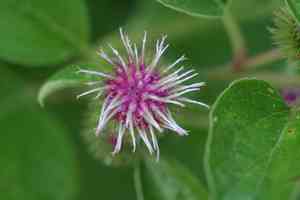
Lesser burdock (Arctium minus)
Also known as: Cuckoo-button, Button-bur
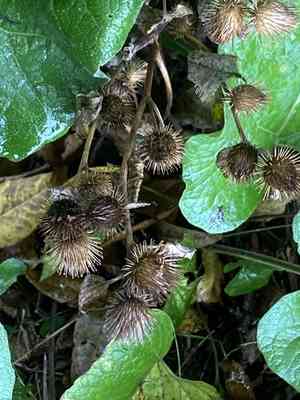
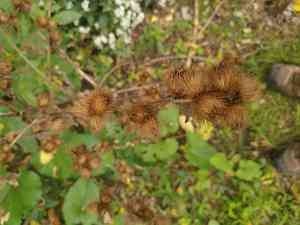
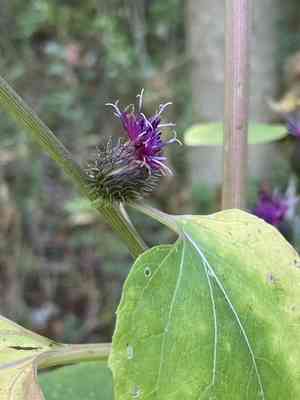
The lesser burdock plant (Arctium minus) features flower bracts with tiny hooks designed to disperse its seeds. These hooks were the inspiration behind the invention of Velcro. Additionally, the roots of the plant are edible when properly prepared. Lesser burdock is also a crucial food source for painted lady butterfly caterpillars.
In This Article
Attributes of Lesser burdock
Lifespan
Biennial
Plant Type
Herb
Plant Height
50 cm to 3 m
Spread
1 m
Leaf Color
Green White
Flower Size
2 cm
Flower Color
Pink Purple
Images of Lesser burdock
Quickly Identify Lesser burdock
1
Pink to purple thistle-like flowers with sharp, hooked bracts and no ray florets.
2
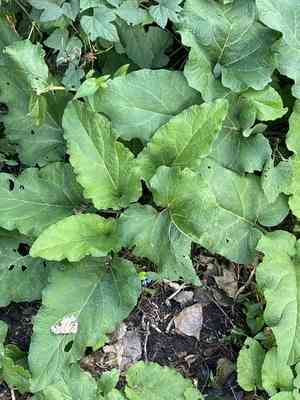
Large heart-shaped leaves up to 2 feet (60 cm) long with wooly undersides.
3
Achenes with fine pappus hairs for wind dispersal, capable of irritating skin and eyes.
4
Stems start hairy in the first year, developing into smooth, stout structures.
5
Slender tap roots extending about one foot (30 cm), aiding in plant stability.
Scientific Classification of Lesser burdock
Phylum
Vascular plants
Class
Dicotyledons
Order
Asterales
Family
Daisy
Genus
Burdock
Species
Lesser burdock
Planting and Growing of Lesser burdock
Care Difficulty
Easy
Watering Schedule
Every 2 days
Sunlight Requirements
Partial sun
Sunshine Duration
4-8 hours
Ideal Temperature
60-70℉
Soil Type
Potting Mix, Peat Mix
Soil pH
6.5-7.5
Fertilizer Type
Balanced
Pruning Season
Spring, Summer
Pruning Area
Branches, Leaves
Pruning Frequency
2 times a year
Repotting Season
Spring
Pot Type
Plastic, Ceramic
 How to Water Lesser burdock?
When watering Arctium minus, aim to provide approximately 500 milliliters each time. This quantity ensures that the soil is adequately moist but not overly drenched, adhering to the principle of keeping the soil consistently damp. It's crucial to strike a balance to prevent both dehydration and waterlogging.
What are the symptoms of an underwatered Lesser burdock?
›
What should I do if my Lesser burdock is not getting enough water?
›
What are the symptoms of an overwatered Lesser burdock?
›
How to save an overwatered Lesser burdock?
›
 What Are the Sunlight Requirements for Lesser burdock?
Arctium minus thrives best with partial sun exposure, accessing 4 to 6 hours of sunlight daily. This balance aids in robust growth and prevents damage from too much or too little sun.
What is the best light condition for Arctium minus?
›
How can Arctium minus achieve this ideal light condition?
›
What benefits come from providing Arctium minus with its optimal light condition?
›
 What Is the Ideal Temperature Range for Lesser burdock?
The ideal temperature range for Arctium minus is between 60°F and 70°F. This temperature range supports optimal growth and metabolic functions for the plant, allowing it to thrive. Maintaining a stable temperature within this range ensures that the plant can photosynthesize and grow efficiently, without the stress that can occur outside of these temperatures.
 What Soil is Best for Lesser burdock?
Arctium minus thrives in well-drained soil, which helps prevent root rot by ensuring excess water doesn't stagnate. A well-drained soil ensures that the roots have access to adequate oxygen, which is critical for healthy plant growth. This plant prefers soils that are rich in organic matter. Fertile soil provides essential nutrients that promote robust growth and flowering. Incorporating organic compost can greatly enhance soil fertility and structure. Maintaining moderate moisture levels helps Arctium minus to remain hydrated yet not overly soggy. A balanced moisture level ensures that the plant's metabolic processes function efficiently without the stress of drought or waterlogging.
 How to Fertilize Lesser burdock?
For Arctium minus, be cautious not to over-fertilize. Use approximately half the recommended amount on the fertilizer's package for plants of similar size. Typically, this is about 1.5-2 teaspoons of all-purpose liquid fertilizer diluted in a gallon of water.
 How to Prune Lesser burdock?
Always wear gloves when pruning Arctium minus, as the plant can have sharp burs and spiky features that may cause irritation or injury. Long sleeves are also advisable to protect skin from accidental scratches. To prevent the spread of disease between plants, sterilize pruning tools with rubbing alcohol or a bleach solution before and after use. This careful practice helps maintain the overall health and vigor of the plant. Do not prune during wet, rainy conditions, as moisture can spread pathogens and increase the risk of infection. Prune on dry, sunny days to minimize these risks and allow cut surfaces to dry quickly.
 How to Propagate Lesser burdock plant?
1
Collect ripe seeds from Arctium minus flowers at the end of the growing season. Ensure seeds are cleaned and dried properly to prevent mold growth.
2
Select healthy stems from the parent plant and cut them with sterilized pruning shears. Remove lower leaves to reduce moisture loss and dip the cut end in rooting hormone.
3
Divide larger plants during early spring to ensure they have time to establish before peak growth periods. Use a sharp spade to separate clumps, ensuring roots remain intact.
 How to Repot Lesser burdock plant?
1
Arctium minus, commonly known as lesser burdock, exhibits signs when it's time to be repotted, such as roots emerging from drainage holes or slowed growth. The ideal seasons for repotting are spring and summer, coinciding with its active growth phase.
2
Select a pot that is 1-2 inches larger in diameter than the current one—this prevents overgrowth while giving roots space to expand. Ensure it has sufficient drainage holes to prevent waterlogged soil, which could lead to root rot.
3
Opt for a loamy, well-draining mix rich in organic matter. Such soil ensures proper aeration and moisture retention, providing the plant with sufficient nutrients and reducing the risk of root disease.
Learn More About Lesser burdock Diseases
Anthracnose
Bacterial Leaf Spot
Bacterial Soft Rot
Crown Gall
Cyst Nematode
Damping-off
Downy Mildew
Drought Stress
Fusarium Wilt
Gray Mold
Leaf Spot
Mosaic
Nutrient Deficiency
Nutrient Toxicity
Powdery Mildew
Root Rot
Root-knot Nematode
Rusts
Sooty Mold
Spider Mites
Temperature Stress
Thrips Damage
White Mold



