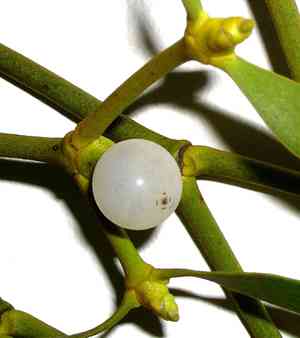
Pineland dwarf mistletoe (Arceuthobium vaginatum)
Also known as: Southwestern dwarf mistletoe
Pineland dwarf mistletoe (Arceuthobium strictum) is a parasitic plant that siphons water and nutrients from the vascular system of its host trees, typically pines. It is identifiable by its diminutive size, yellow-green scale-like leaves, and small, waxy flowers. Instead of roots, it anchors itself firmly onto the branches of host trees, often compromising the host's vitality.
This plant exhibits several noteworthy adaptations to its environment:
1. **Nutrient Acquisition**: It taps into the host tree's resources via haustoria, specialized structures for nutrient extraction.
2. **Seed Dispersal Mechanism**: Seeds are forcefully ejected to facilitate spread to new hosts.
3. **Minimal Water Requirement**: Its parasitic nature reduces its need for independent water uptake, enhancing drought tolerance.
4. **Host-Specific Growth**: Prefers environments where suitable host pines are abundant, often in high-altitude forests.
These adaptations ensure that pineland dwarf mistletoe can persist and reproduce effectively in its specific ecological niche.
Attributes of Pineland dwarf mistletoe
Images of Pineland dwarf mistletoe
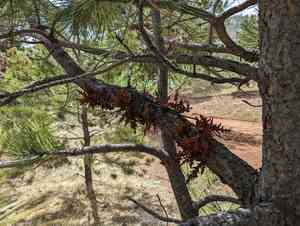
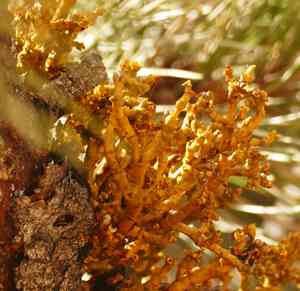
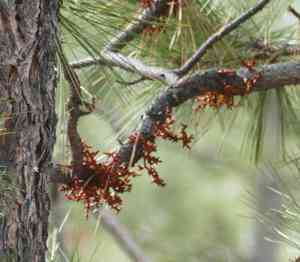
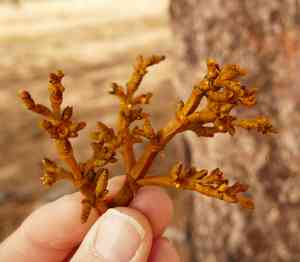
Quickly Identify Pineland dwarf mistletoe
Scientific Classification of Pineland dwarf mistletoe
Planting and Growing of Pineland dwarf mistletoe
 How to Water Pineland dwarf mistletoe?
 What Are the Sunlight Requirements for Pineland dwarf mistletoe?
 What Is the Ideal Temperature Range for Pineland dwarf mistletoe?
 What Soil is Best for Pineland dwarf mistletoe?
 How to Fertilize Pineland dwarf mistletoe?
 How to Prune Pineland dwarf mistletoe?
 How to Propagate Pineland dwarf mistletoe plant?
 How to Repot Pineland dwarf mistletoe plant?
Toxicity
Ingestion of plant parts



