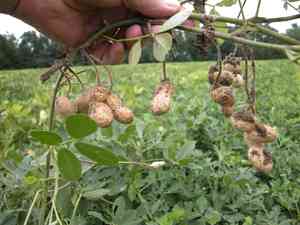
Arachis (Arachis) (Arachis)
Also known as: Peanut, Groundnut, Earthnut
The Arachis genus includes about 70 species of flowering plants, with the peanut (Arachis hypogaea) being the most renowned. This edible peanut serves as a vital food crop. Additionally, some other species within the genus are cultivated for animal forage and play a significant role in agroforestry and permaculture by contributing nitrogen to the soil.
In This Article
Attributes of Arachis (Arachis)
Lifespan
Annual
Plant Height
Up to 50 cm (20 inches)
Spread
Approximately 1 meter (3.3 feet)
Leaf Color
Green
Flower Size
Approximately 1.5 cm (0.6 inches)
Flower Color
Yellow
Images of Arachis (Arachis)
Quickly Identify Arachis (Arachis)
1
Arachis species typically have pinnate leaves with four leaflets, yellow flowers, and produce pods that develop underground. The plant grows close to the ground with spreading branches.
Scientific Classification of Arachis (Arachis)
Phylum
Magnoliophyta
Class
Magnoliopsida
Order
Fabales
Family
Fabaceae
Genus
Arachis
Planting and Growing of Arachis (Arachis)
Care Difficulty
Moderate
Watering Schedule
Every 2 days
Sunlight Requirements
Full sun
Sunshine Duration
6-12 hours
Ideal Temperature
70-85℉
Soil Type
Potting Mix, Peat Mix
Soil pH
6-7.5
Fertilizer Type
Balanced
Pruning Season
Spring, Summer
Pruning Area
Branches, Leaves
Pruning Frequency
2 times a year
Repotting Season
Spring
Pot Type
Plastic, Terracotta
 How to Water Arachis (Arachis)?
When watering Arachis, it is crucial to provide them with around 500 milliliters each time. The key is to ensure the water reaches the root level without creating soggy soil conditions. A thorough soaking until water begins to drain from the pot’s base is ideal, allowing the soil to moisten evenly.
What are the symptoms of an underwatered Arachis (Arachis)?
›
What should I do if my Arachis (Arachis) is not getting enough water?
›
What are the symptoms of an overwatered Arachis (Arachis)?
›
How to save an overwatered Arachis (Arachis)?
›
 What Are the Sunlight Requirements for Arachis (Arachis)?
Arachis thrives in environments offering full to partial sunlight, translating to roughly 6 to 8 hours daily for peak growth. This ideal range ensures the plant's energy needs are met, promoting lush foliage and bloom development.
What is the best natural light location for my Arachis plant?
›
How can I create an optimal lighting setup indoors?
›
What benefits can my Arachis gain from ideal lighting?
›
 What Is the Ideal Temperature Range for Arachis (Arachis)?
Arachis plants thrive best in a warm environment with a consistent temperature ranging from 70 to 85°F. This range ensures optimal growth conditions, allowing the plant to absorb nutrients and water efficiently. The ideal temperature supports healthy photosynthesis, leading to robust plant development and increased yield.
 What Soil is Best for Arachis (Arachis)?
Arachis thrives in well-drained soils which prevent waterlogging. This helps avoid root rot and promotes healthy growth, allowing the plant to establish strong roots. The plant requires soil rich in nitrogen, phosphorus, and potassium, which are vital for its growth and flowering. Balanced nutrient levels ensure lush foliage and prolific seed production. Arachis prefers slightly acidic to neutral pH levels between 6.0 and 7.5. This range optimizes nutrient availability, ensuring the plant absorbs all necessary minerals for its development.
 How to Fertilize Arachis (Arachis)?
Applying the right amount of fertilizer is crucial for Arachis plants. Ideally, a balanced liquid fertilizer can be applied at half the recommended strength to prevent nutrient burn. Solid fertilizers should be used sparingly, following package instructions but typically around 30 grams per application, depending on soil conditions and plant size.
 How to Prune Arachis (Arachis)?
Look for dead or discolored leaves and stems. Focus on branches that cross or are excessively dense, as thinning them can improve air circulation and light penetration. Cut the dead or unwanted branches back to a main stem or node, ensuring a neat finish. Always angle your cut to prevent water accumulation which could lead to rot.
 How to Propagate Arachis (Arachis) plant?
1
Start by selecting high-quality seeds. Soak them in water for several hours to soften the seed coat, which helps in better germination rates.
2
Place seeds in a well-draining potting mix within seed trays. Ensure they are covered lightly with soil and kept in a warm environment to encourage germination.
3
Once the seeds germinate, provide ample light and maintain the soil moisture. Thin out the seedlings to avoid crowding and ensure they develop strong roots.
4
Select healthy stems and use a clean, sharp tool to cut 4-6 inches sections. Dip the cut ends into rooting hormone to enhance root growth.
5
Plant the cuttings in suitable potting mix, covering about one-third of the stem. Keep them in a humid environment, possibly using a plastic cover to retain moisture.
 How to Repot Arachis (Arachis) plant?
1
Repotting is necessary when you notice the plant outgrowing its current pot, with roots emerging from drainage holes or the soil drying out too quickly. The ideal time to repot Arachis is during the active growth seasons of spring and summer, allowing the plant to settle well into its new environment.
2
Opt for a pot with appropriate drainage holes to prevent waterlogging, as Arachis prefers well-drained conditions. The pot should only be slightly larger than the previous one to provide ample space for root growth without overwhelming the plant. This ensures healthy root development and prevents root rot.
3
Choose a soil medium that is well-draining and slightly sandy, as this mimics the plant's natural environment. This type of soil prevents root rot by allowing excess moisture to escape, thus ensuring the roots remain healthy and oxygenated.

