Rockcresses (Arabis) (Arabis)
Also known as: rock cress
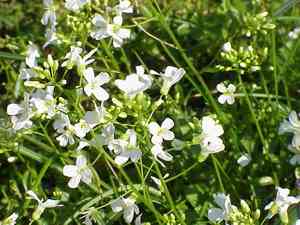
Rockcresses are herbaceous plants that can be annual or perennial, typically standing 10 to 80 cm tall. They often have a dense covering of hairs. The leaves are simple and can vary from entire to lobed, measuring 1 to 6 cm in length. Their small, white flowers have four petals. The fruit is a long, slender capsule that holds 10 to 20 or more seeds.
In This Article
Attributes of Rockcresses (Arabis)
Lifespan
Biennial, Perennial
Plant Height
10-30 cm
Spread
20-60 cm
Leaf Color
Green
Flower Size
1-2 cm
Flower Color
White, pink, purple
Images of Rockcresses (Arabis)
Quickly Identify Rockcresses (Arabis)
1
Arabis can be identified by their small, white to pink or purple, four-petaled flowers, and their ovate to lanceolate leaves. They form low-growing rosettes and have a spreading habit.
Scientific Classification of Rockcresses (Arabis)
Phylum
Magnoliophyta
Class
Magnoliopsida
Order
Brassicales
Family
Brassicaceae
Genus
Arabis
Planting and Growing of Rockcresses (Arabis)
Care Difficulty
Easy
Watering Schedule
Every 3 days
Sunlight Requirements
Full sun
Sunshine Duration
4-8 hours
Ideal Temperature
50-70℉
Soil Type
Potting Mix, Peat Mix
Soil pH
6.5-7.5
Fertilizer Type
Balanced
Pruning Season
Spring, Summer
Pruning Area
Branches, Leaves
Pruning Frequency
2 times a year
Repotting Season
Spring
Pot Type
Plastic, Ceramic
 How to Water Rockcresses (Arabis)?
Arabis plants require their soil to be evenly moist, but not waterlogged. Ideally, you should provide about 200 ml of water per session, ensuring the soil is damp to the touch but not overly saturated. It's crucial to avoid standing water as it can lead to root rot.
What are the symptoms of an underwatered Rockcresses (Arabis)?
›
What should I do if my Rockcresses (Arabis) is not getting enough water?
›
What are the symptoms of an overwatered Rockcresses (Arabis)?
›
How to save an overwatered Rockcresses (Arabis)?
›
 What Are the Sunlight Requirements for Rockcresses (Arabis)?
Arabis thrives in full to partial sun environments, ideally receiving 4-6 hours of daily sunlight. This exposure enhances blooming and foliage density while reducing risks of legginess and disease vulnerability, ensuring a robust and attractive plant.
What is the ideal lighting for Arabis?
›
How can I ensure Arabis receives its ideal light?
›
What are the benefits of providing ideal light to Arabis?
›
 What Is the Ideal Temperature Range for Rockcresses (Arabis)?
For optimal growth and health of Arabis plants, maintaining a stable temperature range of 50°F to 70°F is recommended. This range supports vigorous growth and ensures the plant's metabolic processes occur efficiently. Keeping temperatures within this range helps avoid stress and potential damage.
 What Soil is Best for Rockcresses (Arabis)?
Arabis thrives in well-drained soils due to its ability to mimic its natural alpine habitat. A well-drained soil prevents waterlogging, reducing the risk of root rot and promoting healthy root growth. While Arabis is relatively undemanding, a nutrient-rich medium can support its lush foliage and abundant flowering. Incorporating organic matter like compost enhances soil fertility and benefits plant vigor. Arabis prefers soils with moderate moisture retention capacity. Such soils maintain a balanced moisture level, crucial for steady growth without causing dryness or excess moisture stress.
 How to Fertilize Rockcresses (Arabis)?
For Arabis, it's important to use a balanced fertilizer with an N-P-K ratio of approximately 10-10-10. Liquid fertilizers should be diluted to half the recommended strength. Each application should be just sufficient to moisten the root zone, ensuring neither excessive nor inadequate nourishment.
 How to Prune Rockcresses (Arabis)?
Begin by examining the Arabis plant for any dead or dying foliage and remove them. Then, focus on cutting back the stems just above a leaf node to encourage new growth. Trim off faded flowers to promote continuous blooming. Remember to cut at a slight angle to prevent water from collecting on the cut surface.
 How to Propagate Rockcresses (Arabis) plant?
1
Begin by preparing a light and well-draining soil mix suitable for Arabis. This typically involves a combination of peat, sand, and perlite to ensure good air circulation around the roots. Proper soil preparation is crucial to avoid waterlogging and to provide the cuttings or seeds with the best chance of successful rooting and growth.
2
For seed propagation, scatter the Arabis seeds over the prepared soil surface in your seed tray or pot. Gently press them into the soil to ensure contact, but do not cover them too deeply. Light is often necessary for germination, so keep the coverage minimal. After sowing, mist the surface with water and cover with a plastic dome to maintain moisture and humidity.
3
Select healthy, non-flowering stems for cuttings, about 10-15 cm long. Remove the bottom leaves and dip the cut end into rooting hormone. Plant the cutting into the prepared soil mix, ensuring good contact between the node (where leaves were removed) and the soil to encourage root growth. Keep the soil moist but not waterlogged, and maintain high humidity around the cuttings.
 How to Repot Rockcresses (Arabis) plant?
1
Repot Arabis when you notice roots protruding from the drainage holes or if the soil becomes compacted, hindering drainage. Ideally, the plant should be repotted during its active growing seasons, such as spring or early autumn, to minimize stress.
2
Select a pot that is one size larger than the current one, with adequate drainage holes. This ensures roots have space to grow and prevents waterlogging. A well-chosen pot promotes healthy root development and better plant stability.
3
Use a well-draining potting mix enriched with organic matter, which ensures good aeration and prevents root rot. A sandy loam or mix with perlite or sand is ideal for Arabis, as it mimics its natural habitat.
Learn More About Rockcresses (Arabis) Diseases
Bacterial Leaf Spot
Bacterial Soft Rot
Clubroot
Crown Gall
Cyst Nematode
Damping-off
Downy Mildew
Drought Stress
Fusarium Wilt
Gray Mold
Leaf Spot
Mosaic
Nutrient Deficiency
Nutrient Toxicity
Powdery Mildew
Root Rot
Root-knot Nematode
Rusts
Sooty Mold
Spider Mites
Temperature Stress
Thrips Damage
White Mold
Chemical Injury

