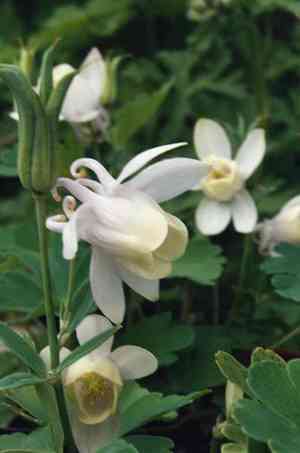
Fan columbine (Aquilegia flabellata)
Also known as: Fan-leaved columbine, Dwarf columbine, Miyama-odamaki
Lavender is a compact, aromatic plant known for its beautiful purple blooms. This award-winning plant is ideal for the front of garden borders due to its short height. Its flowers, which are abundant in nectar and pollen, are highly attractive to bees.
In This Article
Attributes of Fan columbine
Lifespan
Perennial
Plant Type
Herb
Plant Height
30 cm
Spread
15 cm
Leaf Color
Green Blue
Flower Size
3 cm
Flower Color
Blue White Purple Cream
Images of Fan columbine
Quickly Identify Fan columbine
1
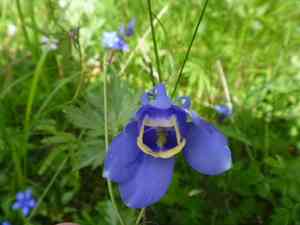
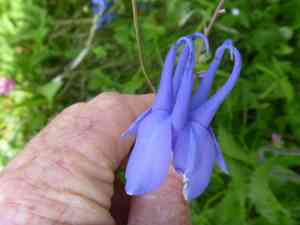
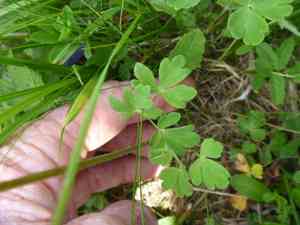
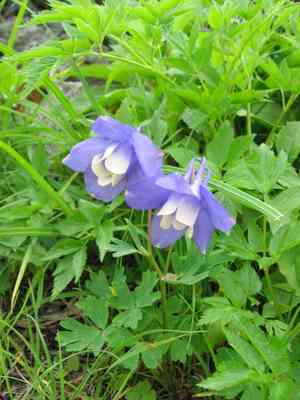
Aquilegia flabellata can be identified by its distinctive fan-shaped leaves and nodding flowers. The plant usually grows low to the ground, with flowers that feature five sepals and five petals which are often spurred. Pay attention to the slightly hairy stems and the bright foliage that typically forms a rosette at the base.
Scientific Classification of Fan columbine
Phylum
Vascular plants
Class
Dicotyledons
Order
Ranunculales
Family
Buttercup
Genus
Columbine
Species
Fan columbine
Planting and Growing of Fan columbine
Care Difficulty
Easy
Watering Schedule
Every 3 days
Sunlight Requirements
Partial sun
Sunshine Duration
6-10 hours
Ideal Temperature
60-70℉
Soil Type
Potting Mix, Peat Mix
Soil pH
6.5-7.5
Fertilizer Type
Balanced
Pruning Season
Spring, Summer
Pruning Area
Branches, Leaves
Pruning Frequency
Once a year
Repotting Season
Spring
Pot Type
Terracotta, Plastic
 How to Water Fan columbine?
The watering amount for Aquilegia flabellata should be sufficient to moisten the soil thoroughly without leaving it waterlogged. A good rule of thumb is to use about 250ml of water, ensuring that the top inch of soil feels damp to the touch. This level of watering supports the plant's moderate moisture needs, while preventing the roots from becoming soggy.
What are the symptoms of an underwatered Fan columbine?
›
What should I do if my Fan columbine is not getting enough water?
›
What are the symptoms of an overwatered Fan columbine?
›
How to save an overwatered Fan columbine?
›
 What Are the Sunlight Requirements for Fan columbine?
Partial sun, ensuring around 3-6 hours of sun exposure ideally. This ensures that Aquilegia flabellata receives enough light for proper blooming and robust growth while avoiding the risk of being overexposed.
More About Sunlight Requirements Techniques→
Optimal Sunlight Requirement
›
Solutions for Ideal Lighting
›
Benefits of Ideal Lighting
›
 What Is the Ideal Temperature Range for Fan columbine?
The ideal temperature range for cultivating Aquilegia flabellata is between 60°F to 70°F. This temperature range ensures optimal growth and flowering for the plant. Maintaining this temperature helps in providing comfortable conditions that mimic its natural habitat.
 What Soil is Best for Fan columbine?
Aquilegia flabellata thrives best in well-draining soil which prevents waterlogging, a common issue that can lead to root rot. This ensures the roots receive adequate oxygen and promotes healthy plant growth. The plant benefits from moderately fertile soil, which provides the necessary nutrients for robust flowering. This fertility supports vibrant blooms and sustains the plant's overall health. Aquilegia flabellata requires soil that retains moderate moisture, ensuring the plant does not dry out but also not too wet. Proper moisture facilitates nutrient absorption and strengthens plant structure.
 How to Fertilize Fan columbine?
When considering the adequate amount of fertilizer for Aquilegia flabellata, it's essential to ensure you're not overdoing it. A diluted liquid fertilizer at half strength every two weeks during the growing season is sufficient. For slow-release fertilizers, use a balanced formula applied sparingly: about one teaspoon per square foot around the plant base in early spring.
 How to Prune Fan columbine?
Always use sharp and clean pruning shears to make clean cuts. This prevents tearing of the stems and reduces the chances of introducing pathogens. Disinfect tools between cuts, especially if any disease is present. The best time to prune Aquilegia flabellata is immediately after flowering in the spring. Cut back flowering stems to the rosette, as this encourages new foliage growth and possible late-season blooming.
More About Pruning Techniques→
 How to Propagate Fan columbine plant?
1
Collect seeds from mature Aquilegia flabellata plants in late summer. Store them in a cool, dry place until early spring. Before planting, scarify the seeds by rubbing them gently with sandpaper to break the hard outer shell.
2
Fill seed trays with a good quality seed-starting mix. Sow the seeds on the surface and cover lightly with soil. Water gently to keep the soil moist but not waterlogged, and place the tray in a warm, well-lit area.
3
In early spring, choose a mature Aquilegia flabellata plant for division. Using a spade or sharp knife, divide the root clump into smaller sections, ensuring each section has roots and shoots. Replant the divisions immediately in nutrient-rich soil.
 How to Repot Fan columbine plant?
1
Aquilegia flabellata should be repotted when you notice roots circling the pot, reduced growth, or decreased flowering. These signs often indicate that the plant is root-bound and needs more space to thrive optimally. Repotting in spring or autumn ensures the plant is not stressed by extreme weather, thus settling into its new home with ease.
2
Select a pot that is one size larger than the current one, offering good drainage with multiple holes. This prevents waterlogging, which leads to root rot. A slightly larger pot allows the plant's roots to spread without overwhelming them with too much soil, nurturing healthy growth.
3
Opt for a well-draining potting mix rich in organic matter. The benefits of such a soil include excellent moisture retention without being waterlogged, which provides necessary nutrients while preventing issues like root rot. This soil type mimics the plant’s natural habitat, ensuring vigorous growth and blooming.
Toxicity
Ingestion
WARNING
The judgment on toxicity and danger is for reference only. We DO NOT GUARANTEE any accuracy of such judgment. Therefore, you SHALL NOT rely on such judgment. It is IMPORTANT TO SEEK PROFESSIONAL ADVICE in advance when necessary.
Learn More About Fan columbine Diseases
Anthracnose
Bacterial Leaf Spot
Bacterial Soft Rot
Bacterial Wilt
Black Spot
Chemical Injury
Crown Gall
Cyst Nematode
Damping-off
Downy Mildew
Drought Stress
Fusarium Wilt
Gray Mold
Leaf Curl
Leaf Spot
Mosaic
Nutrient Deficiency
Nutrient Toxicity
Powdery Mildew
Root Rot
Root-knot Nematode
Rusts
Sooty Mold
Spider Mites
Temperature Stress
Thrips Damage
White Mold



