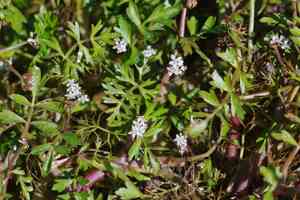
Celery and Marshwort (Apium) (Apium)
Also known as: Celery, Smallage, Wild Celery, Marsh Parsley
Celery and Marshwort belong to a genus of flowering plants known for thriving in wet soils and marshy areas. Among these, Apium graveolens stands out as the primary species, giving rise to celery, Chinese celery, and celeriac. While cultivated varieties of celery are commonly grown in market gardens, other species within the genus can be found in various wild habitats across the globe.
In This Article
Attributes of Celery and Marshwort (Apium)
Lifespan
Biennial
Plant Height
Up to 1 meter (3.3 feet)
Spread
Typically around 30-60 cm (1-2 feet)
Leaf Color
Dark green
Flower Size
Approximately 3-6 mm (0.12-0.24 inches)
Flower Color
White or greenish-white
Images of Celery and Marshwort (Apium)
Quickly Identify Celery and Marshwort (Apium)
1
Apium species can be identified by their aromatic, pinnate leaves, and white or greenish-white umbrella-shaped flower clusters. The plants often have grooved stems and produce small seeds.
Scientific Classification of Celery and Marshwort (Apium)
Phylum
Tracheophyta
Class
Magnoliopsida
Order
Apiales
Family
Apiaceae
Genus
Apium
Planting and Growing of Celery and Marshwort (Apium)
Care Difficulty
Moderate
Watering Schedule
Every 4 days
Sunlight Requirements
Full sun
Sunshine Duration
6-10 hours
Ideal Temperature
60-70℉
Soil Type
Potting Mix, Peat Mix
Soil pH
6-7.5
Fertilizer Type
Balanced
Pruning Season
Spring, Summer
Pruning Area
Branches, Leaves
Pruning Frequency
2 times a year
Repotting Season
Spring
Pot Type
Plastic, Ceramic
 How to Water Celery and Marshwort (Apium)?
For Apium, each watering should be about 250 milliliters. It's essential to maintain the soil moist but not soggy. The amount of water depends on the plant's environment and pot size. Always aim for soil that feels like a squeezed-out sponge - moist but not dripping.
What are the symptoms of an underwatered Celery and Marshwort (Apium)?
›
What should I do if my Celery and Marshwort (Apium) is not getting enough water?
›
What are the symptoms of an overwatered Celery and Marshwort (Apium)?
›
How to save an overwatered Celery and Marshwort (Apium)?
›
 What Are the Sunlight Requirements for Celery and Marshwort (Apium)?
Partial to full sun exposure is ideal, allowing for robust photosynthesis and growth. This range supports vibrant foliage and strong structural development, essential for a thriving celery plant.
Optimal Sunlight Hours
›
Location Selection
›
Reflective Surfaces
›
 What Is the Ideal Temperature Range for Celery and Marshwort (Apium)?
The ideal temperature range for Apium, commonly known as celery, is between 60°F and 70°F. This range supports optimal growth and ensures that the plant can maximize its photosynthetic efficiency. Maintaining a stable temperature within this range helps in minimizing stress and promoting healthy foliage.
 What Soil is Best for Celery and Marshwort (Apium)?
Apium thrives in soils that retain moisture well, which helps prevent the roots from drying out. A moisture-retentive soil ensures continuous access to water, promoting healthy growth and yield. Rich in organic matter, the soil provides essential nutrients conducive to the vigorous growth of Apium. Nutrient-dense soil encourages lush foliage and robust plant structure. Although moisture-retentive, drainage is crucial to prevent root rot. Well-drained soils ensure that excess water doesn't accumulate around the roots, facilitating healthy plant development.
 How to Fertilize Celery and Marshwort (Apium)?
Apium plants generally require a balanced amount of fertilizer. Liquid fertilizers should be used at half strength, no more than twice a month. For slow-release fertilizers, apply at a rate of 2-3 pounds per 100 square feet annually.
 How to Prune Celery and Marshwort (Apium)?
Use clean, sharp scissors or pruning shears to avoid damaging the plant. Always ensure your tools are sterilized to prevent the spread of diseases. Start by removing any dead or yellowing leaves. Cut back the outer stems at the base of the plant to encourage new growth from the center. Trim about one-third of the plant's height to encourage denser foliage. Make cuts just above leaf nodes to promote branching.
 How to Propagate Celery and Marshwort (Apium) plant?
1
Start by filling the seed tray with a sterile potting mix. Sow the Apium seeds evenly on the tray surface, gently pressing them into the soil. Cover them lightly with a fine layer of potting mix, ensuring they are adequately shielded from direct sunlight while still receiving enough light to germinate.
2
Maintain consistent moisture in the germination medium without waterlogging the seeds. Use a spray bottle to mist the soil daily, ensuring the top layer remains moist. Overwatering can lead to fungal issues, so balance moisture carefully.
3
Once the seedlings have developed their first true leaves, it's time to transplant them to larger containers or the garden. Ensure that the new location has well-draining soil and receives ample sunlight. Handle seedlings by their leaves to avoid damaging the stems.
 How to Repot Celery and Marshwort (Apium) plant?
1
Apium plants generally show signs of needing a repot when roots begin to emerge from the drainage holes, or when growth slows noticeably despite optimal conditions. These signs usually become apparent during active growth periods in spring and summer. Regularly checking these indicators ensures you repot at the right time, fostering continuous, healthy growth.
2
When choosing a pot for Apium, consider one that's just a size up from the current one to avoid waterlogging issues. The pot material should facilitate excellent drainage, like terracotta or ceramic pots with a good number of drainage holes. This choice promotes a breathable environment, allowing the soil to dry out between watering sessions, which is crucial for preventing root rot.
3
Selecting the right soil for repotting Apium is crucial. A well-draining potting mix with equal parts of peat, perlite, and organic compost provides a balanced medium. This combination ensures good moisture retention without waterlogging, supporting robust root health and promoting vigorous growth. The presence of organic compost also supplies essential nutrients for sustained plant health.
Learn More About Celery and Marshwort (Apium) Diseases
Anthracnose
Bacterial Leaf Spot
Bacterial Soft Rot
Bacterial Wilt
Chemical Injury
Damping-off
Downy Mildew
Drought Stress
Fusarium Wilt
Gray Mold
Late Blight
Leaf Spot
Mosaic
Nutrient Deficiency
Nutrient Toxicity
Powdery Mildew
Root Rot
Root-knot Nematode
Sooty Mold
Spider Mites
Temperature Stress
Thrips Damage
White Mold

