Muku(Aphananthe aspera)

Muku (Aphananthe aspera)

Also known as: Tulip wood

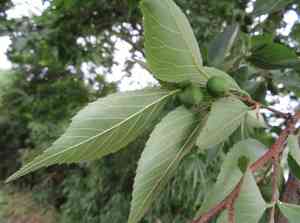
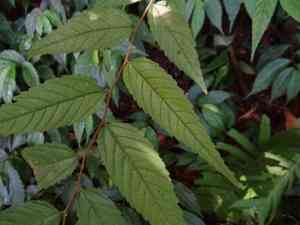
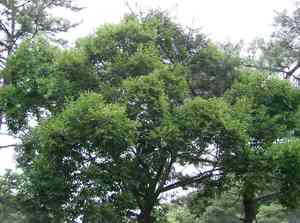
Aphananthe aspera can grow up to 20 meters tall with a trunk diameter exceeding 1 meter. In spring, it develops plate-like roots. The bark is initially light grayish-brown and smooth, but it can develop streaks and cracks with age, and older trees may have peeling bark. The leaves are alternately arranged, oval to narrowly oval, and measure 4 to 10 cm in length. They have serrated edges and taper to a point, with wedge-shaped petioles and three distinct veins. The leaves are thin and covered with fine bristles, giving them a rough, sandpaper-like texture. Blooming in spring, the plant has light green male and female flowers that appear at the base of the leaves. After flowering, it produces green fruits that are 7 to 12 mm in diameter.

Attributes of Muku

Lifespan
Perennial
Plant Type
Tree
Plant Height
25 m
Spread
15 m
Leaf Color
Dark green during the growing season, turning yellow in autumn
Flower Size
1 cm
Flower Color
Yellow Green

ForwardPlant - Identify plants with a snap

Identify and diagnose plants, get toxicity alerts, and explore safety guides for all types of fungi.

Try for Free

Images of Muku

Muku(Aphananthe aspera)

Quickly Identify Muku

1
Identify Aphananthe aspera by its rough, sandpaper-like leaves, serrated leaf margins, and small, greenish-yellow flowers. The tree's bark is grayish and becomes scaly with age.

Scientific Classification of Muku

Phylum
Vascular plants
Class
Dicotyledons
Order
Roses, elms, figs, and allies
Family
Hemp
Genus
Aphananthe
Species
Muku

Planting and Growing of Muku

Care Difficulty
Moderate
Watering Schedule
Every 4 days
Sunlight Requirements
Full sun
Sunshine Duration
4-8 hours
Ideal Temperature
60-77℉
Soil Type
Potting Mix, Peat Mix
Soil pH
6.5-7.5
Fertilizer Type
Balanced
Pruning Season
Spring, Summer
Pruning Area
Branches, Leaves
Pruning Frequency
2 times a year
Repotting Season
Spring
Pot Type
Plastic, Ceramic

water icon How to Water Muku?

When watering Aphananthe aspera, it is essential to ensure the soil is adequately moist but not waterlogged. Ideally, water until you see moisture seeping through the drainage holes of the pot, ensuring even distribution. This usually requires about 500 ml of water, but it can vary depending on the size of the pot and soil composition. The goal is to allow the soil to dry out slightly between waterings, mimicking its natural habitat where occasional rainfall moistens the ground.
What are the symptoms of an underwatered Muku?
What should I do if my Muku is not getting enough water?
What are the symptoms of an overwatered Muku?
How to save an overwatered Muku?

sunlight icon What Are the Sunlight Requirements for Muku?

Sunlight Requirements: Full sun, Partial sun
Duration of light: 3 to 6 hours
Aphananthe aspera flourishes under full sun to partial sun, where exposure to natural light triggers optimal growth, ensuring a sturdy structure and lush leaves.
What is the best lighting setup?
How can I provide ideal lighting indoors?
What benefits does it gain from optimal lighting?
More About Sunlight Requirements Techniques

temperature icon What Is the Ideal Temperature Range for Muku?

Ideal Temperature: 60 ~ 77℉
The ideal temperature range for Aphananthe aspera is between 60°F and 77°F. This range ensures optimal growth and health of the plant. These temperatures mimic the natural conditions of Aphananthe aspera’s native habitat, providing a balance of warmth and coolness, which is essential for its physiological processes.

soil icon What Soil is Best for Muku?

Soil type: Loam, Sandy loam, Clay soil
Soil PH: 6.5 ~ 7.5
Aphananthe aspera thrives in well-drained soil, which prevents waterlogging and ensures roots receive adequate oxygen. This condition is crucial for optimal nutrient uptake, promoting vigorous growth and disease resistance. The plant benefits from nutrient-rich soil that provides essential minerals and organic matter. This nutrient abundance enhances growth efficiency, improving foliage health and encouraging strong, resilient branches. Maintaining consistent soil moisture ensures steady hydration without waterlogging, facilitating proper metabolic functions and reducing stress during dry spells, which supports healthy plant development.

fertilize icon How to Fertilize Muku?

Fertilizer type: Balanced
For Aphananthe aspera, it's essential to balance the fertilizer concentration well. Typically, dilute liquid fertilizer to half the recommended strength. For slow-release granules, use about 200 grams per square meter. This helps the plant absorb nutrients without causing roots to burn.

prune icon How to Prune Muku?

Pruning Time: Spring, Summer, Autumn, Winter
Begin by inspecting the plant thoroughly. Look for any branches that are dead, damaged, or diseased. Carefully cut these back to the base, using clean, sharp pruning shears. This promotes healthy growth and air circulation, preventing future disease. To maintain Aphananthe aspera’s natural beauty, trim back any overgrown branches that disrupt the plant's shape. Make precise cuts just above the node to encourage new growth. This will help the plant maintain its desired size and appearance. Identify areas where branches are densely packed and selectively thin them out. This promotes better light penetration and airflow, which is vital for the health of the inner branches. Avoid over-thinning, as the plant needs enough foliage to produce energy. More About Pruning Techniques

propagate icon How to Propagate Muku plant?

Propagate Time: Spring, Early spring
1
Harvest seeds from mature Aphananthe aspera plants when the fruit is ripe. Make sure they are fully developed as immature seeds are less likely to germinate and produce healthy seedlings.
2
Select healthy stems and cut a 10-15 cm piece with a sharp, disinfected tool. Remove the lower leaves and dip the end in rooting hormone to enhance root development.
3
Plant the seeds in a seedling tray filled with a light, well-draining potting mix. For cuttings, insert into the soil mix and cover it with a plastic bag to maintain humidity, placing them in a warm, bright area.
More About Propagating Techniques

repot icon How to Repot Muku plant?

Repotting frequency: Every 2-3 years
1
You should consider repotting Aphananthe aspera when you notice root-bound conditions, evident by roots emerging from the drainage holes, or the plant's growth slowing significantly. Another sign is when water is draining too quickly through the pot, indicating highly compacted soil.
2
Select a pot that is 2-3 inches larger in diameter than the current one to give the roots ample space to expand. Ensure it has adequate drainage holes to prevent water logging, which can lead to root rot. Opting for a breathable material like terracotta can also help aerate the roots.
3
The ideal soil should be well-drained and able to retain enough moisture without becoming waterlogged. A mix of loam with some perlite or sand ensures good drainage. This type of soil promotes root health by preventing soggy conditions that could lead to rot.

ForwardPlant - Identify plants with a snap

Find the best spots for them to optimize their health, simply using your phone.

Try for Free