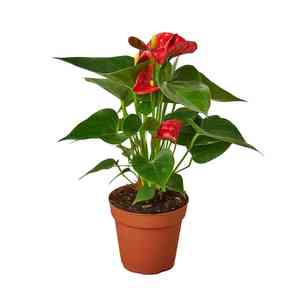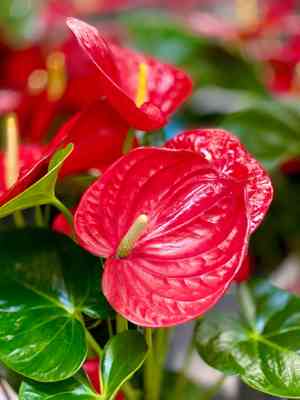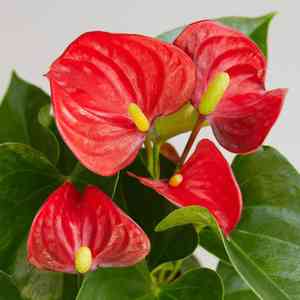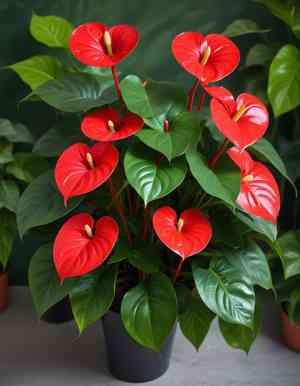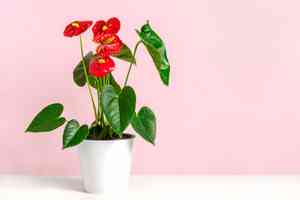
Flamingo flower(Anthurium andraeanum)

Flamingo flower (Anthurium andraeanum)

Also known as: Painter's-palette, Oilcloth flower

The Anthurium andraeanum, commonly known as the Flamingo Flower, is a perennial ornamental plant celebrated for its vivid pink or bright red heart-shaped blooms with striking pistils. In addition to its visual appeal, the Flamingo Flower is reputed for its impressive air-purifying abilities.

Attributes of Flamingo flower

Lifespan
Perennial
Plant Type
Herb
Plant Height
30 cm to 61 cm
Spread
23 cm to 30 cm
Leaf Color
Green
Flower Size
13 cm to 15 cm
Flower Color
Red Yellow White Pink

ForwardPlant - Identify plants with a snap

Identify and diagnose plants, get toxicity alerts, and explore safety guides for all types of fungi.

Try for Free

Images of Flamingo flower

Flamingo flower(Anthurium andraeanum)

Quickly Identify Flamingo flower

1
Anthurium andraeanum can be identified by its glossy, dark green leaves and bright, waxy spathes which come in red, pink, white, or other colors. It also features a yellow to white spadix that stands erect from the spathe. The plant has a clumping growth habit and its leaves are usually heart-shaped and pointed at the tip.

Scientific Classification of Flamingo flower

Phylum
Vascular plants
Class
Monocotyledons
Order
Water plantains and allies
Family
Arum
Genus
Laceleaf
Species
Flamingo flower

Planting and Growing of Flamingo flower

Care Difficulty
Moderate
Watering Schedule
Every 4 days
Sunlight Requirements
Partial sun
Sunshine Duration
6-10 hours
Ideal Temperature
70-85℉
Soil Type
Potting Mix, Peat Mix
Soil pH
5.5-6.5
Fertilizer Type
Balanced
Pruning Season
Spring, Summer
Pruning Area
Branches, Leaves
Pruning Frequency
2 times a year
Repotting Season
Spring
Pot Type
Plastic, Terracotta

water icon How to Water Flamingo flower?

For Anthurium andraeanum, it is crucial to strike a balance between moisture and dryness. Water with approximately 250 ml each time until the soil is evenly moist but not soggy. Check that the top 2-3 cm of the soil feels dry before the next watering.
What are the symptoms of an underwatered Flamingo flower?
What should I do if my Flamingo flower is not getting enough water?
What are the symptoms of an overwatered Flamingo flower?
How to save an overwatered Flamingo flower?
More About Watering Techniques

sunlight icon What Are the Sunlight Requirements for Flamingo flower?

Sunlight Requirements: Partial sun
Duration of light: 2-4 hours sunlight
Anthurium andraeanum thrives best in partial sun conditions, where it receives filtered sunlight for a few hours daily. Ideal lighting ensures optimal growth, intense foliage color, and frequent flowering cycles.
What is the best lighting condition for Anthurium andraeanum?
How can I achieve the ideal lighting for my plant?
What benefits does proper lighting provide?
More About Sunlight Requirements Techniques

temperature icon What Is the Ideal Temperature Range for Flamingo flower?

Ideal Temperature: 70 ~ 85℉
The ideal temperature range for cultivating Anthurium andraeanum is between 70°F and 85°F. Within this range, the plant is able to maintain optimal metabolic activity, ensuring vibrant blooms and healthy foliage. Consistency within these temperatures aids in strong plant development.

soil icon What Soil is Best for Flamingo flower?

Soil type: Loam, Peat soil, Sandy loam
Soil PH: 5.5 ~ 6.5
Anthurium andraeanum thrives in well-draining soil that prevents waterlogging, which can lead to root rot. Such soil allows excess water to escape, keeping roots healthy and oxygenated. The presence of rich organic matter in the soil helps provide essential nutrients to the plant, enhancing its growth and vibrant flower production. Organic matter improves soil texture and nutrient availability. A balanced moisture-retentive soil ensures that Anthurium andraeanum receives consistent hydration. This supports steady growth and maintains the plant's lush appearance. More About Soil

fertilize icon How to Fertilize Flamingo flower?

Fertilizer type: Balanced
For Anthurium andraeanum, a balanced fertilizer with an N-P-K ratio of 20-20-20 or similar is appropriate. Use at half the recommended strength for general-purpose houseplants to prevent over-fertilization. More About Fertilizing Techniques

prune icon How to Prune Flamingo flower?

Pruning Time: Spring, Summer
Start by identifying and removing any dead or yellowing leaves. These leaves can harbor diseases and pests, which could spread to healthier parts of the plant. Gently cut these leaves at the base. Cut back spent flowers to encourage more blooms. Use your sharp scissors or shears to cut the flower stem near the base. Be careful not to damage nearby stems or leaves. After dealing with dead leaves and flowers, focus on shaping the plant. Trim leggy growth to maintain a balanced structure, ensuring light penetration and promoting an aesthetically pleasing form. More About Pruning Techniques

propagate icon How to Propagate Flamingo flower plant?

Propagate Time: Spring,Early summer
1
Start by selecting mature Anthurium andraeanum plants that are healthy and show vigorous growth. This ensures that the divided parts or tissue cultures will have a strong chance of successful rooting and growth.
2
Before proceeding, sterilize all tools such as shears and containers. This is crucial to prevent the introduction of infections or diseases during the propagation process.
3
Carefully separate the root clumps for division propagation. Each division should have a set of healthy roots and a few leaves to promote successful establishment and growth.
More About Propagating Techniques

repot icon How to Repot Flamingo flower plant?

Repotting frequency: Every 1-2 years
1
Anthurium andraeanum should be repotted when you notice that the roots are starting to circle the bottom of the pot or poke through the drainage holes. Another signal is when the plant's growth seems stunted, which indicates it's outgrown its current pot.
2
Select a pot that is 1 to 2 inches larger in diameter than the current pot, with excellent drainage holes. A pot that's too large could cause waterlogging, whereas inadequate drainage can lead to root rot—both detrimental to the plant's health.
3
Opt for a well-draining mix containing peat, pine bark, and perlite. This blend ensures adequate moisture retention while providing the necessary aeration for the roots, which helps prevent conditions such as root rot and promotes healthy growth.
More About Repotting Techniques

ForwardPlant - Identify plants with a snap

Find the best spots for them to optimize their health, simply using your phone.

Try for Free

Toxicity of Flamingo flower

Is Flamingo flower toxic to humans?

Every part of the flamingo flower is toxic to humans due to the presence of calcium oxalate. Poisoning can happen when any portion of the plant is chewed or ingested, and an allergic reaction might also result from coming into contact with the sap. Symptoms of poisoning are generally moderate in severity and may encompass pain and irritation in the mouth and throat, difficulty swallowing, hoarseness, and the development of blisters in the mouth and throat. A skin rash, burning sensation, inflammation, and irritation can arise from exposure to the sap. Children are most at risk for poisoning due to accidental ingestion or contact, as these flowers are frequently used as houseplants and ornamental cut flowers.

Is Flamingo flower toxic to cat?

The flamingo flower presents a toxic hazard to cats, representing a serious health risk if ingested. Cats may unintentionally consume various parts of this plant, resulting in poisoning. Upon consumption, affected cats may display distressing symptoms such as gastrointestinal disturbances, excessive drooling, or challenges with swallowing. Every part of the flamingo flower is harmful, indicating the importance of keeping cats away from this plant. If a cat exhibits signs of distress after exposure to the flamingo flower, prompt veterinary intervention is essential since early treatment is vital for a positive outcome.

Is Flamingo flower toxic to dog?

The Flamingo flower is regarded as toxic for dogs. If dogs consume any part of this plant, they face the possibility of poisoning owing to the inherent toxicity found throughout the complete plant. Dogs might inadvertently ingest flamingo flower while investigating or chewing on home plants. Signs of poisoning can manifest as vomiting, diarrhea, excessive drooling, and irritation of the mouth. Should a dog show any symptoms of distress after exposure to flamingo flower, it is crucial to obtain prompt veterinary assistance to safeguard their health and receive necessary treatment.

Identify toxic plants for your safety

Learn which plants are harmful to you and your pets, and make informed choices for a safer home!

Try for Free
WARNING
The judgment on toxicity and danger is for reference only. We DO NOT GUARANTEE any accuracy of such judgment. Therefore, you SHALL NOT rely on such judgment. It is IMPORTANT TO SEEK PROFESSIONAL ADVICE in advance when necessary.
More About Toxic Techniques