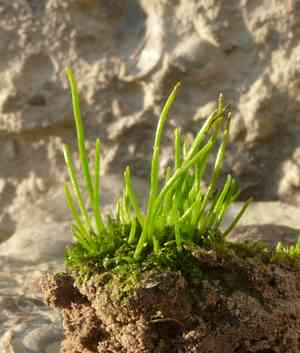
Hornwort (Anthoceros) (Anthoceros)
Also known as: Hornworts
Anthoceros is a genus of hornworts, which are non-vascular plants characterized by horn-like sporophytes. These plants are commonly found in damp environments and are known for their simple yet unique structure.
In This Article
Attributes of Hornwort (Anthoceros)
Lifespan
Annual
Plant Height
Up to 5 cm
Spread
Not applicable
Leaf Color
Green
Flower Size
Not applicable
Flower Color
Not applicable
Images of Hornwort (Anthoceros)
Quickly Identify Hornwort (Anthoceros)
1
Anthoceros can be identified by their horn-shaped sporophytes and thalloid structure. They typically have a flattened, green thallus with horn-like structures that protrude from it.
Scientific Classification of Hornwort (Anthoceros)
Phylum
Anthocerotophyta
Class
Anthocerotopsida
Order
Anthocerotales
Family
Anthocerotaceae
Genus
Anthoceros
Planting and Growing of Hornwort (Anthoceros)
Care Difficulty
Moderate
Watering Schedule
Every 3 days
Sunlight Requirements
Partial sun
Sunshine Duration
4-8 hours
Ideal Temperature
60-75℉
Soil Type
Potting Mix, Peat Mix
Soil pH
5.5-7
Fertilizer Type
Balanced
Pruning Season
Spring, Summer
Pruning Area
Branches, Leaves
Pruning Frequency
2 times a year
Repotting Season
Spring
Pot Type
Plastic, Terracotta
 How to Water Hornwort (Anthoceros)?
When watering Anthoceros, it's essential to ensure the plant's substrate is damp but not waterlogged. Typically, around 50 ml of water per session is enough, but make sure water does not pool on the surface.
What are the symptoms of an underwatered Hornwort (Anthoceros)?
›
What should I do if my Hornwort (Anthoceros) is not getting enough water?
›
What are the symptoms of an overwatered Hornwort (Anthoceros)?
›
How to save an overwatered Hornwort (Anthoceros)?
›
 What Are the Sunlight Requirements for Hornwort (Anthoceros)?
Anthoceros thrives in partial sun to full shade, where light is filtered yet abundant. Optimal lighting ensures maximum photosynthesis efficiency, supporting robust and vibrant plant health.
Solution for Ideal Light
›
Getting Ideal Exposure
›
Benefits of Ideal Light
›
 What Is the Ideal Temperature Range for Hornwort (Anthoceros)?
For optimal growth, it's crucial to maintain Anthoceros within its ideal temperature range of 60°F to 75°F. This range provides the plant with the best conditions to carry out physiological processes efficiently. Temperatures in this range ensure optimal enzyme activity and cellular functions, which are essential for Anthoceros to perform photosynthesis and nutrient absorption effectively.
 What Soil is Best for Hornwort (Anthoceros)?
Anthoceros thrives in soils that can retain moisture efficiently. This ensures the plant remains hydrated, especially during dry spells, promoting better growth and sustaining its delicate structure. While moisture is important, excessive water can be detrimental. Well-drained soil prevents waterlogging and root rot, ensuring the plant receives optimal conditions to flourish. Nitrogen-rich soil supports the nutrient needs of Anthoceros, aiding in its photosynthesis process and overall vitality, resulting in a lush and vibrant plant.
 How to Fertilize Hornwort (Anthoceros)?
For Anthoceros, applying fertilizer must be done with care as they are sensitive to nutrients. Use a diluted liquid fertilizer at one quarter strength to avoid overwhelming the plant. Ensure the soil is moist before applying to prevent root burn.
 How to Prune Hornwort (Anthoceros)?
Start by inspecting the entire plant for any dead or yellowing parts. Use sterilized pruning tools to carefully trim away these parts. Follow the natural shape of the plant to maintain its aesthetic and healthy growth. Post-pruning, water the plant adequately and provide it with a balanced fertilizer to help it recover and grow new shoots.
 How to Propagate Hornwort (Anthoceros) plant?
1
To propagate Anthoceros, begin by collecting mature spores from the plant. Use a clean and dry surface to catch the spores from the spore-producing structures, ensuring that you gather them in dry weather to prevent moisture from hindering spore viability.
2
Prepare a suitable growing medium composed of a mix of sterilized peat and sand. This medium should be placed in a shallow tray or pot that allows good drainage, with a fine layer of sand on top to create an ideal germination surface for the spores.
3
Evenly sprinkle the collected spores over the surface of the prepared medium. Do not cover the spores with additional medium, as they need light to germinate. Use a fine mist sprayer to gently moisten the surface without disturbing the placement of the spores.
 How to Repot Hornwort (Anthoceros) plant?
1
Repot when Anthoceros outgrows its container or shows signs of poor drainage. Indications include rhizoids escaping the pot, slowed growth, or water pooling on the soil surface. Spring and summer are ideal for repotting, as active growth supports recovery.
2
Select a pot slightly larger than the current one with ample drainage holes. This ensures adequate root space without overwhelming the plant, promoting healthy development and preventing root rot due to excess moisture.
3
Opt for a moist, well-drained soil mix, rich in organic matter. This retains necessary moisture while providing aeration to the roots, crucial for Anthoceros’ health. Ensure consistently damp conditions without waterlogging to mimic a semi-aquatic environment.

