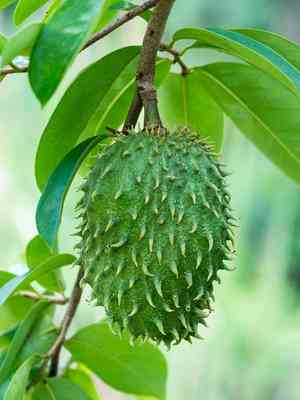
Soursop(Annona muricata)

Soursop (Annona muricata)

Also known as: Guyabano

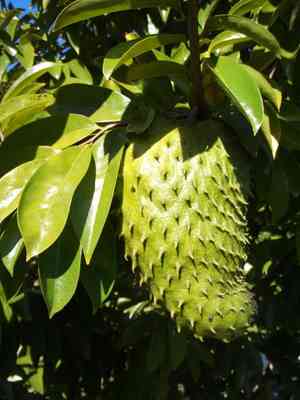
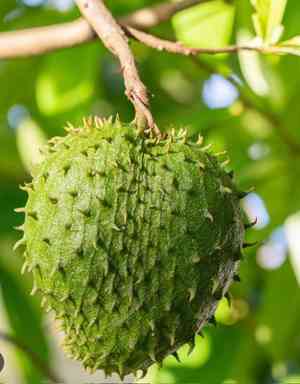
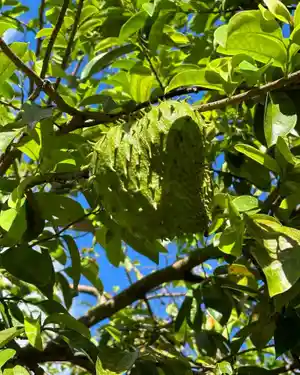
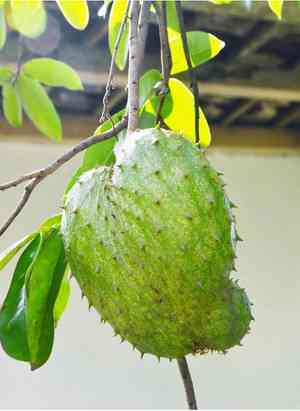
The soursop tree (*Annona muricata*) is a tropical evergreen that can reach heights of up to 9 meters. It yields the guanabana fruit, which typically ripens between mid-summer and mid-winter. This fruit is characterized by its green, spiky exterior and emits a fragrance reminiscent of pineapple. The flavor is a unique blend of strawberry and pineapple, with a creamy texture similar to banana. The guanabana can be enjoyed fresh or utilized in making juices and smoothies.

Attributes of Soursop

Lifespan
Perennial
Plant Type
Tree
Plant Height
9 m
Spread
3 m
Leaf Color
Green Blue
Flower Size
4 cm
Flower Color
Yellow Green

ForwardPlant - Identify plants with a snap

Identify and diagnose plants, get toxicity alerts, and explore safety guides for all types of fungi.

Try for Free

Images of Soursop

Soursop(Annona muricata)

Quickly Identify Soursop

1
Recognize Annona muricata by its large, dark green, leathery leaves; its spiny green fruit; and its fragrant yellow-green flowers. The leaves release a strong odor when crushed.

Scientific Classification of Soursop

Phylum
Vascular plants
Class
Dicotyledons
Order
Magnoliales
Family
Custard apple
Genus
Guanabana
Species
Soursop

Planting and Growing of Soursop

Care Difficulty
Hard
Watering Schedule
Every 4 days
Sunlight Requirements
Partial sun
Sunshine Duration
4-8 hours
Ideal Temperature
75-85℉
Soil Type
Potting Mix, Peat Mix
Soil pH
5-6.5
Fertilizer Type
Balanced
Pruning Season
Spring, Summer
Pruning Area
Branches, Leaves
Pruning Frequency
Once a year
Repotting Season
Spring
Pot Type
Plastic, Ceramic

water icon How to Water Soursop?

For Annona muricata, the watering amount per session should be about 500 ml. The key is to ensure the soil is consistently moist but not soggy. Water until it begins to trickle out of the drainage holes, indicating the soil is adequately hydrated without waterlogging.
What are the symptoms of an underwatered Soursop?
What should I do if my Soursop is not getting enough water?
What are the symptoms of an overwatered Soursop?
How to save an overwatered Soursop?
More About Watering Techniques

sunlight icon What Are the Sunlight Requirements for Soursop?

Sunlight Requirements: Partial sun
Duration of light: 4-6 hours daily
Annona muricata prefers partial sunlight. This ensures photosynthesis occurs effectively, promoting robust foliage, healthy flowers, and steady fruit production.
What is the best light level?
How can you ensure ideal light conditions?
What are the benefits of achieving ideal lighting?
More About Sunlight Requirements Techniques

temperature icon What Is the Ideal Temperature Range for Soursop?

Ideal Temperature: 75 ~ 85℉
The ideal temperature range for Annona muricata cultivation is between 75°F and 85°F. This range ensures optimal growth and fruit production. Within this temperature bracket, the plant can maximize its photosynthesis processes, leading to healthier leaves and fruit set. Maintaining this temperature range consistently will result in robust growth.

soil icon What Soil is Best for Soursop?

Soil type: Loam, Sandy loam, Acidic soil
Soil PH: 5 ~ 6.5
Annona muricata thrives in well-drained soils, preventing waterlogging and root rot. Adequate drainage enhances aeration, promoting healthy root development and optimizing nutrient uptake. This plant requires soil rich in organic matter, providing essential nutrients for growth. High organic content supports vigorous plant vigor, resulting in healthier leaves and fruit production. Consistent moisture is key for Annona muricata, but it's crucial to avoid overly saturated soil. Maintaining moderate moisture ensures hydration without promoting fungal growth. More About Soil

fertilize icon How to Fertilize Soursop?

Fertilizer type: Balanced
For Annona muricata, known as soursop, the fertilizer amount largely depends on its growth stage. During its growing season, it requires a balanced amount of nutrients, ideally using a fertilizer with an N-P-K (Nitrogen-Phosphorous-Potassium) ratio of around 8-4-8. For seedlings, use about 1/2 pound every 3 months and gradually increase this to 1-1/2 pounds as the tree matures. More About Fertilizing Techniques

prune icon How to Prune Soursop?

Pruning Time: Spring, Summer
Prune your Annona muricata during early Spring or Summer, when the tree is not actively growing. Begin by removing lower branches to encourage upward growth, and thin out the canopy to maintain a balanced shape. Wear gloves to protect yourself from thorns and sap. It's important to maintain a clean workspace by removing all cut branches promptly, as leaving debris can encourage pathogens. After pruning, apply a balanced fertilizer to aid recovery and boost growth. Ensure the tree is well-watered but don't overwater, as excess moisture can lead to rot. Monitor the plant for any signs of stress or disease. More About Pruning Techniques

propagate icon How to Propagate Soursop plant?

Propagate Time: Spring, Early Summer, Autumn
1
Soak Annona muricata seeds in warm water for 24 hours before planting. This pre-treatment helps to soften the seed coat and enhances germination rates. Ensure the seeds are fresh to improve the likelihood of success.
2
Select healthy, disease-free stems for cuttings, ideally semi-hardwood. Cut them at an angle just below a node, and remove excess leaves to minimize moisture loss. Treat the cut ends with a rooting hormone.
3
Use the cleft grafting technique in spring or early summer. Carefully join a scion of Annona muricata to a compatible rootstock, ensuring cambium layers align. Secure the graft union with grafting tape to protect and promote fusion.
More About Propagating Techniques

repot icon How to Repot Soursop plant?

Repotting frequency: Every 2-3 years
1
Annona muricata signals the need for repotting when you notice slow growth, roots emerging from drainage holes, or water not absorbing well. The best time to undertake this is during Spring or Summer when the plant is in its active growth phase, allowing it to recover swiftly from the stress of repotting.
2
Select a pot that is one size larger with drainage holes. This ensures healthy root growth and prevents waterlogging, a common enemy of Annona muricata. Opting for a clay pot can also be advantageous as it allows for better air circulation around the root zone.
3
The ideal soil for repotting is a well-draining, organic-rich mix. This is beneficial as it retains necessary moisture while allowing excess to drain away, preventing root rot and encouraging robust, healthy plant development.
More About Repotting Techniques

ForwardPlant - Identify plants with a snap

Find the best spots for them to optimize their health, simply using your phone.

Try for Free

Toxicity of Soursop

Is Soursop toxic to cat?

Cats can face a moderate risk of toxicity if they consume certain parts of the soursop plant, including its bark, leaves, or seeds. Poisoning typically occurs when these components are ingested by cats. Symptoms of poisoning can manifest as physical discomfort and may encompass various negative health reactions. Due to the potential danger that soursop poses, it is vital for cat owners to keep a watchful eye on their pets and restrict their access to this plant. In the event that a cat consumes any part of the soursop, it is imperative to seek prompt medical attention at a veterinary clinic to ensure the cat's health and safety.

Is Soursop toxic to dog?

Soursop presents a moderate toxicity risk for dogs. If canines consume any of its toxic components, such as the bark, leaves, or seeds, they may experience poisoning. Symptoms of ingestion can include vomiting, diarrhea, lethargy, or more serious manifestations, depending on the quantity ingested. It is vital for dog owners to keep a vigilant eye on their pets and restrict their access to soursop. Should a dog ingest any part of this plant, seeking prompt veterinary care is crucial for appropriate treatment and management.

Identify toxic plants for your safety

Learn which plants are harmful to you and your pets, and make informed choices for a safer home!

Try for Free
WARNING
The judgment on toxicity and danger is for reference only. We DO NOT GUARANTEE any accuracy of such judgment. Therefore, you SHALL NOT rely on such judgment. It is IMPORTANT TO SEEK PROFESSIONAL ADVICE in advance when necessary.
More About Toxic Techniques