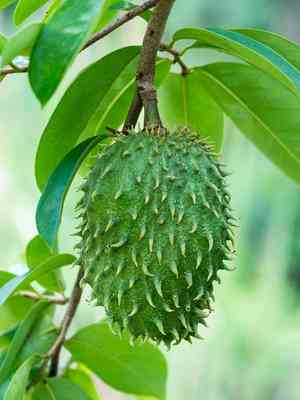
Soursop (Annona muricata)
Also known as: Guyabano
The soursop tree (*Annona muricata*) is a tropical evergreen that can reach heights of up to 9 meters. It yields the guanabana fruit, which typically ripens between mid-summer and mid-winter. This fruit is characterized by its green, spiky exterior and emits a fragrance reminiscent of pineapple. The flavor is a unique blend of strawberry and pineapple, with a creamy texture similar to banana. The guanabana can be enjoyed fresh or utilized in making juices and smoothies.
Attributes of Soursop
Images of Soursop
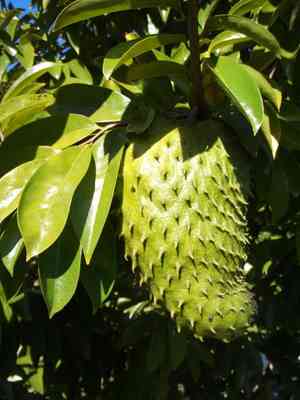
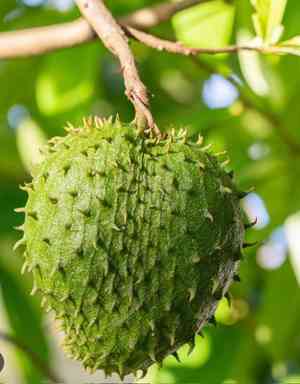
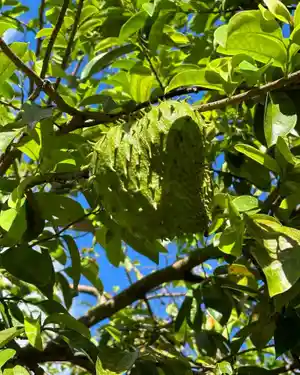
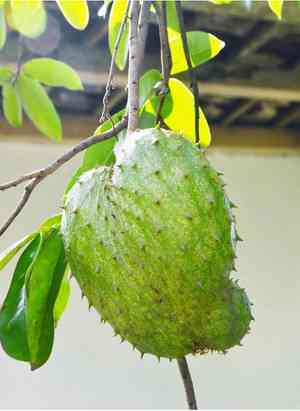
Quickly Identify Soursop
Scientific Classification of Soursop
Planting and Growing of Soursop
 How to Water Soursop?
 What Are the Sunlight Requirements for Soursop?
 What Is the Ideal Temperature Range for Soursop?
 What Soil is Best for Soursop?
 How to Fertilize Soursop?
 How to Prune Soursop?
 How to Propagate Soursop plant?
 How to Repot Soursop plant?
Toxicity of Soursop
Is Soursop toxic to cat?
Cats can face a moderate risk of toxicity if they consume certain parts of the soursop plant, including its bark, leaves, or seeds. Poisoning typically occurs when these components are ingested by cats. Symptoms of poisoning can manifest as physical discomfort and may encompass various negative health reactions. Due to the potential danger that soursop poses, it is vital for cat owners to keep a watchful eye on their pets and restrict their access to this plant. In the event that a cat consumes any part of the soursop, it is imperative to seek prompt medical attention at a veterinary clinic to ensure the cat's health and safety.
Is Soursop toxic to dog?
Soursop presents a moderate toxicity risk for dogs. If canines consume any of its toxic components, such as the bark, leaves, or seeds, they may experience poisoning. Symptoms of ingestion can include vomiting, diarrhea, lethargy, or more serious manifestations, depending on the quantity ingested. It is vital for dog owners to keep a vigilant eye on their pets and restrict their access to soursop. Should a dog ingest any part of this plant, seeking prompt veterinary care is crucial for appropriate treatment and management.



