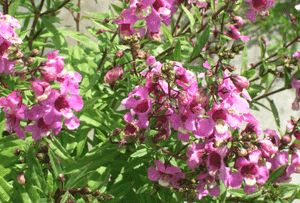
Angelonia (Angelonia angustifolia)
Also known as: Summer snapdragon, Mauve
Angelonia is often confused with snapdragons due to their similar look. However, unlike snapdragons, Angelonia thrives and blooms in the summer heat. Additionally, it has a pleasant, light, fruity scent.
In This Article
Attributes of Angelonia
Lifespan
Perennial, Annual
Plant Type
Herb
Plant Height
30 cm to 50 cm
Spread
10 cm to 30 cm
Leaf Color
Green
Flower Size
1.9 cm
Flower Color
White Purple Blue Pink Variegated
Images of Angelonia
Quickly Identify Angelonia
1
Glossy lance-shaped foliage up to 18 inches (45 cm) tall.
2
Abundant small two-lipped snapdragon-like flowers in various colors.
3
Explosive sub-globose brown capsule for seed dispersal.
4
Narrow, oblong leaves up to 3 inches (7.6 cm) long with toothed margins.
5
Leaves release aromatic scent resembling apples or grape soda when rubbed.
Scientific Classification of Angelonia
Phylum
Vascular plants
Class
Dicotyledons
Order
Lamiales
Family
Plantain
Genus
Angelonia
Species
Angelonia
Planting and Growing of Angelonia
Care Difficulty
Easy
Watering Schedule
Every 8 days
Sunlight Requirements
Full sun
Sunshine Duration
6-10 hours
Ideal Temperature
65-80℉
Soil Type
Potting Mix, Peat Mix
Soil pH
6.5-7.5
Fertilizer Type
Balanced
Pruning Season
Spring, Summer
Pruning Area
Branches, Leaves
Pruning Frequency
2 times a year
Repotting Season
Spring
Pot Type
Plastic, Ceramic
 How to Water Angelonia?
Angelonia angustifolia thrives when its soil is evenly moist but not soggy. Aim for about 250 ml of water per session, ensuring the entire root zone is hydrated but not waterlogged. Water thoroughly until you see a bit of water drainage from the bottom of the pot.
What are the symptoms of an underwatered Angelonia?
›
What should I do if my Angelonia is not getting enough water?
›
What are the symptoms of an overwatered Angelonia?
›
How to save an overwatered Angelonia?
›
 What Are the Sunlight Requirements for Angelonia?
Angelonia angustifolia flourishes in full sun to partial sun conditions. Ample sunlight ensures optimal bloom production and keeps the plant's foliage lush and vibrant.
More About Sunlight Requirements Techniques→
How much light does Angelonia angustifolia need?
›
How to provide ideal lighting conditions for Angelonia angustifolia?
›
What are the benefits of ideal lighting for Angelonia angustifolia?
›
 What Is the Ideal Temperature Range for Angelonia?
For Angelonia angustifolia, an ideal temperature range of 65 to 80°F ensures healthy growth and vibrant blooming. This range supports key physiological processes, helping to maintain the plant's overall health.
 What Soil is Best for Angelonia?
Angelonia angustifolia thrives in well-drained soil, which prevents water from pooling around the roots and causing root rot. Adequate drainage ensures that the roots receive the necessary oxygen they need to function optimally, promoting robust growth and profuse blooming. This plant benefits from nutrient-rich soils that offer a mix of organic matter and essential minerals. Nutrient-rich soil supports sustained leaf and flower development, resulting in lush foliage and vibrant blooms throughout the growing season. Soils that retain moderate moisture levels are ideal for Angelonia angustifolia. These soils provide a consistent but not overwhelming water supply, helping to maintain hydration without encouraging fungal disease or water stress.
 How to Fertilize Angelonia?
When applying fertilizer to Angelonia angustifolia, it's crucial to ensure you're using the right amount to promote healthy growth. Use a balanced liquid fertilizer diluted to half its recommended strength. For solid fertilizers, disperse them evenly, avoiding direct contact with the stems and using approximately half the label-recommended dose.
 How to Prune Angelonia?
Begin by inspecting the plant for any dead or fading flowers, which should be snipped just above the nearest pair of leaves. Use clean, sharp scissors or pruning shears to make precise cuts, always aiming to maintain a rounded and full shape. Cutting back the stems by a third can invigorate the plant to produce new, vigorous growth and promote a dense array of flowering. This practice not only enhances the plant's aesthetic but also ensures better air circulation among the foliage, reducing the risk of disease.
More About Pruning Techniques→
 How to Propagate Angelonia plant?
1
Begin by soaking Angelonia angustifolia seeds in water for a few hours to enhance germination rates. This softens the seed coat and makes it easier for the seedlings to emerge.
2
Choose a healthy, non-flowering stem from the plant. Make a diagonal cut below a node to encourage root development. Remove any lower leaves and place the cutting in water or rooting hormone before planting in soil.
3
For both seeds and cuttings, plant carefully in potting soil. Ensure that the soil remains consistently moist but not soggy. Water gently to avoid displacing the seeds or cuttings.
 How to Repot Angelonia plant?
1
Angelonia angustifolia shows signs of needing repotting when roots start to emerge from the bottom drainage holes or when growth slows. Typically, you should consider repotting during the spring or summer when the plant is actively growing.
2
Select a pot that is one size larger than the current one, preferably with drainage holes to prevent waterlogging. A slightly larger pot encourages room for root growth, which results in a healthier plant while also preventing root rot.
3
Opt for a well-draining potting mix that facilitates proper air circulation and moisture retention. A good mix helps prevent root rot and ensures that the plant receives the necessary nutrients for vigorous growth.



