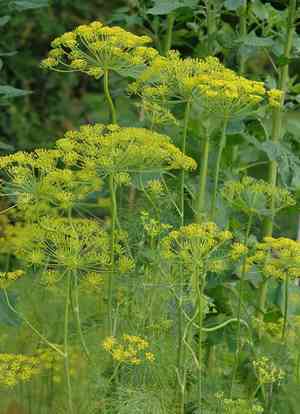
Dill (Anethum graveolens)
Also known as: Dill, Lao coriander
Dill, characterized by its feathery, fine leaves, is a versatile herb extensively used in cooking. It can be utilized both in its dried form and as a fresh garnish. Dill boasts a rich history as a flavoring herb, even being discovered in ancient Egyptian tombs dating back 3400 years. In North America, it is particularly renowned for its role in giving dill pickles their unique taste.
In This Article
Attributes of Dill
Lifespan
Annual
Plant Type
Herb
Plant Height
40 cm to 60 cm
Spread
60 cm to 90 cm
Leaf Color
Green Blue
Flower Size
2 cm to 9 cm
Flower Color
Yellow
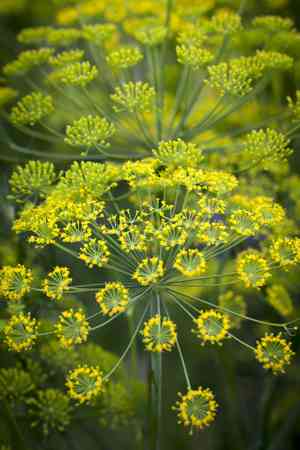
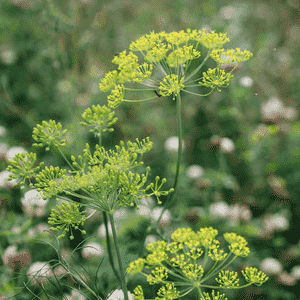
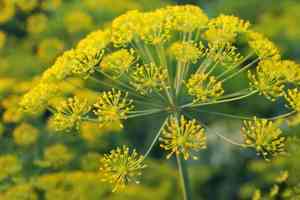
Images of Dill
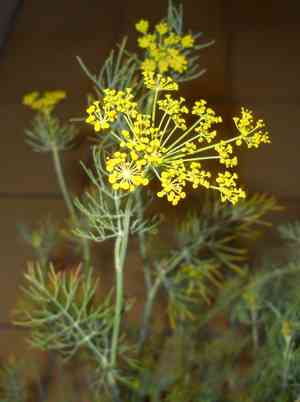
Quickly Identify Dill
1
Fine, feathery leaves split into delicate thread-like segments.
2
Umbrella-shaped clusters of tiny yellow flowers in compound umbels.
3
Fruit transitions from vibrant green to dark brown, with distinct longitudinal ridges.
4
Blue-green aromatic leaves finely divided into soft, needle-like segments.
5
Erect, hollow stem with white vertical striations, requiring support against strong winds.
Scientific Classification of Dill
Phylum
Vascular plants
Class
Dicotyledons
Order
Apiales
Family
Umbellifers
Genus
Anethum
Species
Dill
Planting and Growing of Dill
Care Difficulty
Easy
Watering Schedule
Every 5 days
Sunlight Requirements
Full sun
Sunshine Duration
6-10 hours
Ideal Temperature
60-77℉
Soil Type
Potting Mix, Peat Mix
Soil pH
6.5-7.5
Fertilizer Type
Balanced
Pruning Season
Spring, Summer
Pruning Area
Branches, Leaves
Pruning Frequency
2 times a year
Repotting Season
Spring
Pot Type
Plastic, Ceramic
 How to Water Dill?
For Anethum graveolens, it's essential to ensure the soil is moist but not waterlogged. Aim to provide about 250 milliliters of water per session. The water should be enough to reach the roots without flooding them, allowing the plant to stay hydrated while preventing root rot.
What are the symptoms of an underwatered Dill?
›
What should I do if my Dill is not getting enough water?
›
What are the symptoms of an overwatered Dill?
›
How to save an overwatered Dill?
›
 What Are the Sunlight Requirements for Dill?
Anethum graveolens flourishes in full to partial sun environments, ideally within six to eight hours of sun. Adequate light fosters healthy leaf development and enhances the plant's aromatic properties.
More About Sunlight Requirements Techniques→
What is the ideal amount of sunlight for Anethum graveolens?
›
How to ensure Anethum graveolens receives optimal sunlight?
›
What are the benefits of ideal sunlight for Anethum graveolens?
›
 What Is the Ideal Temperature Range for Dill?
For optimal growth, dill (Anethum graveolens) thrives in temperatures ranging from 60°F to 77°F. These temperatures provide the ideal environment for photosynthesis and nutrient absorption, allowing the plant to flourish and produce flavorful leaves. Maintaining these temperatures consistently ensures healthy growth and maximizes yield.
 What Soil is Best for Dill?
Anethum graveolens requires well-draining soil to prevent root rot. Sandy or loamy soil ensures proper water percolation and helps maintain healthy root systems. Good drainage prevents waterlogged conditions, which can weaken and damage the plant over time, thus promoting strong and vigorous growth. To thrive, this plant demands soil rich in nutrients, particularly with adequate amounts of nitrogen, phosphorus, and potassium. This nutrient-rich environment supports its brisk growth and enhances flavor and aroma, optimizing the plant for culinary or medicinal uses. Amend soil with organic matter for best results. Loose, airy soil ensures that Anethum graveolens roots have access to oxygen, which is critical for respiration and nutrient uptake. Proper aeration helps prevent compaction and supports a robust root system, ultimately leading to a healthier plant and more vigorous foliage.
 How to Fertilize Dill?
Anethum graveolens, commonly known as dill, typically requires moderate fertilization. Use a balanced liquid fertilizer diluted to half strength, approximately 1 teaspoon per gallon of water. When using slow-release fertilizers, apply around 1 to 2 tablespoons per plant, ensuring not to overburden the soil with excess nutrients.
 How to Prune Dill?
Begin pruning by ensuring your tools are clean to prevent disease. Cut back the flower stalks as soon as they appear to prolong the life of the plant and encourage bushier growth. Remove any yellowing or dead leaves at the base. Pruning will stimulate leaf production, ensuring a more abundant harvest.
More About Pruning Techniques→
 How to Propagate Dill plant?
1
Fill the seed tray with potting mix, ensuring it is evenly spread and lightly compressed to provide a stable base for seed germination. Make shallow holes for sowing the seeds.
2
Place dill seeds in the prepared shallow holes, evenly spaced apart. Lightly cover the seeds with potting mix, making sure they are not buried too deep to ensure successful germination.
3
Gently water the seeds to ensure the potting mix is moist but not waterlogged. Place the seed tray in a warm, bright location that receives indirect sunlight to encourage germination.
 How to Repot Dill plant?
1
The signals that Anethum graveolens needs repotting include roots visibly circling the bottom of the pot, evident stunted growth, and poor water retention in soil. Ideally, you should look for these signs at the end of winter or early spring to start the repotting process.
2
When selecting a pot for Anethum graveolens, it's important to opt for one that is about 2 inches larger in diameter than the current pot. Ceramic pots with drainage holes are preferable because they allow for airflow and prevent root rot, promoting healthier plant growth.
3
Anethum graveolens thrives in loose, well-draining soil. Utilizing a potting mix that includes sand, perlite, or coco coir helps maintain the right balance of moisture and aeration, ensuring the roots don't become waterlogged, ultimately enhancing plant health.
Learn More About Dill Diseases
Anthracnose
Bacterial Leaf Spot
Bacterial Soft Rot
Bacterial Wilt
Chemical Injury
Damping-off
Downy Mildew
Drought Stress
Fusarium Wilt
Gray Mold
Leaf Spot
Mosaic
Nutrient Deficiency
Nutrient Toxicity
Powdery Mildew
Root Rot
Root-knot Nematode
Rusts
Sooty Mold
Spider Mites
Temperature Stress
Thrips Damage
White Mold



