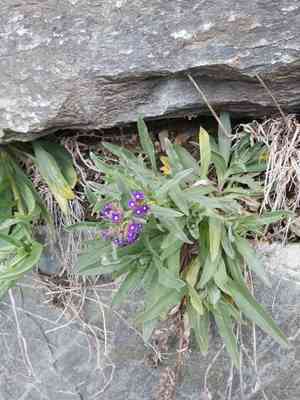
Buglosses (Anchusa) (Anchusa)
Also known as: Bugloss
Buglosses, comprising around 35 species, are native to Europe, North Africa, South Africa, and Western Asia, and have also been introduced to the United States. These plants can be annual, biennial, or perennial and are generally herbaceous, reflecting the traits of the borage family. Their leaves are simple or wavy and covered with stiff hairs. The flowers are typically bright blue and maintain their color for an extended period. Characterized by small, radially symmetrical blooms, buglosses have flowers with five sepals united at the base and five petals forming a narrow tube. These flowers grow in several axillary cymes or clusters at the plant's end.
In This Article
Attributes of Buglosses (Anchusa)
Lifespan
Biennial, Perennial
Plant Height
1 to 3 feet
Spread
1 to 2 feet
Leaf Color
Green
Flower Size
0.5 to 1 inch
Flower Color
Blue, Purple
Images of Buglosses (Anchusa)
Quickly Identify Buglosses (Anchusa)
1
Look for rough, hairy leaves and bright blue or purple flowers. The plants typically feature a coiled inflorescence known as scorpiod cyme.
Scientific Classification of Buglosses (Anchusa)
Phylum
Magnoliophyta
Class
Magnoliopsida
Order
Boraginales
Family
Boraginaceae
Genus
Anchusa
Planting and Growing of Buglosses (Anchusa)
Care Difficulty
Moderate
Watering Schedule
Every 3 days
Sunlight Requirements
Full sun
Sunshine Duration
6-8 hours
Ideal Temperature
65-75℉
Soil Type
Potting Mix, Peat Mix
Soil pH
6.5-7.5
Fertilizer Type
Balanced
Pruning Season
Spring, Summer
Pruning Area
Branches, Leaves
Pruning Frequency
2 times a year
Repotting Season
Spring
Pot Type
Plastic, Ceramic
 How to Water Buglosses (Anchusa)?
Anchusa plants prefer moderately moist soil, so aim to provide about 500 milliliters of water per session. The key is to keep the soil consistently damp but not soaked, ensuring it dries out slightly between waterings. Overwatering can lead to root rot, so it's vital to strike the right balance.
What are the symptoms of an underwatered Buglosses (Anchusa)?
›
What should I do if my Buglosses (Anchusa) is not getting enough water?
›
What are the symptoms of an overwatered Buglosses (Anchusa)?
›
How to save an overwatered Buglosses (Anchusa)?
›
 What Are the Sunlight Requirements for Buglosses (Anchusa)?
Anchusa thrives in full to partial sun environments where it can benefit from robust lighting that encourages flowering and strong growth.
Solution for Ideal Lighting
›
Steps to Achieve Ideal Lighting
›
Benefits of Ideal Lighting
›
 What Is the Ideal Temperature Range for Buglosses (Anchusa)?
The ideal temperature range for growing Anchusa is between 65°F and 75°F. This range provides an optimal environment for growth and development, ensuring that the plant can thrive without being stressed by temperature fluctuations outside this range. Within these temperatures, Anchusa can efficiently conduct photosynthesis, maintain healthy growth, and produce vibrant flowers. Additionally, maintaining this temperature range will help in minimizing the risk of diseases and pests that often affect plants under stress.
 What Soil is Best for Buglosses (Anchusa)?
Anchusa thrives in soil that drains well, avoiding waterlogging which can lead to root rot. Well-draining soil ensures the roots receive the right balance of air and moisture, promoting healthy growth and vibrant blooms. This plant benefits from soil rich in organic matter, which provides essential nutrients. Compost or aged manure can be added to the soil to enhance its fertility, directly contributing to the plant's lush foliage and overall vigor. Soil that retains moderate moisture is ideal for Anchusa. It ensures the plant remains hydrated while also preventing the detrimental effects of standing water. This balance supports the plant's sustained blooming period.
 How to Fertilize Buglosses (Anchusa)?
Anchusa plants benefit from moderate fertilization. For liquid fertilizer, use a balanced 10-10-10 or 20-20-20 formula at half strength. When using slow-release granules, apply approximately 2 tablespoons around the base of the plant, avoiding direct contact with the stems.
 How to Prune Buglosses (Anchusa)?
Start by removing dead or damaged leaves and stems. Use sharp, clean scissors or pruning shears for precise cuts. Trim the plant back to healthy, vibrant growth nodes. This promotes more branching and a bushier plant. It's beneficial to prune around flowering time to encourage new blooms. Also, cut back any excessively long stems to maintain a balanced look.
 How to Propagate Buglosses (Anchusa) plant?
1
Fill seed trays with a well-draining seed-starting mix, and sprinkle the Anchusa seeds thinly on top. Lightly cover with a thin layer of soil and mist with water. Place them in a warm, sunny location or under grow lights.
2
Choose healthy stems to cut from the parent plant. Cut about 4-6 inches of stem below a node. Remove the lower leaves, leaving a few at the top, and dip the cut end in rooting hormone before planting.
3
Carefully dig up the parent plant in early spring. Use a sharp knife or spade to divide the root clump into sections. Each section should have healthy roots and shoots. Replant the divisions immediately to reduce stress.
 How to Repot Buglosses (Anchusa) plant?
1
Repot Anchusa when you notice roots growing through the drainage holes or the top growth slows down significantly. Spring is ideal as plants recover quickly then, and the cooler temperatures of autumn also make it a suitable time to repot without stressing the plant.
2
Select a pot that is one size larger than the current one, with ample drainage holes to prevent waterlogging, which Anchusa dislikes. A slightly larger pot will give roots room to spread and support healthy growth without overwhelming the plant.
3
Opt for a well-draining mix blended with a bit of perlite or sand. This mix supports healthy root aeration while avoiding water retention, preventing root rot and ensuring the vibrant growth Anchusa is known for.
Learn More About Buglosses (Anchusa) Diseases
Anthracnose
Bacterial Leaf Spot
Crown Gall
Cyst Nematode
Damping-off
Downy Mildew
Drought Stress
Fusarium Wilt
Gray Mold
Leaf Spot
Mosaic
Nutrient Deficiency
Nutrient Toxicity
Powdery Mildew
Root Rot
Root-knot Nematode
Rusts
Sooty Mold
Spider Mites
Temperature Stress
Thrips Damage
White Mold
Chemical Injury

