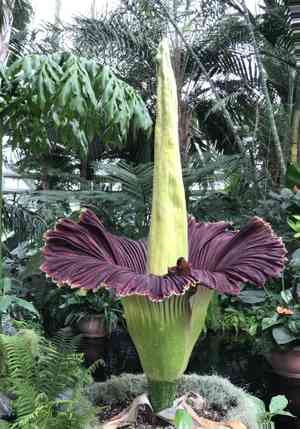
Titan arum (Amorphophallus titanum)
Also known as: Voodoo plant, Voodoo lily, Corpse plant
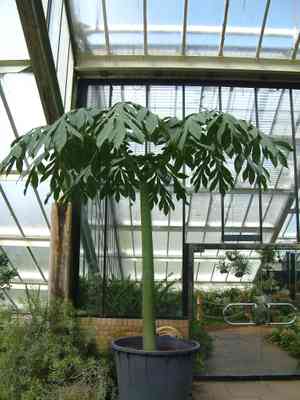
The titan arum's inflorescence can grow more than 3 meters tall. The leaf emerges from a green stalk, which divides into three parts, each bearing numerous leaflets. The leaf structure itself can achieve heights of up to 6 meters and widths of up to 5 meters.
In This Article
Attributes of Titan arum
Lifespan
Perennial
Plant Type
Herb
Plant Height
2.5 m to 4.5 m
Spread
4.5 m
Leaf Color
Green with white variegation
Flower Size
30 cm
Flower Color
White Yellow Pink Green Cream Purple Red Orange
Images of Titan arum
Quickly Identify Titan arum
1
Enormous solitary compound leaf reaching 20 feet (6.1 meters) in height and 15 feet (4.57 meters) in diameter.
2
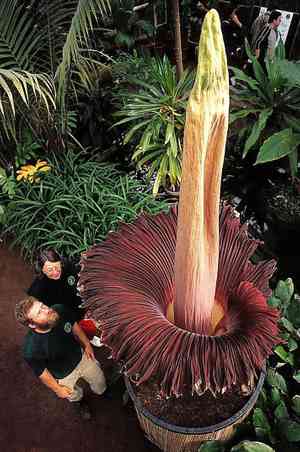
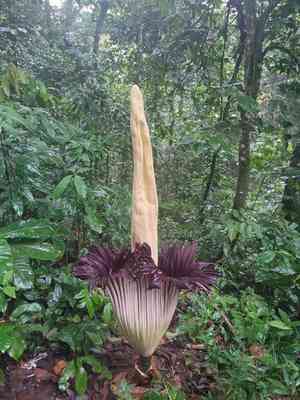
Striking maroon spathe up to 3 feet (0.91 meters) wide with a 6 feet (1.83 meters) tall central spadix.
3
Bright scarlet berries clustered around the spadix, 0.5 to 1 inch (1.3 to 2.5 cm) in diameter.
4
Large glossy green leaflets with cream spots and compound vein pattern, up to 23 feet (7 meters) in size.
5
Spherical tuber stem, 8 to 16 inches (20 to 40 cm) in diameter, light brown to grayish-brown in color.
Scientific Classification of Titan arum
Phylum
Vascular plants
Class
Monocotyledons
Order
Water plantains and allies
Family
Arum
Genus
Amorphophallus
Species
Titan arum
Planting and Growing of Titan arum
Care Difficulty
Hard
Watering Schedule
Every 2 days
Sunlight Requirements
Partial sun
Sunshine Duration
6-10 hours
Ideal Temperature
75-85℉
Soil Type
Potting Mix, Peat Mix
Soil pH
6.5-7.5
Fertilizer Type
Balanced
Pruning Season
Spring, Summer
Pruning Area
Branches, Leaves
Pruning Frequency
2 times a year
Repotting Season
Spring
Pot Type
Plastic, Ceramic
 How to Water Titan arum?
Watering for Amorphophallus titanum should be generous, about 1000 ml per session. It's important to soak the soil thoroughly until water drains from the bottom of the pot, ensuring that the root system receives ample hydration without leaving the soil soggy.
What are the symptoms of an underwatered Titan arum?
›
What should I do if my Titan arum is not getting enough water?
›
What are the symptoms of an overwatered Titan arum?
›
How to save an overwatered Titan arum?
›
 What Are the Sunlight Requirements for Titan arum?
The ideal light range for Amorphophallus titanum is partial sun, about 3 to 4 hours of filtered light. This ensures robust growth, vibrant leaf color, and prevents stress from environmental changes.
More About Sunlight Requirements Techniques→
What type of light does it need?
›
Where should it be placed indoors?
›
How to manage lighting in outdoor settings?
›
 What Is the Ideal Temperature Range for Titan arum?
Amorphophallus titanum thrives best within a temperature range of 75°F to 85°F. This range mimics the warm, humid conditions of its natural habitat in the tropical rainforests of Sumatra. Maintaining consistent warmth is crucial for optimal growth and health.
 What Soil is Best for Titan arum?
Amorphophallus titanum thrives in well-draining soil to prevent waterlogged conditions, which can lead to root rot. This ensures healthy tuber development and supports robust growth. This plant demands soil rich in organic material, providing essential nutrients to sustain its large structure and foliage. A nutrient-dense environment fosters vitality and flowering. Despite needing drainage, Titan arum's soil should retain some moisture. This balance helps maintain humidity around the roots, essential for its lush growth in native rainforest-like conditions.
 How to Fertilize Titan arum?
The titan arum, known for its gigantic size, requires careful fertilization. For liquid fertilizers, use a balanced 10-10-10 NPK formula, diluting it to half-strength to avoid burning the roots. For solid fertilizers, a granular slow-release type is preferred, applied sparingly, with 50 grams per application around the root zone, avoiding direct contact with the plant itself.
 How to Prune Titan arum?
Pruning the Titan Arum is not a typical procedure due to its unique growth patterns. Typically, you will not need to prune the plant heavily. Focus on removing any dead or damaged leaves at the base only if necessary. The plant's leaf sheaths form a single large leaf, so significant trimming is usually not required unless there's apparent decay. Start your pruning by wearing gloves to protect your hands from any potential irritants or sap. Use clean and sharp pruning shears to avoid disease transmission. Inspect the plant for any shriveled or brown leaves. Gently cut away these areas at their base, taking care not to damage the healthy portion of the plant. Avoid trimming the main stalk or healthy leaves, as they are essential for the plant's growth and photosynthesis.
More About Pruning Techniques→
 How to Propagate Titan arum plant?
1
Collect fresh seeds from a mature Amorphophallus titanum plant. Soak the seeds in warm water for 24 hours to break dormancy before planting.
2
Place the soaked seeds in well-draining potting medium, burying them just below the surface. Ensure the soil is moist but not waterlogged, and keep at a stable warm temperature.
3
Carefully dig up the mature corms and separate offsets, being cautious not to damage the delicate corms. Replant the divisions in individual pots with fresh potting medium.
 How to Repot Titan arum plant?
1
Recognize the signs of need for repotting by observing the corm size and soil condition. Amorphophallus titanum requires repotting when the corm visibly outgrows its pot or when drainage becomes poor. Repotting in spring or summer allows the plant ample time to recover and adjust before its blooming period.
2
Select a pot that is large enough to accommodate the growing corm with ample space for expansion. Ensure the pot has adequate drainage holes to prevent waterlogging, which can rot the corm. A sturdy, wide, and deep pot is ideal, providing stability for the expected size of the titan arum's leaf and eventual bloom.
3
The ideal soil must be well-draining yet rich in nutrients to support the titan arum's growth. A mix of peat, sand, and organic compost is recommended, as this combination offers excellent drainage and essential nutrients, aiding robust corm development and preventing root rot.
Learn More About Titan arum Diseases
Anthracnose
Bacterial Leaf Spot
Bacterial Soft Rot
Bacterial Wilt
Chemical Injury
Crown Gall
Cyst Nematode
Damping-off
Drought Stress
Fusarium Wilt
Gray Mold
Leaf Spot
Mosaic
Nutrient Deficiency
Nutrient Toxicity
Powdery Mildew
Root Rot
Root-knot Nematode
Sooty Mold
Spider Mites
Temperature Stress
Thrips Damage
White Mold



