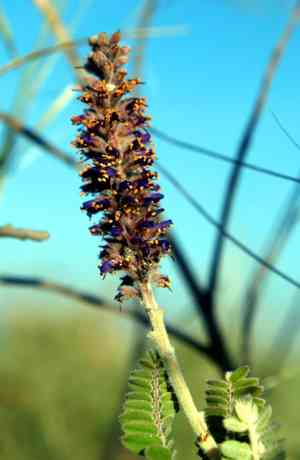
Leadplant (Amorpha canescens)
Also known as: Prairie Shoestring, Lead Plant
Russian Sage (Perovskia atriplicifolia) is a hardy perennial woody shrub that draws bees and butterflies. Typically reaching heights of 3 to 5 feet, it showcases stunning iridescent purple flowers during the summer months. The plant's silver-gray foliage provides a striking contrast to its vibrant blooms. Russian Sage flourishes in full sun and adapts well to a variety of soil types, including sandy and loamy soils.
In This Article
Attributes of Leadplant
Lifespan
Perennial
Plant Type
Shrub
Plant Height
91 cm to 1.8 m
Spread
1.2 m to 1.5 m
Leaf Color
Gray Green Silver
Flower Size
2.5 cm
Flower Color
Purple Blue Orange
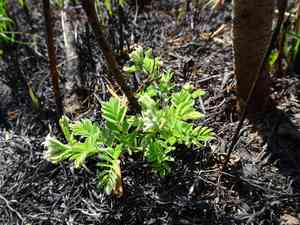
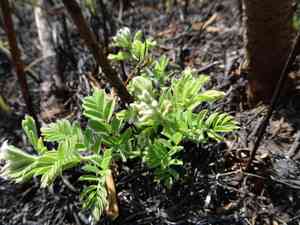
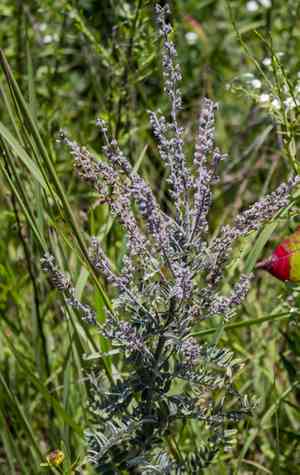
Images of Leadplant
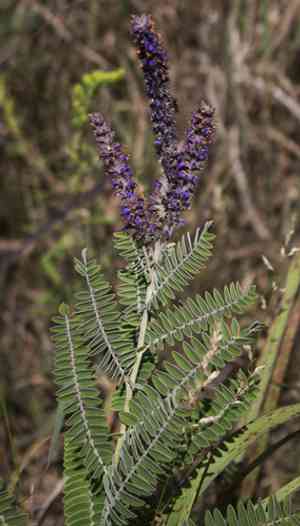
Quickly Identify Leadplant
1
Silvery-gray foliage with frosted appearance due to short hairs.
2
Purple flowers on terminal spikes, contrasting with gray leaves.
3
Small kidney-shaped legume pods, dark brown to black when ripe.
4
Compound pinnate leaves with 14-45 small leaflets, fuzzy texture.
5
Dense floral spikes, 2-6 inches (5-15 cm) in length, purple-blue color.
Scientific Classification of Leadplant
Phylum
Vascular plants
Class
Dicotyledons
Order
Fabales
Family
Legume
Genus
False indigos
Species
Leadplant
Planting and Growing of Leadplant
Care Difficulty
Easy
Watering Schedule
Every 2 days
Sunlight Requirements
Full sun
Sunshine Duration
6-10 hours
Ideal Temperature
60-80℉
Soil Type
Potting Mix, Peat Mix
Soil pH
6.5-7.5
Fertilizer Type
Balanced
Pruning Season
Spring, Summer
Pruning Area
Branches, Leaves
Pruning Frequency
2 times a year
Repotting Season
Spring
Pot Type
Plastic, Ceramic
 How to Water Leadplant?
Amorpha canescens, also known as Leadplant, thrives in dry conditions and requires minimal watering. When watering, ensure that the soil is fully saturated without water pooling at the surface. Approximately 500 ml suffices to provide adequate moisture that mimics its natural environment.
What are the symptoms of an underwatered Leadplant?
›
What should I do if my Leadplant is not getting enough water?
›
What are the symptoms of an overwatered Leadplant?
›
How to save an overwatered Leadplant?
›
 What Are the Sunlight Requirements for Leadplant?
Amorpha canescens prefers full sun to partial sun environments, ideally receiving 6 to 8 hours of light daily. These conditions are beneficial for promoting vibrant blooms and healthy, resilient foliage, maximizing the plant's ornamental and ecological value.
More About Sunlight Requirements Techniques→
How much sunlight does Amorpha canescens need?
›
What are some solutions for achieving the ideal sunlight for Amorpha canescens?
›
What are the benefits for Amorpha canescens if it achieves ideal light conditions?
›
 What Is the Ideal Temperature Range for Leadplant?
The ideal temperature range for Amorpha canescens is between 60°F and 80°F. Within this range, the plant can undergo optimal metabolic and photosynthetic processes, leading to robust growth and healthy development. Being a plant native to the prairies, it thrives in conditions that replicate its natural habitat. Maintaining consistent temperatures within this range ensures minimal stress and maximizes growth potential.
 What Soil is Best for Leadplant?
Amorpha canescens thrives in well-drained soil, preventing root rot and ensuring the plant's roots receive adequate oxygen. This condition promotes healthy growth and abundant flowering. This plant is adapted to survive in nutrient-poor soils, thanks to its ability to fix nitrogen. This makes it an excellent choice for areas with poor soil quality, improving the soil fertility over time. This species excels in dry conditions, making it ideal for regions with limited rainfall. It conserves water by growing in soils with good drainage, enhancing its resilience against drought.
 How to Fertilize Leadplant?
Amorpha canescens, commonly known as Lead Plant, requires moderate fertilization. For liquid fertilizers, a concentration of 1/4 strength is recommended, while for granular or slow-release fertilizers, use about half the recommended rate on the package. This ensures the plant receives enough nutrients without overwhelming its root system.
 How to Prune Leadplant?
Begin by identifying branches that appear dead or are visibly weak. Use clean, sharp shears to cut these at a 45-degree angle close to the main stem. Next, trim back any branches that cross over each other to maintain an open, vase-like shape. This encourages growth and flowering. In spring, perform heavier pruning to shape the plant and encourage strong growth. Summer pruning can be lighter, primarily focusing on aesthetics and removing any spent blooms. This helps in continuous blooming and prevents the plant from looking unruly.
More About Pruning Techniques→
 How to Propagate Leadplant plant?
1
Collect mature seeds from the plant, ensuring they are clean and free from disease. It is important to sow seeds immediately after collection or store them in a cool, dry place until sowing. Soak seeds in warm water for a few hours to improve germination rates by softening the seed coat.
2
Select healthy, disease-free stems for cuttings, approximately 4-6 inches long. Make the cut just below a node. Dip the cut end in rooting hormone powder to enhance root development and plant the cutting in a well-draining soil mix. Keep soil moisture consistent but not waterlogged.
3
For division propagation, dig up the established plant carefully in early spring. Divide the rootball into sections, ensuring each section has healthy roots and shoots, then replant the divisions at their original depth. Water thoroughly to help new divisions settle into the soil.
 How to Repot Leadplant plant?
1
Look for signs like roots growing out of drainage holes, soil compacting, or poor growth. The best time to repot Amorpha canescens is during spring or autumn when temperatures are moderate, which allows the plant to adjust without stress.
2
Select a pot that is slightly larger than the current one, ensuring it has good drainage holes. A pot that's too large can hold excess moisture, causing root rot, whereas a correctly sized one can promote healthy root expansion.
3
Opt for well-draining sandy loam soil, which mirrors its natural habitat and prevents water logging. Such soil allows enough air to reach roots and maintains the necessary nutrients for thriving growth.
Learn More About Leadplant Diseases
Anthracnose
Bacterial Leaf Spot
Bacterial Wilt
Crown Gall
Cyst Nematode
Damping-off
Downy Mildew
Drought Stress
Fusarium Wilt
Gray Mold
Leaf Spot
Mosaic
Nutrient Deficiency
Nutrient Toxicity
Powdery Mildew
Root Rot
Root-knot Nematode
Rusts
Sooty Mold
Spider Mites
Temperature Stress
Thrips Damage
White Mold



