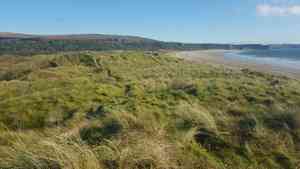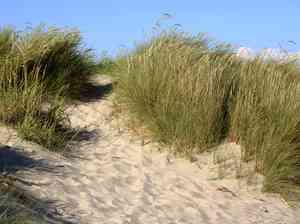
European beach grass(Ammophila arenaria)

European beach grass (Ammophila arenaria)

Also known as: European marram grass, Marram

European beach grass (Ammophila arenaria) was initially brought to the shores of the United States, Australia, New Zealand, and other regions for dune stabilization. Despite becoming an invasive species that harms local ecosystems and reduces biodiversity, it has some practical uses:

1. **Erosion Prevention:** Its deep root system is effective in controlling coastal erosion by stabilizing sand dunes.
2. **Thatching Material:** The sturdy stems are traditionally used for thatching roofs.
3. **Crafting:** The tough stems can also be used in making brooms and weaving baskets.

While beneficial in these specific applications, managing its spread is essential to protect native habitats.

Attributes of European beach grass

Lifespan
Perennial
Plant Type
Grass
Plant Height
1.2 m
Spread
3 m
Leaf Color
Green Blue
Flower Size
1.5 cm to 2 cm
Flower Color
Yellow Green Cream Brown

ForwardPlant - Identify plants with a snap

Identify and diagnose plants, get toxicity alerts, and explore safety guides for all types of fungi.

Try for Free

Images of European beach grass

European beach grass(Ammophila arenaria)

Quickly Identify European beach grass

1
Marram grass can be identified by its long, stiff, and narrow leaves that are grey-green in color and rolled inward. The plant forms dense clumps and produces tall flower spikes with dense, wheat-like flower heads.

Scientific Classification of European beach grass

Phylum
Vascular plants
Class
Monocotyledons
Order
Poales
Family
Grass
Genus
Marram grasses
Species
European beach grass

Planting and Growing of European beach grass

Care Difficulty
Easy
Watering Schedule
Every day
Sunlight Requirements
Full sun
Sunshine Duration
6-10 hours
Ideal Temperature
55-75℉
Soil Type
Potting Mix, Peat Mix
Soil pH
4.5-8.5
Fertilizer Type
Balanced
Pruning Season
Spring, Summer
Pruning Area
Branches, Leaves
Pruning Frequency
2 times a year
Repotting Season
Spring
Pot Type
Terracotta, Plastic

water icon How to Water European beach grass?

Ammophila arenaria, known as marram grass, thrives in well-drained sandy soils. Water this plant with 250 ml per session to ensure that the roots receive enough moisture without being waterlogged. The key is to let the soil dry out completely between waterings, simulating its natural dune habitat.
What are the symptoms of an underwatered European beach grass?
What should I do if my European beach grass is not getting enough water?
What are the symptoms of an overwatered European beach grass?
How to save an overwatered European beach grass?

sunlight icon What Are the Sunlight Requirements for European beach grass?

Sunlight Requirements: Full sun
Duration of light: 6-8 hours daily
Ammophila arenaria prefers full sun conditions. Ideal light contributes to the development of strong, deep roots and vibrant foliage, critical for stabilizing sand dunes and sustaining long-term plant health.
How does Ammophila arenaria thrive with sunlight?
What is the best way to ensure optimal sun exposure?
What are the benefits of ideal sunlight for Ammophila arenaria?
More About Sunlight Requirements Techniques

temperature icon What Is the Ideal Temperature Range for European beach grass?

Ideal Temperature: 55 ~ 75℉
The ideal temperature range for the growth of Ammophila arenaria is between 55°F and 75°F. This range allows the plant to thrive and maintain robust growth, as it provides the necessary warmth without causing stress. Maintaining a temperature within this range will support healthy root development and foliage production.

soil icon What Soil is Best for European beach grass?

Soil type: Sandy soil, Sandy loam
Soil PH: 4.5 ~ 8.5
Ammophila arenaria thrives in nutrient-poor soils, which helps the plant avoid competition from more aggressive species that need richer soil. This minimal nutrient requirement is perfect for redistributing coastal sands without the risk of nutrient overload. This plant prefers well-drained soil, vital for preventing root rot. Its natural habitat on dunes benefits from rapid drainage, ensuring its roots can breathe and reducing the likelihood of waterlogging. Ammophila arenaria can efficiently grow in soils with minimal organic matter, which suits the sandy environments it is adapted to. This trait reduces the need for enrichment and allows the plant to stabilize sand dunes without needing significant soil amendment.

fertilize icon How to Fertilize European beach grass?

Fertilizer type: Balanced
Ammophila arenaria is a hardy grass, requiring modest fertilization. Use a balanced fertilizer at a minimal rate, such as 10-20 grams per square meter twice a year, considering its natural adaptation to nutrient-poor sandy environments.

prune icon How to Prune European beach grass?

Pruning Time: Spring, Summer, Autumn
As Ammophila arenaria can be invasive, keep an eye on its growth pattern. If it starts spreading beyond its desired area, trim aggressively. However, remain cautious not to destabilize its root system, as this grass is crucial for soil stabilization. Avoid heavy pruning during peak growth periods in spring and early summer. Excessive cutting can stress the plant and hinder its ability to stabilize sand dunes or soil effectively. More About Pruning Techniques

propagate icon How to Propagate European beach grass plant?

Propagate Time: Spring, Early summer
1
Fill a seed tray with a quality seed-starting mix. Water the mix thoroughly to ensure it is evenly moist but not waterlogged. The seeds should then be sown lightly on the surface and covered with a thin layer of sand, which mimics their natural habitat.
2
Evenly sprinkle Ammophila arenaria seeds over the mix in the seed tray. Press them gently into the surface without burying them too deep, as they require light for germination. Maintain a temperature between 15-20°C for optimal growth.
3
To propagate through division, dig up mature clumps of Ammophila arenaria in spring. Use a sharp spade to carefully separate the clumps into smaller sections, ensuring each has adequate roots and shoots. Replant these divisions immediately in prepared soil.
More About Propagating Techniques

repot icon How to Repot European beach grass plant?

Repotting frequency: Every two years
1
One of the main indicators that your Ammophila arenaria needs repotting is when its roots begin to outgrow the container, becoming visibly crowded through the drainage holes. Additionally, if there's slow growth despite proper care or the plant appears top-heavy and unstable, it's time for a refresh. The best time for repotting is during the Spring, allowing the plant to recover and establish in its new home during the growing season.
2
Select a pot that is just slightly larger than the current one, no more than 2-3 inches bigger in diameter. A pot that's too large can lead to overwatering issues as the soil will retain too much moisture. Ensure the pot has adequate drainage holes to help the plant maintain optimal soil aeration, which is crucial for its robust root development.
3
For Ammophila arenaria, a well-draining sandy soil is ideal. This soil type replicates its natural coastal environment, ensuring that it doesn’t retain excessive moisture. Such a soil mix allows for proper root ventilation, minimizes the risk of root rot, and supports the plant's structural stability, all contributing to a healthier and more vigorous Ammophila arenaria.

ForwardPlant - Identify plants with a snap

Find the best spots for them to optimize their health, simply using your phone.

Try for Free