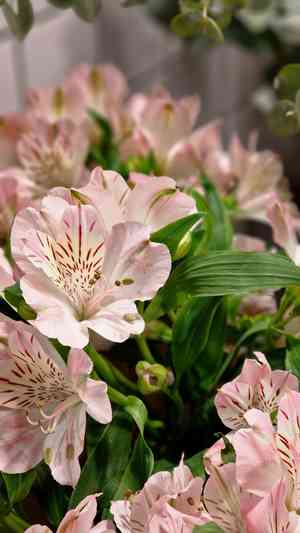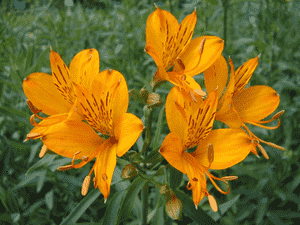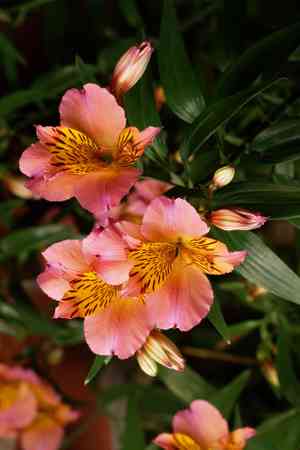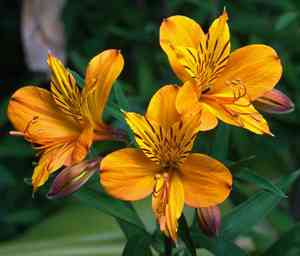
Peruvian lily(Alstroemeria aurea)

Peruvian lily (Alstroemeria aurea)

Also known as: Inca lily

The Peruvian lily (Alstroemeria aurea) is a tuberous perennial known for its striking, orchid-like blooms. Typically found in shades of yellow and orange with spots or stripes, these flowers attract bees, butterflies, and other pollinators. Over time, selective breeding has introduced a wider range of colors, enhancing its ornamental appeal.

Attributes of Peruvian lily

Lifespan
Perennial, Annual
Plant Type
Herb
Plant Height
50 cm to 1.2 m
Spread
30 cm to 60 cm
Leaf Color
Green
Flower Size
3 cm to 4 cm
Flower Color
Yellow Orange

ForwardPlant - Identify plants with a snap

Identify and diagnose plants, get toxicity alerts, and explore safety guides for all types of fungi.

Try for Free

Images of Peruvian lily

Peruvian lily(Alstroemeria aurea)

Quickly Identify Peruvian lily

1
Identify Alstroemeria aurea by its lance-shaped leaves and clusters of vibrant blooms with distinctive spotting or streaking patterns. The flowers usually have six tepals and are funnel-shaped.

Scientific Classification of Peruvian lily

Phylum
Vascular plants
Class
Monocotyledons
Order
Liliales
Family
Peruvian lily
Genus
Lily of the incas
Species
Peruvian lily

Planting and Growing of Peruvian lily

Care Difficulty
Moderate
Watering Schedule
Every 3 days
Sunlight Requirements
Full sun
Sunshine Duration
4-8 hours
Ideal Temperature
60-75℉
Soil Type
Potting Mix, Peat Mix
Soil pH
6.5-7.5
Fertilizer Type
Balanced
Pruning Season
Spring, Summer
Pruning Area
Branches, Leaves
Pruning Frequency
2 times a year
Repotting Season
Spring
Pot Type
Plastic, Ceramic

water icon How to Water Peruvian lily?

When watering Alstroemeria aurea, aim to drench the soil thoroughly with approximately 500 ml per plant. Ensure the water reaches at least 15 cm deep into the soil. The principle is to keep the soil moist but not waterlogged, allowing it to partly dry out between waterings.
What are the symptoms of an underwatered Peruvian lily?
What should I do if my Peruvian lily is not getting enough water?
What are the symptoms of an overwatered Peruvian lily?
How to save an overwatered Peruvian lily?
More About Watering Techniques

sunlight icon What Are the Sunlight Requirements for Peruvian lily?

Sunlight Requirements: Full sun, Partial sun
Duration of light: 4 to 6 hours
The ideal light range for Alstroemeria aurea involves partial to full sun conditions. With this range, the plant receives ample energy for photosynthesis, which boosts flowering and maintains healthy foliage.
What is the best lighting environment for Alstroemeria aurea?
How can I achieve the ideal lighting conditions?
What are the benefits of ideal lighting conditions for Alstroemeria aurea?
More About Sunlight Requirements Techniques

temperature icon What Is the Ideal Temperature Range for Peruvian lily?

Ideal Temperature: 60 ~ 75℉
The ideal temperature range for Alstroemeria aurea cultivation is between 60°F and 75°F. Within this range, the plant can effectively photosynthesize and sustain healthy growth, resulting in vibrant blooms and robust foliage.

soil icon What Soil is Best for Peruvian lily?

Soil type: Loam, Sandy loam
Soil PH: 6.5 ~ 7.5
Alstroemeria aurea thrives in well-drained soil to prevent root rot and other moisture-related issues. The presence of good drainage helps the roots access oxygen efficiently, promoting healthy growth and flowering. Ensuring the soil is rich in organic matter and nutrients supports vigorous growth in Alstroemeria aurea. Amending soil with compost or well-rotted manure can supply essential nutrients, enhancing bloom production and foliage. A balance in moisture retention is crucial for Alstroemeria aurea's optimal growth. While the soil should not be soggy, it should retain enough moisture to sustain the plant during dry periods, preventing stress and promoting resilience. More About Soil

fertilize icon How to Fertilize Peruvian lily?

Fertilizer type: Balanced
For Alstroemeria aurea, it is crucial to use a balanced 10-10-10 or a 15-30-15 fertilizer during its growing season. You can apply about 1/4 cup of granular fertilizer per square foot around the base of the plant or use a diluted liquid fertilizer following the manufacturer’s instructions. More About Fertilizing Techniques

prune icon How to Prune Peruvian lily?

Pruning Time: Spring, Summer, Autumn
Start by identifying any dead or yellowing foliage; these should be removed to prevent disease. Use sharp, clean scissors or pruners to cut these stems back to the base of the plant. Trim back old flower stems after they have finished blooming to encourage new growth. Cut just above a set of leaves or a healthy bud to stimulate further growth. Do this monthly throughout the active growing seasons. More About Pruning Techniques

propagate icon How to Propagate Peruvian lily plant?

Propagate Time: Spring, Early spring
1
Start by filling a seed tray with a good quality seed-starting mix. Moisten the soil lightly, then sow the Alstroemeria aurea seeds evenly on the surface. Cover them with a thin layer of soil and water gently.
2
In early spring, carefully dig up the mature Alstroemeria aurea plant. Use a garden trowel to divide the clump into smaller sections, ensuring that each section has a portion of the root system.
3
Once seedlings or divided sections show growth, transplant them into a prepared garden bed or containers. Ensure the soil is well-draining and fertile, and space them adequately to encourage healthy development.
More About Propagating Techniques

repot icon How to Repot Peruvian lily plant?

Repotting frequency: Every 2-3 years
1
Alstroemeria aurea, also known as Peruvian Lily, shows signs it needs repotting when you notice its roots overflowing from the drainage holes or when the plant's growth appears stunted. These indicators signal that the plant has outgrown its current pot and requires more space to flourish.
2
Opt for a pot that is one to two inches larger in diameter than the current one. This size allows the roots to spread slightly without feeling overwhelmed, ensuring good growth. Make sure the pot has adequate drainage holes to prevent waterlogging, which could lead to root rot.
3
Choose a well-draining potting mix for optimal results. Soils with organic matter like peat moss or compost retain necessary moisture without suffocating the roots. This type of soil promotes aeration and provides the ideal environment for nutrient absorption and healthy growth.

ForwardPlant - Identify plants with a snap

Find the best spots for them to optimize their health, simply using your phone.

Try for Free

Toxicity of Peruvian lily

Is Peruvian lily toxic to humans?

The Peruvian lily is a harmful plant species that poses risks to humans upon ingestion or skin contact. Generally, the symptoms are mild in nature. Every part of the plant, including its sap, contains toxic substances that can result in symptoms like swelling, redness, and skin rashes when touched. If ingested, it may lead to diarrhea, vomiting, and nausea. Given its prevalence as an ornamental plant in gardens, it might be accessible to children. Young children could inadvertently touch or consume parts of the plant without recognizing its toxic properties. To avoid contact with the sap, it is advisable to wear gloves during repotting or pruning activities.

Is Peruvian lily toxic to cat?

The Peruvian lily is a plant recognized for its toxic characteristics, particularly regarding cats. If a cat inadvertently consumes any part of the Peruvian lily, it could result in poisoning. Affected animals may display symptoms of physical distress, which can range in severity from gastrointestinal issues to skin irritation. It is essential for cat owners to observe their pets for any abnormal behavior and to keep the Peruvian lily well out of their reach. Should ingestion be suspected, it is imperative to promptly consult a veterinary hospital, as swift medical attention is vital for the recovery of the impacted cat.

Is Peruvian lily toxic to dog?

The Peruvian lily is recognized as toxic to canine companions. When dogs consume any part of the peruvian lily, they face the risk of poisoning. Each component of the plant, including its leaves, stems, and flowers, harbors substances that can trigger negative reactions in dogs. Usually, dogs encounter the plant by inadvertently eating it, which may result in a range of symptoms. These symptoms can encompass gastrointestinal distress, vomiting, diarrhea, and potentially more severe effects depending on the quantity ingested and the specific sensitivity of the dog involved. It is vital for dog guardians to remain alert and keep their pets away from peruvian lily. Should there be a suspicion that a dog has ingested the peruvian lily, seeking prompt veterinary assistance is imperative to guarantee appropriate treatment and management of the poisoning.

Identify toxic plants for your safety

Learn which plants are harmful to you and your pets, and make informed choices for a safer home!

Try for Free
WARNING
The judgment on toxicity and danger is for reference only. We DO NOT GUARANTEE any accuracy of such judgment. Therefore, you SHALL NOT rely on such judgment. It is IMPORTANT TO SEEK PROFESSIONAL ADVICE in advance when necessary.
More About Toxic Techniques