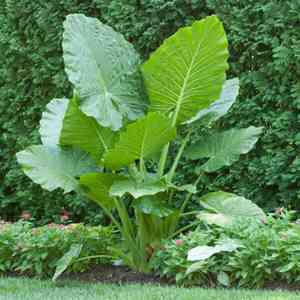
Giant taro(Alocasia macrorrhizos)

Giant taro (Alocasia macrorrhizos)

Also known as: Pai, Giant ape

Giant taro originates from the rainforests of Southeast Asia, with its initial cultivation taking place in the Philippines. The plant features large leaves similar to elephant ears, which become edible after thorough cooking. However, caution is needed as the plant's sap can irritate the skin and it is toxic to pets like dogs, cats, and horses.

Attributes of Giant taro

Lifespan
Perennial
Plant Type
Herb
Plant Height
1 m to 5 m
Spread
1.8 m to 2.5 m
Leaf Color
Green
Flower Size
10 cm to 30 cm
Flower Color
White Yellow Green

ForwardPlant - Identify plants with a snap

Identify and diagnose plants, get toxicity alerts, and explore safety guides for all types of fungi.

Try for Free

Images of Giant taro

Giant taro(Alocasia macrorrhizos)

Quickly Identify Giant taro

1
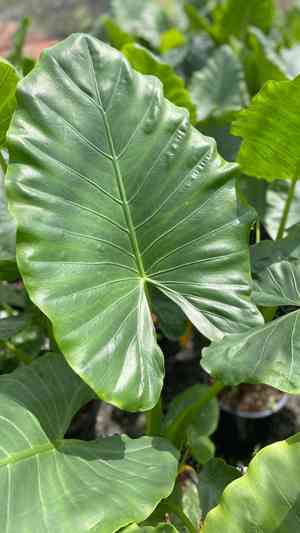
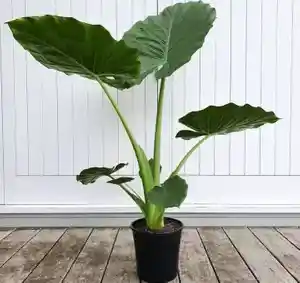
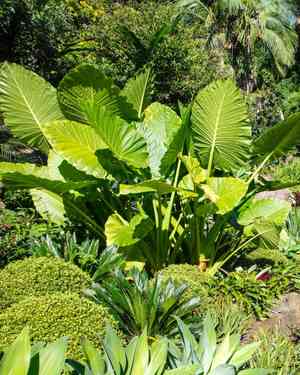
Identify Alocasia macrorrhizos by its large, glossy, and dark green leaves that are heart or arrow-shaped. The plant often has a thick, erect stem and can grow up to several meters high. Additionally, its unique leaf venation pattern helps in identification.

Scientific Classification of Giant taro

Phylum
Vascular plants
Class
Monocotyledons
Order
Alismatales
Family
Arum
Genus
Elephant's-ears
Species
Giant taro

Planting and Growing of Giant taro

Care Difficulty
Easy
Watering Schedule
Every 3 days
Sunlight Requirements
Partial sun
Sunshine Duration
4-8 hours
Ideal Temperature
75-85℉
Soil Type
Potting Mix, Peat Mix
Soil pH
6-7.3
Fertilizer Type
Balanced
Pruning Season
Spring, Summer
Pruning Area
Branches, Leaves
Pruning Frequency
Once a year
Repotting Season
Spring
Pot Type
Plastic, Ceramic

water icon How to Water Giant taro?

For Alocasia macrorrhizos, watering should ensure the soil is evenly moist but not waterlogged. A general guide is to apply approximately 500 ml of water, enough to moisten the soil thoroughly without letting water sit at the bottom of the pot.
What are the symptoms of an underwatered Giant taro?
What should I do if my Giant taro is not getting enough water?
What are the symptoms of an overwatered Giant taro?
How to save an overwatered Giant taro?
More About Watering Techniques

sunlight icon What Are the Sunlight Requirements for Giant taro?

Sunlight Requirements: Partial sun, Full shade
Duration of light: 4 to 6 hours
Alocasia macrorrhizos thrives in partial sun to full shade. Ideal lighting aids in maintaining lush, vibrant foliage, optimizing photosynthesis, and improving its ornamental appeal, which is key for robust plant health.
What is the ideal lighting condition for Alocasia macrorrhizos?
How can I achieve the ideal lighting for my Alocasia?
What benefits does ideal lighting bring to Alocasia macrorrhizos?
More About Sunlight Requirements Techniques

temperature icon What Is the Ideal Temperature Range for Giant taro?

Ideal Temperature: 75 ~ 85℉
The ideal temperature range for Alocasia macrorrhizos is between 75°F to 85°F. This range ensures optimal growth and development by allowing proper metabolic and enzymatic activities. Within this range, the plant can perform photosynthesis efficiently, which supports healthy foliage and overall health.

soil icon What Soil is Best for Giant taro?

Soil type: Loam, Sandy loam
Soil PH: 6 ~ 7.3
Alocasia macrorrhizos thrives in soil with excellent drainage to prevent root rot. Well-draining soil allows water to pass through quickly, minimizing waterlogging and ensuring the roots have access to oxygen. This plant flourishes in soil rich in organic matter, which provides essential nutrients. Organic content like decomposed leaves improves soil fertility, enhancing the plant's growth and foliage quality. While drainage is crucial, the soil should also retain some moisture to support the hydration needs of Alocasia macrorrhizos. A balance of drainage and moisture retention helps maintain consistent plant hydration. More About Soil

fertilize icon How to Fertilize Giant taro?

Fertilizer type: Balanced
When fertilizing Alocasia macrorrhizos, it's essential to remember that while they are hungry plants, they can also be sensitive to over-fertilization. For liquid fertilizers, use a balanced 20-20-20 or 10-10-10 diluted to half the recommended strength. Apply about 250 ml for a medium-sized plant. For slow-release fertilizers, a moderate amount spread evenly over the soil will suffice. More About Fertilizing Techniques

prune icon How to Prune Giant taro?

Pruning Time: Spring, Summer, Autumn
Begin by inspecting the plant for leaves that are yellowing, browning, or damaged. These are the ones that should be prioritized for removal to improve the overall appearance and health of your Alocasia. When removing unwanted leaves, make sure to cut as close to the stem base as possible without harming the main stem. This encourages new growth and helps maintain the plant's natural shape. If the Alocasia macrorrhizos becomes too large or unwieldy, you can trim it back slightly to better fit its space. Remember to maintain a balance so the plant continues to look aesthetically pleasing. More About Pruning Techniques

propagate icon How to Propagate Giant taro plant?

Propagate Time: Early spring,Late spring
1
Ensure the parent plant is healthy and well-watered before starting the propagation process. This increases the chance that the divisions will successfully establish themselves.
2
Carefully remove the plant from its pot and divide the rhizomes using a sharp knife. Each division should have at least one or two leaves and a good number of roots attached.
3
Plant each division into its own pot with well-draining soil. Firmly pack the soil around the roots and water the plants lightly to settle the soil without oversaturating it.
More About Propagating Techniques

repot icon How to Repot Giant taro plant?

Repotting frequency: Every 2-3 years
1
Alocasia macrorrhizos signals its need for repotting when roots start poking out of the drainage holes or when growth seems stunted. This usually happens in spring or summer, aligning with its natural growth cycle. During these seasons, the plant is actively growing and can recover more effectively from the stress of repotting, making it the ideal time.
2
Select a pot that's one size larger than the current one, with adequate drainage holes. This ensures proper root development and prevents waterlogging. A slightly larger pot provides space for root expansion, which is crucial for the health and growth of Alocasia macrorrhizos.
3
Opt for a well-draining soil mix that retains some moisture but doesn't get waterlogged. A mix with peat, perlite, and pine bark works well. This kind of soil ensures that the plant roots receive adequate air circulation and reduces the risk of root rot, promoting healthier plant development.
More About Repotting Techniques

ForwardPlant - Identify plants with a snap

Find the best spots for them to optimize their health, simply using your phone.

Try for Free

Toxicity of Giant taro

Is Giant taro toxic to humans?

Giant taro plants exhibit a mild to moderate toxicity level in humans. Each part of the plant harbors calcium oxalate crystals, which can act as irritants both on the skin and within the gastrointestinal tract. Direct exposure to its sap can lead to skin reactions such as redness, itchiness, or blisters. If giant taro is consumed without being properly boiled, it may irritate the mouth, cause throat swelling, trigger swallowing difficulties, and lead to abdominal discomfort, vomiting, and diarrhea. This species is not only cherished as an ornamental plant but is also considered a popular food source in certain islands of the South Pacific. Gardeners should exercise caution when handling giant taro, particularly if the plant is damaged and its sap is leaking or exposed. Individuals who wish to eat giant taro must ensure it has been adequately prepared beforehand.

Is Giant taro toxic to cat?

Giant taro is recognized for its toxicity to felines. Cats can become poisoned by unknowingly ingesting any portion of the plant, since every part harbors toxic compounds. Following consumption, a cat may undergo considerable physical distress, which could present itself through various signs of discomfort, though specific symptoms are not outlined here. If ingestion occurs and poisoning is suspected, it is crucial to urgently seek veterinary care to alleviate the effects and safeguard the well-being of the cat.

Is Giant taro toxic to dog?

The giant taro is recognized as a toxic species for dogs. If dogs consume any part of this plant, either out of curiosity or by accident, it can lead to poisoning. All parts of the plant, which include leaves, stems, and roots, harbor toxic compounds that are detrimental to pets if ingested. Signs of toxicity in dogs may manifest as vomiting, diarrhea, excessive drooling, irritation in the mouth, and difficulty in swallowing. It is crucial for pet owners to remain alert and restrict their dogs' access to giant taro. Should a dog ingest any portion of giant taro, it is imperative to seek prompt veterinary assistance to ensure the best possible outcome for the dog's health.

Identify toxic plants for your safety

Learn which plants are harmful to you and your pets, and make informed choices for a safer home!

Try for Free
WARNING
The judgment on toxicity and danger is for reference only. We DO NOT GUARANTEE any accuracy of such judgment. Therefore, you SHALL NOT rely on such judgment. It is IMPORTANT TO SEEK PROFESSIONAL ADVICE in advance when necessary.
More About Toxic Techniques