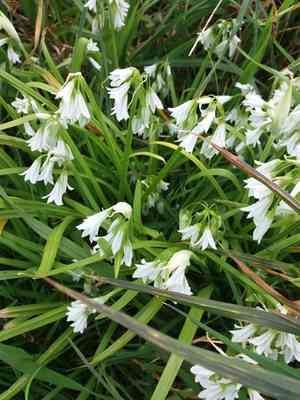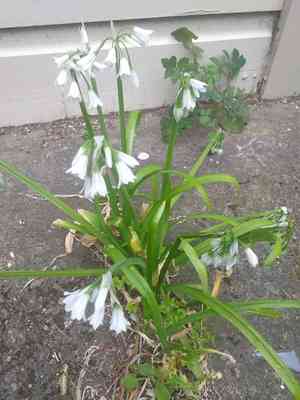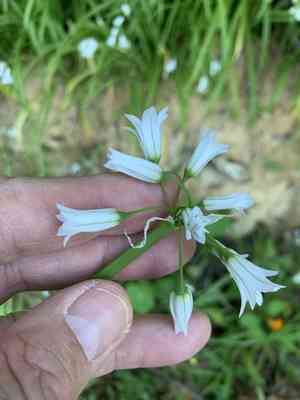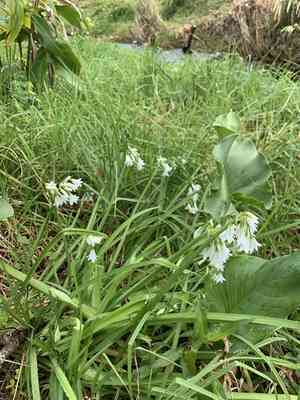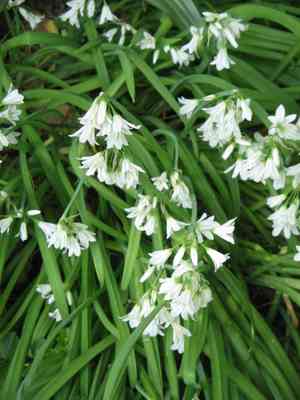
Three-cornered leek(Allium triquetrum)

Three-cornered leek (Allium triquetrum)

Also known as: Three-cornered garlic

Three-cornered leek (Allium triquetrum) is an invasive perennial plant known for its easy germination. Every part of this plant is edible, making it quite versatile. The leaves and stalks can add a fresh flavor to salads, and the bulb serves as an excellent garlic substitute in various dishes.

Attributes of Three-cornered leek

Lifespan
Perennial
Plant Type
Herb
Plant Height
17 cm to 60 cm
Spread
10 cm
Leaf Color
Green
Flower Size
1 cm to 1.8 cm
Flower Color
White Green

ForwardPlant - Identify plants with a snap

Identify and diagnose plants, get toxicity alerts, and explore safety guides for all types of fungi.

Try for Free

Images of Three-cornered leek

Three-cornered leek(Allium triquetrum)

Quickly Identify Three-cornered leek

1
This plant can be identified by its characteristic triangular stems (hence the name triquetrum), along with its umbrella-like clusters of bell-shaped white flowers and strong garlic odor when crushed.

Scientific Classification of Three-cornered leek

Phylum
Vascular plants
Class
Monocotyledons
Order
Asparagales
Family
Amaryllis
Genus
Onions
Species
Three-cornered leek

Planting and Growing of Three-cornered leek

Care Difficulty
Easy
Watering Schedule
Every 2 days
Sunlight Requirements
Partial sun
Sunshine Duration
4-6 hours
Ideal Temperature
50-68℉
Soil Type
Potting Mix, Peat Mix
Soil pH
6.5-7.5
Fertilizer Type
Balanced
Pruning Season
Spring, Summer
Pruning Area
Branches, Leaves
Pruning Frequency
2 times a year
Repotting Season
Spring
Pot Type
Terracotta, Plastic

water icon How to Water Three-cornered leek?

The watering amount for Allium triquetrum should be enough to keep the soil consistently moist, but not waterlogged. Water deeply until the top few inches of soil are moistened, which usually means about 250ml per watering session. Avoid letting the plant sit in water as this can lead to root rot.
What are the symptoms of an underwatered Three-cornered leek?
What should I do if my Three-cornered leek is not getting enough water?
What are the symptoms of an overwatered Three-cornered leek?
How to save an overwatered Three-cornered leek?

sunlight icon What Are the Sunlight Requirements for Three-cornered leek?

Sunlight Requirements: Partial sun
Duration of light: 4 to 6 hours
Partial sun is the ideal light condition for Allium triquetrum, providing 4 to 6 hours of indirect or filtered sunlight. This range allows the plant to photosynthesize effectively while minimizing the risk of leaf burn.
What is the ideal sunlight exposure for Allium triquetrum?
How can you achieve ideal light conditions for Allium triquetrum?
What benefits does ideal lighting provide to Allium triquetrum?
More About Sunlight Requirements Techniques

temperature icon What Is the Ideal Temperature Range for Three-cornered leek?

Ideal Temperature: 50 ~ 68℉
The ideal temperature range for Allium triquetrum is between 50°F and 68°F. In this range, the plant can achieve optimal growth and vitality. Providing consistent temperatures within this interval ensures healthy development, robust bulb formation, and beautiful flowering.

soil icon What Soil is Best for Three-cornered leek?

Soil type: Loam, Sandy loam
Soil PH: 6.5 ~ 7.5
Allium triquetrum thrives in soil that retains moisture without becoming waterlogged. The ability to retain moisture helps the plant during dry spells yet ensures the roots are not submerged, promoting healthy growth. A nutrient-rich soil is vital for Allium triquetrum, providing essential minerals that boost leaf and flower development. This type of soil ensures that the plant receives a balanced supply of nutrients necessary for vibrant growth. The soil must be well-drained to prevent root rot, a common issue when water stagnates. This prevents excess water from harming the plant while allowing it to absorb what it needs efficiently.

fertilize icon How to Fertilize Three-cornered leek?

Fertilizer type: Balanced
For Allium triquetrum, a balanced approach is essential. Use approximately 10 milliliters of liquid fertilizer per liter of water. Apply this around the base without directly hitting the foliage to avoid burning. Solid fertilizers should be applied sparingly, around 20 grams per plant, scattered loosely around the base to allow nutrients to seep in gradually with watering.

prune icon How to Prune Three-cornered leek?

Pruning Time: Spring, Autumn
To prune Allium triquetrum, use sharp garden scissors or pruning shears to snip off any dead or withered foliage at the base. Remove flower stalks after they have finished blooming to direct the plant's energy towards bulb development. Be cautious not to disturb the bulbs underground. Carefully remove any yellowed leaves in spring to prevent disease spread. Avoid cutting leaves too early or excessively, as this can hinder photosynthesis and negatively affect bulb growth. Let nature take its course until leaves naturally wither away. More About Pruning Techniques

propagate icon How to Propagate Three-cornered leek plant?

Propagate Time: Spring, Early spring, Late autumn
1
Gather seeds from mature Allium triquetrum flowers. Allow the seed heads to dry on the plants and then crush and winnow the seeds. Store them in a cool, dry place until ready to plant.
2
Lift the clump of bulbs gently during the dormant season. Carefully separate large, healthy bulbs, ensuring each has roots attached. Replant them immediately into prepared soil.
3
Sow seeds in a seed tray filled with well-draining soil mix. Cover the seeds lightly with soil and keep them moist. Place the tray in a sunny location to stimulate germination.
More About Propagating Techniques

repot icon How to Repot Three-cornered leek plant?

Repotting frequency: Every 2-3 years
1
You'll know it's time to repot your Allium triquetrum when you notice its roots are creeping out from the drainage holes or if the plant starts to show signs of stunted growth. Spring is the perfect season since it's just before the active growing period, allowing your plant to settle into its new environment gracefully.
2
Select a pot that is just one size larger than the current one. This ensures that the plant doesn’t get overwhelmed with too much soil, which can lead to excessive moisture retention. A good pot provides enough space for root expansion and has adequate drainage holes to prevent waterlogging.
3
Opt for a well-draining loamy mix, ensuring it mimics the natural environment of your plant. This type of soil prevents root rot by allowing excess water to escape freely, keeping the roots aerated. A balanced mix promotes healthy growth and vibrant blooms for your Allium triquetrum.

ForwardPlant - Identify plants with a snap

Find the best spots for them to optimize their health, simply using your phone.

Try for Free

Toxicity of Three-cornered leek

Is Three-cornered leek toxic to cat?

The three-cornered leek presents a serious danger to cats due to its concerning toxicity levels. All parts of the plant, including the bulbs, flowers, leaves, and stems, can lead to poisoning if ingested by felines. Symptoms of physical discomfort may arise after consumption, ranging in severity from mild to severe, depending on the quantity eaten. Therefore, it is crucial for cat owners to keep their pets away from three-cornered leek. Should a cat be suspected of consuming this plant, it is vital to seek immediate veterinary assistance to properly address the poisoning and secure the best possible health outcome for the animal.

Is Three-cornered leek toxic to dog?

Three-cornered leek is known to be toxic to dogs. Canines may inadvertently consume parts of this plant, resulting in poisoning. All parts of the plant are dangerous if eaten, making it essential for dog owners to be aware of the potential symptoms of poisoning, which may manifest as vomiting, diarrhea, lethargy, abdominal discomfort, and excessive salivation. If a dog ingests three-cornered leek, it is vital for the owner to obtain immediate veterinary assistance to secure the best possible outcome for their furry friend.

Identify toxic plants for your safety

Learn which plants are harmful to you and your pets, and make informed choices for a safer home!

Try for Free
WARNING
The judgment on toxicity and danger is for reference only. We DO NOT GUARANTEE any accuracy of such judgment. Therefore, you SHALL NOT rely on such judgment. It is IMPORTANT TO SEEK PROFESSIONAL ADVICE in advance when necessary.
More About Toxic Techniques