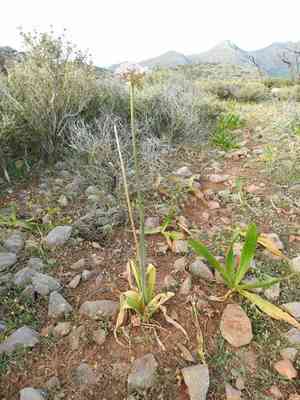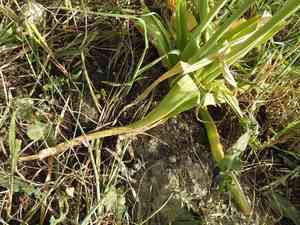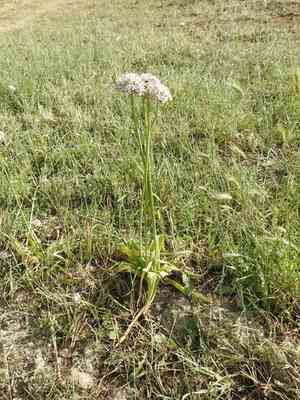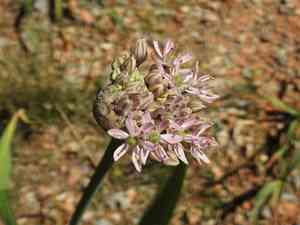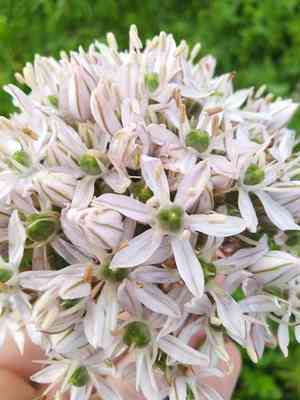
Black garlic(Allium nigrum)

Black garlic (Allium nigrum)

Also known as: Broadleaf garlic

Native to the Middle East, Allium nigrum, also known as black garlic, is a species of wild onion. Contrary to what its name might suggest, it produces small, creamy white flowers with greenish centers that form dense clusters atop a singular flower spike.

Attributes of Black garlic

Lifespan
Perennial
Plant Type
Herb
Plant Height
45 cm to 60 cm
Spread
10 cm
Leaf Color
Green Gray Silver
Flower Size
8 cm to 10 cm
Flower Color
White Cream

ForwardPlant - Identify plants with a snap

Identify and diagnose plants, get toxicity alerts, and explore safety guides for all types of fungi.

Try for Free

Images of Black garlic

Black garlic(Allium nigrum)

Quickly Identify Black garlic

1
Identify Allium nigrum by its star-shaped flowers, which are typically white with a subtle greenish tinge. The ovary is blackish-green and prominent in the center of each flower. The plant grows in umbels, forming a rounded cluster. Additionally, its strap-shaped leaves and a height ranging from 30 to 90 cm can aid in identification.

Scientific Classification of Black garlic

Phylum
Vascular plants
Class
Monocotyledons
Order
Asparagales
Family
Amaryllis
Genus
Onions
Species
Black garlic

Planting and Growing of Black garlic

Care Difficulty
Easy
Watering Schedule
Every 2 days
Sunlight Requirements
Full sun
Sunshine Duration
6-10 hours
Ideal Temperature
60-70℉
Soil Type
Potting Mix, Peat Mix
Soil pH
6.5-7.5
Fertilizer Type
Balanced
Pruning Season
Spring, Summer
Pruning Area
Branches, Leaves
Pruning Frequency
2 times a year
Repotting Season
Spring
Pot Type
Plastic, Ceramic

water icon How to Water Black garlic?

For Allium nigrum, the key is to water thoroughly but infrequently. Allow the soil to dry out a bit between waterings. When you water, use about 250 ml and ensure the water reaches the deeper roots without waterlogging the soil.
What are the symptoms of an underwatered Black garlic?
What should I do if my Black garlic is not getting enough water?
What are the symptoms of an overwatered Black garlic?
How to save an overwatered Black garlic?

sunlight icon What Are the Sunlight Requirements for Black garlic?

Sunlight Requirements: Full sun, Partial sun
Duration of light: 6 to 8 hours daily
Allium nigrum thrives best under full sun to partial sun, benefiting from 6-8 hours of direct sunlight. This range promotes healthy flowering and robust foliage growth.
What is the ideal lighting condition for Allium nigrum?
How can I achieve the ideal lighting conditions for Allium nigrum?
What are the benefits of providing ideal lighting to Allium nigrum?
More About Sunlight Requirements Techniques

temperature icon What Is the Ideal Temperature Range for Black garlic?

Ideal Temperature: 60 ~ 70℉
Allium nigrum thrives best in environments where the temperature is consistently between 60°F and 70°F. This range offers the optimal conditions for its growth, ensuring the plant utilizes water and nutrients efficiently, leading to healthy bulb development and flowering.

soil icon What Soil is Best for Black garlic?

Soil type: Loam, Sandy loam
Soil PH: 6.5 ~ 7.5
Allium nigrum thrives in well-drained soil, which prevents waterlogging and ensures optimal root health. Good drainage facilitates proper air circulation and nutrient uptake, crucial for robust growth. This plant prefers soil with moderate fertility, balancing nutrient supply without over-fertilizing. Ensuring the right nutrient levels supports strong bloom and foliage development. A soil rich in organic matter helps retain moisture while providing essential nutrients. Incorporating compost or well-rotted manure can enhance soil texture and fertility for Allium nigrum.

fertilize icon How to Fertilize Black garlic?

Fertilizer type: Balanced
Allium nigrum, commonly known as Black Garlic, thrives with moderate fertilization. Utilize a balanced fertilizer mixed at half the recommended strength provided on the packaging to ensure the plant receives adequate nutrients without being overwhelmed.

prune icon How to Prune Black garlic?

Pruning Time: Spring, Summer
When pruning Allium nigrum, ensure you use sharp, clean tools to make cuts. Begin by removing any dead or damaged leaves and stems, which helps prevent disease. Focus on cutting back spent flower stalks once the blooms have faded, as this will allow the plant to direct energy into bulb development rather than seed production. Trim carefully at the base of the stalk without damaging the surrounding foliage. This encourages healthy growth and future flower displays. If Allium nigrum becomes too dense, it may be necessary to thin it out. Selectively remove any overcrowding shoots to improve air circulation and light penetration. This step can help prevent fungal infections and improve overall plant health. Be mindful to retain the plant's natural shape and appearance while ensuring sufficient space between individual growths. More About Pruning Techniques

propagate icon How to Propagate Black garlic plant?

Propagate Time: Spring, Early summer, Autumn
1
Begin by filling seed trays with a well-draining potting mix. Sow the Allium nigrum seeds on the surface and lightly cover them with soil. Keep the soil consistently moist until germination occurs.
2
In early spring or autumn, carefully dig up a mature Allium nigrum plant. Use a gardening fork to separate the bulbs, ensuring each division has roots attached. Replant the divisions at the same depth as the original.
3
Prepare well-drained soil in a sunny location. Space the bulb divisions appropriately to avoid overcrowding. Water the divisions well after planting to help them establish quickly.
More About Propagating Techniques

repot icon How to Repot Black garlic plant?

Repotting frequency: Every 2-3 years
1
Repotting Allium nigrum should be timed with care. Look for signals such as roots growing out of the drainage holes or the plant's growth becoming stunted; these are clear indications it's time to repot. The plant enjoys a fresh environment every few years to ensure adequate nutrition and space.
2
Select a pot that's slightly larger than the current one, with enough drainage holes. A well-sized pot allows room for root expansion and prevents waterlogging, which can cause root rot. Choosing terracotta pots can help in regulating moisture levels due to their porous nature.
3
Opt for a well-draining loamy mix to replicate Allium nigrum's natural habitat. This type of soil prevents water from sitting at the roots and keeps the bulbs from rotting. A loamy mix also provides just the right balance of moisture retention and aeration.

ForwardPlant - Identify plants with a snap

Find the best spots for them to optimize their health, simply using your phone.

Try for Free

Toxicity of Black garlic

Is Black garlic toxic to humans?

Black garlic is known to have a low level of toxicity for humans, with the entire plant capable of inducing poisoning if ingested. When people consume various parts of black garlic, they may encounter a spectrum of symptoms that suggest mild poisoning. These symptoms can manifest as gastrointestinal issues, including nausea, vomiting, and diarrhea. Furthermore, there may be indications of oral irritation or skin reactions if the plant's sap comes into contact with the skin. Given that the whole plant is toxic, it is essential to exercise caution to avert accidental ingestion, especially in non-food scenarios where the likelihood of consuming dangerous amounts increases. It is vital for individuals to understand these possible health concerns associated with black garlic to mitigate any negative effects.

Is Black garlic toxic to cat?

Black garlic poses a mild toxicity risk to cats. Should a cat inadvertently consume any portion of black garlic, it might display symptoms of poisoning, including physical distress, sickness, or discomfort. Every part of the plant can lead to these negative effects in felines. If a cat is suspected to have been poisoned by black garlic, it is crucial to obtain prompt veterinary assistance to facilitate a swift and safe recovery.

Is Black garlic toxic to dog?

Black garlic presents a moderate toxicity risk to dogs. Canines might unintentionally ingest portions of this plant, which can lead to possible poisoning. The whole black garlic is toxic, and consumption may trigger symptoms that should alarm pet owners. If a dog ingests any component of black garlic, they could show signs of discomfort or sickness. It is vital for dog owners to vigilantly observe their pets and obtain urgent veterinary attention if they suspect their dog has ingested black garlic. Swift treatment at a veterinary facility is essential for the health and welfare of the affected pet.

Identify toxic plants for your safety

Learn which plants are harmful to you and your pets, and make informed choices for a safer home!

Try for Free
WARNING
The judgment on toxicity and danger is for reference only. We DO NOT GUARANTEE any accuracy of such judgment. Therefore, you SHALL NOT rely on such judgment. It is IMPORTANT TO SEEK PROFESSIONAL ADVICE in advance when necessary.
More About Toxic Techniques