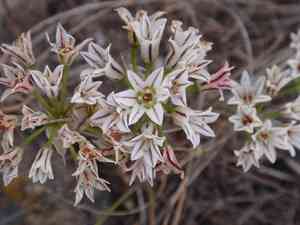
Pitted onion (Allium lacunosum)
Also known as: White fringed onion, Davis' pitted onion
The pitted onion features small, star-shaped flowers that range from white to pink, which form clusters at the top of slender, leafless stems. Its bulbs produce narrow, linear leaves that usually dry out before the plant flowers. This plant thrives in rocky, well-drained soils and is well-suited for arid environments, making the most of limited moisture with its modest height and clustered blooms.
In This Article
Attributes of Pitted onion
Lifespan
Perennial
Plant Type
Herb
Plant Height
10-30 cm
Spread
N/A
Leaf Color
Green
Flower Size
3-5 mm
Flower Color
White to Pink
Images of Pitted onion
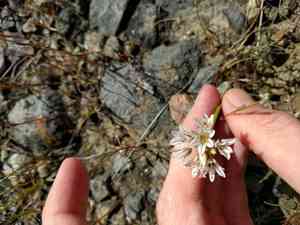
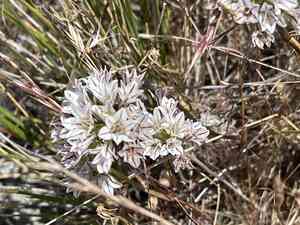
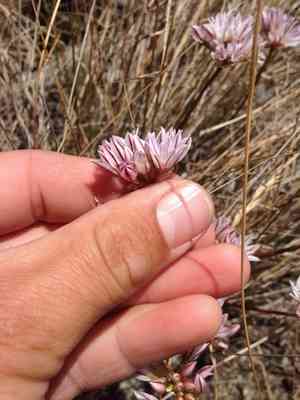

Quickly Identify Pitted onion
1
Allium lacunosum can be identified by its small, white to pinkish flowers forming in an umbel, its thin and narrow leaves, and its habitat typically in rocky and grassy areas.
Scientific Classification of Pitted onion
Phylum
Vascular plants
Class
Monocotyledons
Order
Asparagales
Family
Amaryllis
Genus
Onions
Species
Pitted onion
Planting and Growing of Pitted onion
Care Difficulty
Easy
Watering Schedule
Every 2 days
Sunlight Requirements
Full sun
Sunshine Duration
6-10 hours
Ideal Temperature
60-75℉
Soil Type
Potting Mix, Peat Mix
Soil pH
6.5-7.5
Fertilizer Type
Balanced
Pruning Season
Spring, Summer
Pruning Area
Branches, Leaves
Pruning Frequency
2 times a year
Repotting Season
Spring
Pot Type
Plastic, Ceramic
 How to Water Pitted onion?
For Allium lacunosum, ensure the soil is moist but not soggy. Water sufficiently until approximately 150ml drains through the pot's bottom for each session. This ensures hydration without waterlogging.
What are the symptoms of an underwatered Pitted onion?
›
What should I do if my Pitted onion is not getting enough water?
›
What are the symptoms of an overwatered Pitted onion?
›
How to save an overwatered Pitted onion?
›
 What Are the Sunlight Requirements for Pitted onion?
Allium lacunosum flourishes with full sun, benefiting from 6 to 8 hours of sunlight daily. This exposure is key to its health, contributing to potent photosynthesis and abundant flowering.
Optimal Lighting Inquiry
›
Solutions for Ideal Light Acquisition
›
Enhancement of Plant Health
›
 What Is the Ideal Temperature Range for Pitted onion?
To grow Allium lacunosum optimally, an ideal temperature range of 60°F to 75°F is recommended. This range allows for the best development of the plant's physiological processes and ensures vibrant growth and flowering.
 What Soil is Best for Pitted onion?
Allium lacunosum thrives in well-draining soil which prevents root rot and ensures healthy growth. It benefits from a good balance of moisture and air, promoting root health. This plant requires a nutrient-rich medium to support its growth and flowering. Adequate organic matter enhances soil fertility, offering the essential nutrients the plant needs. While well-draining, the soil should retain enough moisture to sustain the plant between watering cycles. This balance prevents stress and encourages vibrant blooms.
 How to Fertilize Pitted onion?
For Allium lacunosum, a moderate amount of fertilizer is ideal. During active growth phases, apply a half-strength liquid fertilizer solution every two weeks. Ensure the soil is evenly moist to help absorb the nutrients efficiently.
 How to Prune Pitted onion?
Begin by observing the overall structure of your Allium lacunosum. Identify any dead or diseased foliage, which should be the first to be removed. This provides a healthier environment for new growth. Prune to shape the plant by selectively trimming wayward stalks that disrupt the plant's symmetry. Cut at a 45-degree angle above a node or leaf set to encourage healthy new growth. Once flowering is complete, trim back any spent flower stalks to direct the plant's energy toward bulb growth. This process is key for sustaining the plant's vitality.
More About Pruning Techniques→
 How to Propagate Pitted onion plant?
1
Begin by collecting mature seeds from the Allium lacunosum plant or identify healthy bulbs for division. Ensure that seeds are dry and stored in a cool place before planting.
2
Use well-draining soil rich in organic matter. Fill seed trays or pots with the soil, and incorporate sand if necessary to improve drainage and aeration.
3
If using seeds, sow them evenly on the soil surface and lightly cover with a thin layer of soil. For division, carefully separate the bulbs and plant them at the same depth they were growing initially.
 How to Repot Pitted onion plant?
1
Repot your Allium lacunosum in spring when new growth emerges. Signals include roots poking out of drainage holes or soil compaction. This timing allows for maximum growth potential by taking advantage of the plant's natural growth cycle.
2
Select a pot with proper drainage and slightly larger than the current one. Ideally, it should be clay or terracotta to allow for breathability. A suitable pot prevents waterlogging and aids in healthy root development, providing the ideal conditions for robust growth.
3
Opt for a well-draining loamy soil mix containing organic matter. This choice ensures proper nutrient and moisture retention while preventing root rot. The right soil promotes the health and longevity of your plant, encouraging vigorous growth and flowering.
Learn More About Pitted onion Diseases
Anthracnose
Bacterial Leaf Spot
Bacterial Soft Rot
Bacterial Wilt
Chemical Injury
Cyst Nematode
Damping-off
Downy Mildew
Drought Stress
Fusarium Wilt
Gray Mold
Leaf Spot
Mosaic
Nutrient Deficiency
Nutrient Toxicity
Powdery Mildew
Root Rot
Root-knot Nematode
Rusts
Sooty Mold
Spider Mites
Temperature Stress
Thrips Damage
White Mold



