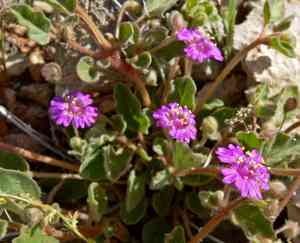
Windmills (Allionia) (Allionia)
Also known as: Windmills
The plant you're describing is likely the Purple Heart (Tradescantia pallida). It features sprawling stems, vivid purple flowers, and dark green, oval-shaped leaves. Interestingly, each purple bloom typically consists of three petals grouped closely together. This plant is commonly found in the wild.
In This Article
Attributes of Windmills (Allionia)
Lifespan
Annual, Perennial
Plant Height
15-30 cm
Spread
Spreading
Leaf Color
Green
Flower Size
Approximately 1 cm
Flower Color
Pink, Purple
Images of Windmills (Allionia)

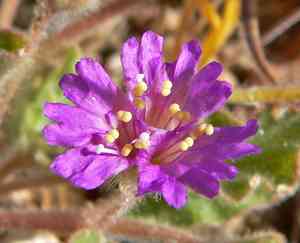
Quickly Identify Windmills (Allionia)
1
Allionia can be identified by its central cluster of three flowers, which resemble a single larger flower, as well as its opposite leaves and slender stems. The flowers are typically pink or purple with a funnel shape.
Scientific Classification of Windmills (Allionia)
Phylum
Magnoliophyta
Class
Magnoliopsida
Order
Caryophyllales
Family
Nyctaginaceae
Genus
Allionia
Planting and Growing of Windmills (Allionia)
Care Difficulty
Moderate
Watering Schedule
Every 2 days
Sunlight Requirements
Partial sun
Sunshine Duration
4-8 hours
Ideal Temperature
65-75℉
Soil Type
Potting Mix, Peat Mix
Soil pH
6.5-7.5
Fertilizer Type
Balanced
Pruning Season
Spring, Summer
Pruning Area
Branches, Leaves
Pruning Frequency
2 times a year
Repotting Season
Spring
Pot Type
Plastic, Terracotta
 How to Water Windmills (Allionia)?
For Allionia, the watering amount should be just enough to moisten the soil without waterlogging it. Aim to provide approximately 500 ml of water each session, ensuring it penetrates thoroughly to reach the roots without pooling on the surface.
What are the symptoms of an underwatered Windmills (Allionia)?
›
What should I do if my Windmills (Allionia) is not getting enough water?
›
What are the symptoms of an overwatered Windmills (Allionia)?
›
How to save an overwatered Windmills (Allionia)?
›
 What Are the Sunlight Requirements for Windmills (Allionia)?
Partial sun conditions with 4-6 hours of morning or late afternoon light. Ideal lighting promotes healthy development, increases flowering potential, and ensures robust foliage.
What type of sunlight does Allionia prefer?
›
How can you achieve the ideal lighting for Allionia?
›
What benefits does ideal lighting provide for Allionia?
›
 What Is the Ideal Temperature Range for Windmills (Allionia)?
The ideal temperature range for growing Allionia is between 65°F and 75°F. This range provides a stable environment that supports optimal metabolic processes, leaf development, and flowering. Maintaining temperatures within this range helps ensure robust and healthy plant growth.
 What Soil is Best for Windmills (Allionia)?
Allionia thrives in nutrient-rich soil, providing the essential minerals and nutrients needed for healthy growth. Fertile soils enhance blooming and vigor, ensuring that the plant can produce vibrant flowers and lush foliage. Proper drainage is crucial for Allionia, as standing water can lead to root rot. Well-drained soil prevents excess moisture accumulation, promoting optimal root health and preventing potential diseases. Allionia prefers soils with moderate moisture, avoiding drought stress that can hinder growth. Consistent moisture allows for steady nutritional uptake and sustained flowering periods, leading to vibrant, longer-lasting blooms.
 How to Fertilize Windmills (Allionia)?
For Allionia, apply a balanced liquid fertilizer diluted to half strength, about 250 ml per plant. This ensures the roots are not overwhelmed while providing necessary nutrients.
 How to Prune Windmills (Allionia)?
Begin pruning Allionia by identifying dead or damaged stems. Use sharp, sterilized scissors or pruning shears to make clean cuts. Trim back overgrown stems to maintain the desired shape and size, ensuring plenty of sunlight reaches the foliage. For an enhanced display, prune to shape the plant artistically. Remove basal stems for a more compact look. Encourage bushy growth by pinching back the tips of healthy shoots. Be mindful to ensure symmetry and balance during the process.
 How to Propagate Windmills (Allionia) plant?
1
Begin by filling a seed tray with a sterile seed-starting mix. Sow the seeds on the surface and cover them lightly with soil. Ensure consistent moisture by using a spray bottle to avoid washing away seeds. Place the tray in a warm, bright location.
2
Select a healthy, non-flowering stem and use sterilized pruners to cut a section about 4-6 inches long. Strip lower leaves to expose nodes, which is where root development will occur. Optionally, dip the cut end in rooting hormone to encourage faster rooting.
3
Once seedlings or cuttings have developed roots, prepare individual pots filled with potting mix. Gently transplant them, taking care not to damage the roots. Water thoroughly after planting, and maintain a consistent moisture level until established.
 How to Repot Windmills (Allionia) plant?
1
You should repot Allionia when growth slows down and the roots become visible through the pot's drainage holes. These are clear indicators that the plant needs more room to grow and fresh nutrients from new soil.
2
Select a pot that is one size larger than the current one with ample drainage holes. This ensures adequate root space while preventing water retention, safeguarding against root rot and promoting healthy growth.
3
Opt for a sandy, well-drained potting mix. This type of soil prevents waterlogging and mimics the plant's natural habitat, supporting optimum root aeration and growth.
Learn More About Windmills (Allionia) Diseases
Anthracnose
Bacterial Leaf Spot
Bacterial Soft Rot
Bacterial Wilt
Black Spot
Chemical Injury
Crown Gall
Cyst Nematode
Damping-off
Downy Mildew
Drought Stress
Fusarium Wilt
Gray Mold
Leaf Curl
Leaf Spot
Mosaic
Nutrient Deficiency
Nutrient Toxicity
Powdery Mildew
Root Rot
Root-knot Nematode
Rusts
Sooty Mold
Spider Mites
Temperature Stress
Thrips Damage
White Mold

