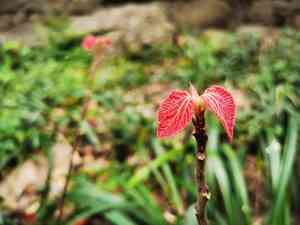
David's alchornea (Alchornea davidii)
Also known as: David's Alchornea
Alchornea davidii captivates gardeners with its striking foliage that emerges in shades from soft pink to rich magenta in spring. During the summer, the leaves turn green, and in autumn, they transform into a stunning red-tinged yellow. The plant also features delicate red flowers, adding to its visual appeal. Despite its tendency to spread rapidly through root suckers, its vibrant and changing colors throughout the seasons make it a sought-after choice for gardens.
In This Article
Attributes of David's alchornea
Lifespan
Perennial
Plant Type
Shrub
Plant Height
2.5 m to 4 m
Spread
Approximately 2 to 3 meters.
Leaf Color
Green Yellow Red
Flower Size
1.5 cm to 3.5 cm
Flower Color
Red Green Yellow
Quickly Identify David's alchornea
1
Identify Alchornea davidii by its alternate leaves, which are broadly elliptical to ovate in shape. The plant produces small greenish flowers in clusters and red berries as fruits.
Scientific Classification of David's alchornea
Phylum
Vascular plants
Class
Dicotyledons
Order
Nances, spurges, willows and allies
Family
Spurge
Genus
Alchornea
Species
David's alchornea
Planting and Growing of David's alchornea
Care Difficulty
Easy
Watering Schedule
Every 4 days
Sunlight Requirements
Partial sun
Sunshine Duration
6-10 hours
Ideal Temperature
68-77℉
Soil Type
Potting Mix, Peat Mix
Soil pH
6.5-7.5
Fertilizer Type
Balanced
Pruning Season
Spring, Summer
Pruning Area
Branches, Leaves
Pruning Frequency
2 times a year
Repotting Season
Spring
Pot Type
Plastic, Ceramic
 How to Water David's alchornea?
When watering Alchornea davidii, it's vital to ensure the soil is thoroughly moistened but not waterlogged. Typically, using about 300 milliliters per watering session allows the water to penetrate deep into the soil, reaching the roots effectively while preventing soil saturation and root rot.
What are the symptoms of an underwatered David's alchornea?
›
What should I do if my David's alchornea is not getting enough water?
›
What are the symptoms of an overwatered David's alchornea?
›
How to save an overwatered David's alchornea?
›
 What Are the Sunlight Requirements for David's alchornea?
Alchornea davidii thrives in partial sun conditions, receiving 4-6 hours of indirect light daily. Optimal lighting promotes vibrant leaf color and strong structural growth.
More About Sunlight Requirements Techniques→
What is the best lighting condition for Alchornea davidii?
›
How can one achieve ideal lighting for Alchornea davidii?
›
What benefits does Alchornea davidii gain from optimal lighting?
›
 What Is the Ideal Temperature Range for David's alchornea?
The ideal temperature range for Alchornea davidii lies between 68°F and 77°F. This range provides optimal conditions for growth and metabolic activity. Maintaining the plant within this range ensures that the physiological processes occur smoothly, promoting robust and healthy growth.
 What Soil is Best for David's alchornea?
Alchornea davidii thrives in well-draining soil, which helps prevent root rot and allows for better oxygenation of the roots. This type of soil adds the benefit of maintaining moisture balance, ensuring the plant receives enough water without the risk of waterlogging. This plant requires a nutrient-rich soil base to support its growth. Organic matter like compost or well-rotted manure can be mixed into the soil to enhance nutrient availability, which promotes robust growth and vibrant foliage. While high nutrient content is essential, Alchornea davidii also thrives with a moderate amount of organic matter, improving the soil structure and providing a steady supply of nutrients, crucial for sustaining healthy growth over time.
 How to Fertilize David's alchornea?
For Alchornea davidii, the recommended amount of fertilizer is moderate. Use approximately 1 teaspoon of liquid fertilizer diluted in 1 liter of water for every application. For solid fertilizers, 50 grams per plant should suffice, spread uniformly around the root zone every four months.
 How to Prune David's alchornea?
Start by looking for dead or diseased branches. These should be removed first to prevent the spread of disease and improve the overall health of the plant. Cut back long, gangly branches to encourage denser growth. Prune just above a node or bud to stimulate new shoots and a bushier appearance. Remove any branches that are rubbing against each other. Light can then better penetrate through the canopy, enhancing overall foliage health.
More About Pruning Techniques→
 How to Propagate David's alchornea plant?
1
Collect seeds from ripe fruits in early summer. Clean and dry the seeds before planting. Store them in a cool, dry place if not planting immediately.
2
Select healthy stems for cuttings in spring. Use clean pruning shears to cut below a node. Remove leaves from the lower part of the cutting to reduce moisture loss.
3
Sow the seeds in a prepared seed tray with moist, fertile soil. Cover them lightly with soil. Maintain consistent moisture and temperature for successful germination.
 How to Repot David's alchornea plant?
1
Repotting your Alchornea davidii is necessary when you notice roots growing out of the drainage holes, the plant's growth slowing down, or it becoming top-heavy and unstable. Ideally, timing this with its natural growth periods in spring or autumn helps minimize stress and promote faster recovery.
2
Selecting a pot for your Alchornea davidii involves picking one that is 2-3 inches larger in diameter than the current pot to give roots room to grow. A pot with drainage holes is essential for preventing waterlogging, which can cause root rot. The material can vary, but terracotta pots are excellent for their breathability and ability to wick away excess moisture.
3
The ideal soil mix for repotting Alchornea davidii should be well-draining and enriched with organic matter such as compost. A mix containing equal parts of peat, perlite, and loamy soil ensures aeration, moisture retention, and nutrient supply, providing a healthy environment for the roots to expand and thrive.



