Bugleweed (Ajuga)(Ajuga)

Bugleweed (Ajuga) (Ajuga)

Also known as: Bugle

Bugleweed (Ajuga reptans) is a low-growing member of the mint family known for its appealing foliage and vibrant flower spikes. Here are some notable characteristics and uses in gardening:

**Characteristics:**
- **Foliage:** Evergreen or semi-evergreen leaves in shades of green, bronze, purple, or variegated.
- **Flowers:** Produces spikes of blue, purple, or white blooms from late spring to early summer.
- **Growth Habit:** Spreads rapidly through runners, forming dense mats.
- **Height:** Grows to about 3-6 inches tall.

**Uses:**
- **Ground Cover:** Excellent for covering large areas, particularly in shady locations where grass may not thrive.
- **Erosion Control:** Effective at stabilizing soil on slopes and preventing erosion.
- **Borders and Edging:** Suitable for creating attractive, low-maintenance borders along pathways and garden beds.
- **Under Trees:** Performs well under trees and shrubs where sunlight is limited.

While bugleweed is low-maintenance, its vigorous growth can lead to invasiveness, so regular management is advised.

Attributes of Bugleweed (Ajuga)

Lifespan
Perennial
Plant Height
5-30 cm
Spread
30-60 cm
Leaf Color
Green, bronze, purple
Flower Size
1-2 cm
Flower Color
Blue, purple, pink, white

ForwardPlant - Identify plants with a snap

Identify and diagnose plants, get toxicity alerts, and explore safety guides for all types of fungi.

Try for Free

Images of Bugleweed (Ajuga)

Bugleweed (Ajuga)(Ajuga)

Quickly Identify Bugleweed (Ajuga)

1
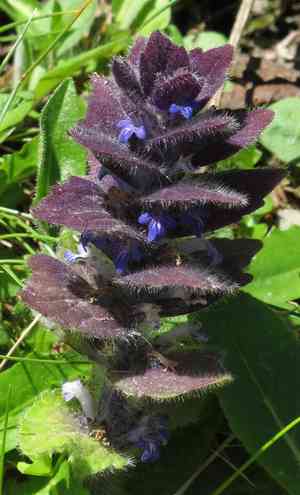
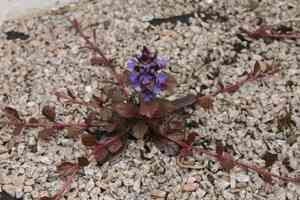
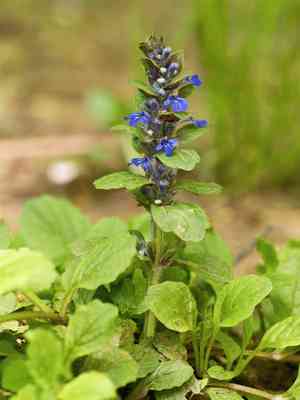
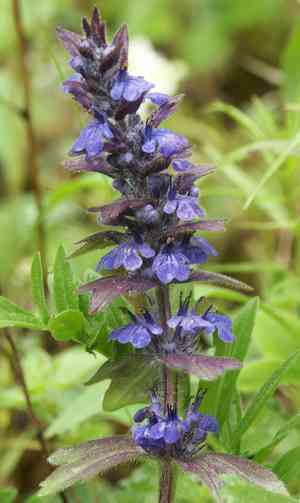
Ajuga can be identified by its low-lying growth habit, rosette of leaves, and spike-like racemes of usually blue to purple flowers. The leaves are typically glossy and can vary in color from green to bronze or purple.

Scientific Classification of Bugleweed (Ajuga)

Phylum
Magnoliophyta
Class
Magnoliopsida
Order
Lamiales
Family
Lamiaceae
Genus
Ajuga

Planting and Growing of Bugleweed (Ajuga)

Care Difficulty
Easy
Watering Schedule
Every 4 days
Sunlight Requirements
Partial sun
Sunshine Duration
4-6 hours
Ideal Temperature
60-75℉
Soil Type
Potting Mix, Peat Mix
Soil pH
6.5-7.5
Fertilizer Type
Balanced
Pruning Season
Spring, Summer
Pruning Area
Branches, Leaves
Pruning Frequency
2 times a year
Repotting Season
Spring
Pot Type
Plastic, Ceramic

water icon How to Water Bugleweed (Ajuga)?

Ajuga, commonly known as Bugleweed, prefers consistently moist soil. Ensure that each watering provides around 250 milliliters of water, soaking the soil until it's moist but not waterlogged. This mimics the plant's natural habitat and prevents stress from drought or excess moisture.
What are the symptoms of an underwatered Bugleweed (Ajuga)?
What should I do if my Bugleweed (Ajuga) is not getting enough water?
What are the symptoms of an overwatered Bugleweed (Ajuga)?
How to save an overwatered Bugleweed (Ajuga)?

sunlight icon What Are the Sunlight Requirements for Bugleweed (Ajuga)?

Sunlight Requirements: Partial sun, Full shade
Duration of light: 3-6 hours
Partial sun to full shade offers Ajuga ideal conditions, encouraging vigorous growth and vibrant foliage. Sufficient light supports healthy metabolism and photosynthetic processes, resulting in strong, resilient plants.
How much light does Ajuga need?
What solutions can help achieve ideal lighting for Ajuga?
What are the benefits of optimal light for Ajuga?

temperature icon What Is the Ideal Temperature Range for Bugleweed (Ajuga)?

Ideal Temperature: 60 ~ 75℉
The ideal temperature range is crucial for Ajuga plants because it ensures optimal growth and vitality. Temperatures between 60°F and 75°F are perfect for their enzymatic activities, photosynthesis efficiency, and overall metabolic processes. This range provides the right balance of warmth that Ajuga thrives in without stressing its systems.

soil icon What Soil is Best for Bugleweed (Ajuga)?

Soil type: Loam, Sandy loam
Soil PH: 6.5 ~ 7.5
Ajuga thrives in soils that retain moisture well without becoming waterlogged. This helps the plant maintain optimal hydration levels, promoting lush foliage and vigorous growth. Ajuga prefers soils rich in organic matter, ensuring a steady supply of essential nutrients. This nutrient abundance supports the plant's vibrant blooms and robust health. Well-draining soil prevents root rot by allowing excess water to escape, crucial for Ajuga's longevity. It ensures roots get oxygen while avoiding harmful soggy conditions.

fertilize icon How to Fertilize Bugleweed (Ajuga)?

Fertilizer type: Balanced
Ajuga thrives with moderate nourishment. While over-fertilization may harm it, providing the right balance of nutrients ensures vibrant growth. Use a liquid fertilizer diluted to half strength, for instance, 10-10-10 NPK, about 250 ml per plant monthly during the growing season.

prune icon How to Prune Bugleweed (Ajuga)?

Pruning Time: Spring, Summer
Always ensure your pruning tools are sterilized. This simple step prevents the spread of disease between plants. You can disinfect tools with rubbing alcohol or a bleach solution between uses. Avoid pruning during extremely hot days. This can stress the plant unnecessarily. Instead, aim to prune in the cooler parts of the day, such as early morning or late afternoon, to reduce plant shock. After pruning, keep an eye on your Ajuga for any signs of stress or disease. If you notice anything unusual such as wilting or discoloration, check for potential issues and address them promptly.

propagate icon How to Propagate Bugleweed (Ajuga) plant?

Propagate Time: Spring,Early spring,Autumn
1
Harvest Ajuga seeds from matured plants in autumn. Allow the seed heads to dry completely on the plant before collecting them carefully. Ensure that they are fully mature to maximize germination rates.
2
In spring, take 2- to 3-inch cuttings from healthy Ajuga plants. Make sure each cutting includes a leaf node. These nodes are where root growth is most likely to occur.
3
In early spring or autumn, dig up the entire Ajuga plant. Use a sharp knife or spade to divide the plant into smaller sections, ensuring each section has roots and foliage.

repot icon How to Repot Bugleweed (Ajuga) plant?

Repotting frequency: Every 1-2 years
1
Ajuga plants need repotting when you notice their roots visibly coming out of the pot’s drainage holes or when their growth significantly slows. These signs indicate that the plant might be root-bound or the soil has lost its nutrient density, which could hinder its growth.
2
Select a pot that is at least 1-2 inches wider in diameter than the current one, and it should have ample drainage holes. A slightly larger size allows for root growth and good drainage prevents waterlogging, reducing the risk of root rot and ensuring healthier plant growth.
3
Opt for a well-draining potting mix rich in organic matter, which can include components like perlite, peat, and pine bark. This is crucial as it helps with aeration, retains necessary moisture, and provides essential nutrients, facilitating a conducive environment for your Ajuga to thrive.

ForwardPlant - Identify plants with a snap

Find the best spots for them to optimize their health, simply using your phone.

Try for Free