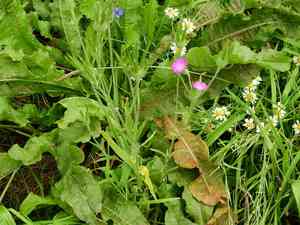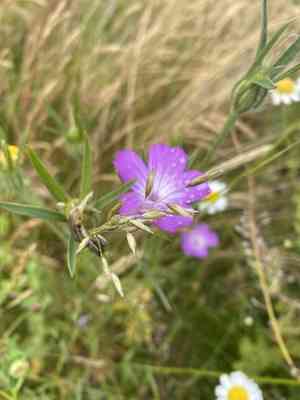
Common corncockle(Agrostemma githago)

Common corncockle (Agrostemma githago)

Also known as: Corn pink, Zizany

The plant you're referring to is likely the Common Corncockle (Agrostemma githago). This annual can reach a height of up to 91 cm and produces purple blooms from spring through summer, with seeds maturing from summer to fall. While it is often deemed a weed in agricultural settings, it can enhance a home garden. Its sturdy stems make it particularly suitable for cut flower arrangements.

Attributes of Common corncockle

Lifespan
Annual, Biennial, Perennial
Plant Type
Herb
Plant Height
50 cm to 1 m
Spread
25 cm
Leaf Color
Green Gray
Flower Size
2.5 cm to 5 cm
Flower Color
Pink Purple White

PlantJoy - Identify plants with a snap

Identify and diagnose plants, get toxicity alerts, and explore safety guides for all types of fungi.

Try for Free

Images of Common corncockle

Common corncockle(Agrostemma githago)

Quickly Identify Common corncockle

1
Robust herbaceous form with downy, erect stems.
2
Prominent, vivid flowers with 5 ovate petals in pink to purple shades.
3
5 sepals extending beyond delicate, tapered petals give flowers a distinctive appearance.
4
Dry capsule fruit with black, pitted seeds measuring up to 0.12 inches (3 mm).
5
Slender, silky-haired stem with light green color and minimal branching.

Scientific Classification of Common corncockle

Phylum
Vascular plants
Class
Dicotyledons
Order
Pinks, cacti, and allies
Family
Pink
Genus
Corncockles
Species
Common corncockle

Planting and Growing of Common corncockle

Care Difficulty
Easy
Watering Schedule
Every 4 days
Sunlight Requirements
Full sun
Sunshine Duration
4-8 hours
Ideal Temperature
60-75℉
Soil Type
Potting Mix, Peat Mix
Soil pH
6.5-7.5
Fertilizer Type
Balanced
Pruning Season
Spring, Summer
Pruning Area
Branches, Leaves
Pruning Frequency
2 times a year
Repotting Season
Spring
Pot Type
Plastic, Ceramic

water icon How to Water Common corncockle?

For Agrostemma githago, the watering amount should be around 250 milliliters. It is important to ensure the soil is consistently moist but never waterlogged. This plant thrives when its soil is allowed to dry out slightly between waterings, so check the top inch of soil before the next watering.
What are the symptoms of an underwatered Common corncockle?
What should I do if my Common corncockle is not getting enough water?
What are the symptoms of an overwatered Common corncockle?
How to save an overwatered Common corncockle?

sunlight icon What Are the Sunlight Requirements for Common corncockle?

Sunlight Requirements: Full sun
Duration of light: 6-8 hours daily
Agrostemma githago prefers full sun for optimal growth. Ideal lighting enhances photosynthesis, leading to healthy plant development and abundant flowering, crucial for its ornamental appeal.
What is the ideal lighting for Agrostemma githago?
How can one achieve ideal lighting?
What are the benefits of ideal lighting?
More About Sunlight Requirements Techniques

temperature icon What Is the Ideal Temperature Range for Common corncockle?

Ideal Temperature: 60 ~ 75℉
Agrostemma githago thrives in temperatures between 60°F and 75°F, which provides the optimal environment for its growth. These temperatures facilitate efficient photosynthesis and growth processes, leading to a healthy and robust plant. To achieve this ideal range, it's essential to monitor environmental conditions regularly to ensure they remain conducive to the plant's development.

soil icon What Soil is Best for Common corncockle?

Soil type: Loam, Sandy loam, Calcareous soil
Soil PH: 6.5 ~ 7.5
Agrostemma githago thrives in well-drained soil, which prevents waterlogging and root rot. Optimal drainage ensures that the roots receive necessary oxygen and nutrients, contributing to the plant's overall health and vibrant blooms. This plant prefers moderately fertile soil, which provides an ideal balance of nutrients. This supports consistent growth without promoting excessive foliage at the expense of flowering, giving the plant a balanced appearance. Agrostemma githago prefers soil with a neutral to slightly alkaline pH, which supports nutrient availability and healthy growth. This pH range also reduces the risk of certain diseases and nutrient deficiencies. More About Soil

fertilize icon How to Fertilize Common corncockle?

Fertilizer type: Balanced
For Agrostemma githago, a modest approach to fertilizer application is advised. Use a balanced 10-10-10 liquid or granular fertilizer. For a liquid application, mix at a dilution rate of one tablespoon per gallon of water. For granular slow-release, apply approximately one teaspoon per square foot of garden soil surface. An excess of nutrients can lead to detrimental effects on both plant health and soil balance. More About Fertilizing Techniques

prune icon How to Prune Common corncockle?

Pruning Time: Spring, Summer
Start by removing any dead or diseased stems to encourage healthy growth. Trim back overgrown areas to maintain the plant's natural shape, being careful not to cut back more than one-third of the plant at a time. Focus on cutting above a leaf node to encourage more blooms. Use a pair of clean, sharp garden shears to minimize damage to the plant. Disinfect the shears with rubbing alcohol before and after to prevent the spread of diseases. More About Pruning Techniques

propagate icon How to Propagate Common corncockle plant?

Propagate Time: Spring, Early spring
1
Soak Agrostemma githago seeds in lukewarm water overnight to soften the seed coat and enhance germination rates. This is particularly important to mimic natural conditions.
2
Scatter the seeds evenly across the surface of a seed tray filled with fine potting mix. Lightly cover them with a thin layer of the same soil to ensure they remain in place.
3
Mist the surface gently with water and cover the tray with a clear plastic lid to maintain humidity. This creates a mini greenhouse effect, encouraging faster germination.
More About Propagating Techniques

repot icon How to Repot Common corncockle plant?

Repotting frequency: Every 1-2 years
1
Agrostemma githago should be repotted when you observe that roots are visible through the drainage holes of the pot or when soil dries out too quickly. Additionally, if the plant appears stunted or is not producing vibrant blooms, it is likely time to consider repotting.
2
Selecting an appropriate pot involves ensuring it has enough drainage holes and is one size larger than the current one. This offers sufficient space for root expansion, helping the plant to grow healthier and more vigorously. The material, whether clay or plastic, can be chosen based on preference, but adequate drainage is paramount.
3
Opt for a well-drained loamy soil mix that mimics the plant's natural habitat, providing essential nutrients while preventing waterlogging. This type of soil ensures that the roots receive adequate oxygen, promoting robust growth and blooming.

PlantJoy - Identify plants with a snap

Find the best spots for them to optimize their health, simply using your phone.

Try for Free

Toxicity of Common corncockle

Is Common corncockle toxic to humans?

Common corncockle, appreciated for its ornamental beauty in gardens, possesses mild toxicity for humans, as its toxins are not significantly absorbed upon consumption. However, it poses a considerable risk to poultry that consume its seeds, while other domestic animals show a lower susceptibility to its toxic effects.

Is Common corncockle toxic to cat?

The common corncockle presents a moderate risk of toxicity to cats, particularly if they accidentally consume the seeds. The toxic effects are attributed to triterpenoid secondary metabolites. Following ingestion, a cat may display signs of physical distress that require urgent medical care. To reduce the risks and possible health issues, cat owners must prevent their cats from accessing common corncockle and should promptly consult a veterinary hospital if poisoning is suspected.

Is Common corncockle toxic to dog?

Common corncockle presents a moderate toxicity hazard for dogs. Canines may inadvertently consume the plant, especially the seeds, which are recognized for their toxic properties. If a dog ingests any part of common corncockle, it could display symptoms such as gastrointestinal distress, lethargy, and potentially more severe clinical manifestations, depending on the quantity consumed. The seeds contain triterpenoid secondary metabolites, which play a significant role in the plant's toxicity. Should a dog be suspected of having ingested common corncockle, it is crucial to obtain immediate veterinary assistance to ensure swift and proper treatment.

Identify toxic plants for your safety

Learn which plants are harmful to you and your pets, and make informed choices for a safer home!

Try for Free
WARNING
The judgment on toxicity and danger is for reference only. We DO NOT GUARANTEE any accuracy of such judgment. Therefore, you SHALL NOT rely on such judgment. It is IMPORTANT TO SEEK PROFESSIONAL ADVICE in advance when necessary.
More About Toxic Techniques