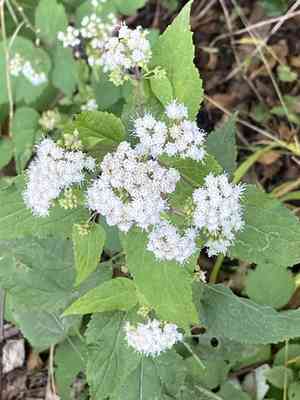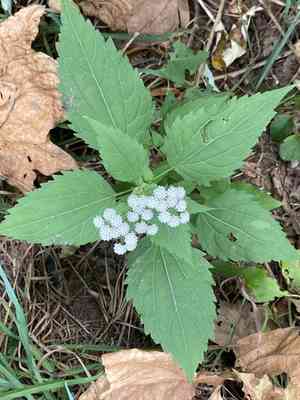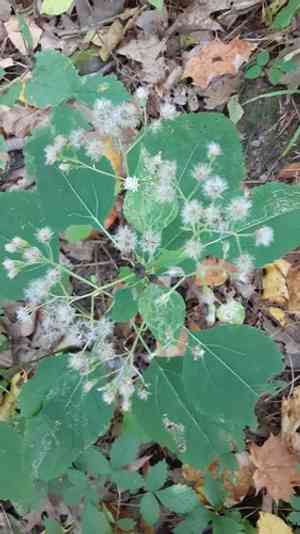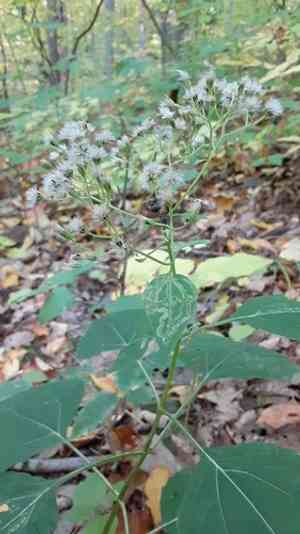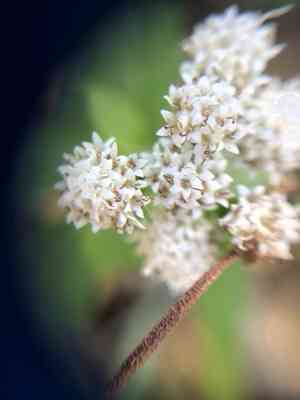
White snakeroot(Ageratina altissima)

White snakeroot (Ageratina altissima)

Also known as: Tall boneset

It's wise to be cautious around white snakeroot because it harbors a toxin called tremetol, which can cause severe illness. If lactating animals consume this plant, the toxin can be transferred into their milk, posing a risk to humans who drink it. Historically, "milk sickness" claimed many lives among early European settlers before the dangers of white snakeroot were recognized.

Attributes of White snakeroot

Lifespan
Perennial
Plant Type
Herb
Plant Height
1.5 m
Spread
60 cm to 1.2 m
Leaf Color
Green
Flower Size
5 cm to 15 cm
Flower Color
White

ForwardPlant - Identify plants with a snap

Identify and diagnose plants, get toxicity alerts, and explore safety guides for all types of fungi.

Try for Free

Images of White snakeroot

White snakeroot(Ageratina altissima)

Quickly Identify White snakeroot

1
The plant can be identified by its upright, branching stems which are usually around 1-1.5 meters tall. It has triangular to heart-shaped toothed leaves with pointed tips and its white flower clusters are arranged in flat-topped inflorescences.

Scientific Classification of White snakeroot

Phylum
Vascular plants
Class
Dicotyledons
Order
Asterales
Family
Daisy
Genus
Snakeroots
Species
White snakeroot

Planting and Growing of White snakeroot

Care Difficulty
Easy
Watering Schedule
Every 2 days
Sunlight Requirements
Partial sun
Sunshine Duration
4-6 hours
Ideal Temperature
60-75℉
Soil Type
Potting Mix, Peat Mix
Soil pH
6.5-7.5
Fertilizer Type
Balanced
Pruning Season
Spring, Summer
Pruning Area
Branches, Leaves
Pruning Frequency
2 times a year
Repotting Season
Spring
Pot Type
Plastic, Ceramic

water icon How to Water White snakeroot?

Ageratina altissima, commonly known as white snakeroot, prefers its soil to be kept consistently moist but not waterlogged. A watering amount of approximately 250 ml per session should suffice. Ensure the water reaches the depth of the roots without pooling on the surface. It is essential to let the top inch of soil dry out slightly between waterings to avoid root rot.
What are the symptoms of an underwatered White snakeroot?
What should I do if my White snakeroot is not getting enough water?
What are the symptoms of an overwatered White snakeroot?
How to save an overwatered White snakeroot?

sunlight icon What Are the Sunlight Requirements for White snakeroot?

Sunlight Requirements: Partial sun, Full shade
Duration of light: 4-6 hours
Partial sun offers the best lighting conditions, helping Ageratina altissima maintain lush foliage and promote flowering, enhancing both its beauty and ecological contributions.
Ideal Light Type
Solution for Optimal Light
Benefits of Ideal Lighting

temperature icon What Is the Ideal Temperature Range for White snakeroot?

Ideal Temperature: 60 ~ 75℉
Ageratina altissima thrives best within an ideal temperature range of 60 to 75 degrees Fahrenheit. This temperature range closely mimics the conditions of its native habitats, allowing the plant to grow robustly and produce its iconic white blooms. Under these conditions, cellular metabolism proceeds optimally, enabling efficient photosynthesis and nutrient uptake essential for healthy growth.

soil icon What Soil is Best for White snakeroot?

Soil type: Loam, Sandy loam
Soil PH: 6.5 ~ 7.5
Ageratina altissima thrives in soil that retains moisture well. The water retention ensures the plant has consistent moisture access, crucial during dry spells. Well-retained moisture supports healthier growth and lushness. The plant prefers soil rich in organic nutrients. This facilitates healthy foliage and robust blooms. Nutrient-rich soil provides essential elements necessary for photosynthesis and overall plant vitality. Properly draining soil is vital for avoiding waterlogging, which this plant is susceptible to. Well-drained soil helps prevent root rot, ensuring that the roots are oxygenated and healthy.

fertilize icon How to Fertilize White snakeroot?

Fertilizer type: Balanced
When fertilizing Ageratina altissima, use a balanced 10-10-10 fertilizer. For liquid fertilizers, dilute it to half the strength recommended on the label. For slow-release granules, approximately one tablespoon per square foot is sufficient.

prune icon How to Prune White snakeroot?

Pruning Time: Spring, Summer, Autumn
Begin by identifying and cutting away any dead or damaged stems at their base, close to the ground. This allows the plant to channel energy into healthy growth. Ensure you cut back overgrown sections by about one-third. This encourages a compact growth habit and prevents the plant from becoming unruly. Mold the overall shape of the Ageratina altissima by selectively trimming stems to maintain a balanced and aesthetically pleasing form. Consistent shape maintenance can help promote uniform growth.

propagate icon How to Propagate White snakeroot plant?

Propagate Time: Spring, Early spring, Late spring, Summer, Early summer, Late summer
1
Begin by filling seed trays with a sterile seed-starting mix. Sow the seeds of Ageratina altissima on the surface and lightly cover them with soil. Keep the soil moist but not waterlogged during the germination period.
2
Select healthy stems for cuttings, approximately 4-6 inches in length. Remove the lower leaves and dip the cut end in rooting hormone before placing them into a well-drained potting mix.
3
Mature Ageratina altissima plants can be divided in spring. Dig out the plant and gently separate the roots into smaller sections. Replant each section immediately to ensure they establish well.

repot icon How to Repot White snakeroot plant?

Repotting frequency: Every 2-3 years
1
Look for signs like roots emerging from drainage holes or the soil drying out quickly; these indicate the plant is root-bound and needs repotting. Ideally, choose early spring or early autumn for the process.
2
Select a pot with ample drainage holes, ideally one size larger than the current. A well-draining pot prevents water accumulation, reducing the risk of root rot and promoting healthier growth.
3
Opt for a well-draining potting mix; it should be loose enough to prevent waterlogging yet retain some moisture. This facilitates root aeration, essential for the plant's health and growth.

ForwardPlant - Identify plants with a snap

Find the best spots for them to optimize their health, simply using your phone.

Try for Free

Toxicity of White snakeroot

Is White snakeroot toxic to cat?

White snakeroot poses a significant threat to the health of cats, as its toxic properties can adversely affect felines that accidentally consume its leaves. When cats are exposed to white snakeroot, they may experience physical discomfort, evidenced by various symptoms of illness or pain. Given the risks associated with ingestion, it is essential for pet owners to restrict their cats' access to areas where this plant is present. Although specific toxic compounds within white snakeroot are not well-defined, the overall toxicity of the plant requires prompt veterinary intervention for any cat exhibiting negative reactions after eating it. Swift treatment at a veterinary facility is vital for the recovery of any feline suspected of being poisoned by white snakeroot.

Is White snakeroot toxic to dog?

White snakeroot is a highly toxic plant that presents a considerable danger to dogs. If dogs inadvertently consume any part of this plant, especially the leaves, they may experience poisoning. The signs of poisoning can differ but often include vomiting, diarrhea, general weakness, and in severe instances, may result in tremors or seizures. It is vital for dog owners to remain alert and prevent their pets from accessing areas where white snakeroot is present. Should there be any suspicion that a dog has consumed any portion of white snakeroot, it is essential to seek immediate veterinary assistance to ensure the best possible outcome for the affected animal.

Identify toxic plants for your safety

Learn which plants are harmful to you and your pets, and make informed choices for a safer home!

Try for Free
WARNING
The judgment on toxicity and danger is for reference only. We DO NOT GUARANTEE any accuracy of such judgment. Therefore, you SHALL NOT rely on such judgment. It is IMPORTANT TO SEEK PROFESSIONAL ADVICE in advance when necessary.
More About Toxic Techniques