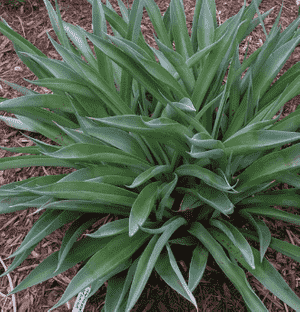
False aloe (Agave virginica)
Also known as: Virginian agave, American aloe
Eryngium yuccifolium, commonly known as rattlesnake master, is a succulent species native to the eastern United States and Mexico. This plant is known for attracting sphinx moths, bees, and hummingbirds.
In This Article
Attributes of False aloe
Lifespan
Perennial
Plant Type
Succulent, Herb
Plant Height
91 cm to 1.8 m
Spread
90 cm to 1.2 m
Leaf Color
Green
Flower Size
2.5 cm
Flower Color
Yellow Green Gold
Images of False aloe
Quickly Identify False aloe
1
Fleshy lanceolate leaves with waxy surface, growing up to 1 foot (30 cm) long.
2
Basal rosette formation close to the ground, with a spike of greenish-yellow flowers.
3
Pale yellow-green flowers with three petals, emitting a sweet fruity fragrance.
4
Capsule-like fruits with oval shape, containing flattened, half-orbicular seeds in three chambers.
5
Dark green, thick, fleshy sword-shaped leaves with red or purple flecks, measuring 6 to 20 inches (15 to 50 cm) in length.
Scientific Classification of False aloe
Phylum
Vascular plants
Class
Monocotyledons
Order
Asparagales
Family
Asparagus
Genus
Agaves
Species
False aloe
Planting and Growing of False aloe
Care Difficulty
Easy
Watering Schedule
Every 2 days
Sunlight Requirements
Full sun
Sunshine Duration
6-8 hours
Ideal Temperature
60-75℉
Soil Type
Potting Mix, Peat Mix
Soil pH
6.5-7.5
Fertilizer Type
Balanced
Pruning Season
Spring, Summer
Pruning Area
Branches, Leaves
Pruning Frequency
2 times a year
Repotting Season
Spring
Pot Type
Plastic, Ceramic
 How to Water False aloe?
The Agave virginica prefers a moderate amount of water. As a succulent, it thrives on the principle of 'less is more.' Ensure the soil is completely dry before watering again. Aim for around 200 mL of water each time, and make sure it's evenly distributed throughout the soil.
What are the symptoms of an underwatered False aloe?
›
What should I do if my False aloe is not getting enough water?
›
What are the symptoms of an overwatered False aloe?
›
How to save an overwatered False aloe?
›
 What Are the Sunlight Requirements for False aloe?
Agave virginica prefers full sun exposure but can tolerate partial sun. Ideal light conditions allow it to photosynthesize efficiently, enabling robust growth and vibrant leaf coloration.
More About Sunlight Requirements Techniques→
How much light does Agave virginica ideally need?
›
What is the best solution to achieve ideal lighting for Agave virginica?
›
What are the benefits of ideal lighting for Agave virginica?
›
 What Is the Ideal Temperature Range for False aloe?
The ideal temperature range for Agave virginica is between 60°F to 75°F. This range provides the optimal conditions for growth, as it mimics its native environment that balances warm days and cooler nights. Within this range, the plant can efficiently photosynthesize and maintain its physiological processes. Ensuring these temperatures will help the Agave grow robustly while minimizing stress.
 What Soil is Best for False aloe?
Agave virginica thrives in soil that allows water to pass through quickly, preventing root rot. This is crucial for the plant to mimic its natural dry, arid habitats where water doesn’t linger. Adapted to survive in minimalistic conditions, this agave is used to soils not enriched with heavy nutrients. A nutrient-dense soil can actually harm its growth by encouraging rot and unwanted pests. The presence of sand in the soil mix ensures good aeration and supports the structural growth of roots. Sandy textures prevent compaction, which is ideal for thriving agave root systems.
 How to Fertilize False aloe?
For Agave virginica, it's vital not to over-fertilize. A diluted liquid fertilizer should be applied at half-strength to avoid burning the roots. Ensure that the fertilizer is well-balanced, focusing on low nitrogen content to prevent excessive growth and weak structural development of the plant.
 How to Prune False aloe?
Start by removing any dead or damaged leaves at the base of the plant. Make clean cuts close to the stem without cutting into the healthy tissue. For aesthetic shaping, carefully trim leaves that stick out oddly or disrupt the symmetrical appearance of the agave. Always cut at an angle that mimics the natural growth pattern.
 How to Propagate False aloe plant?
1
Gather seeds from mature Agave virginica plants when the seed pods have dried. Ensure the seeds are clean and free of any pulp or debris before planting.
2
Prepare well-draining soil by mixing sand with commercial potting mix. The mixture should provide adequate aeration and drainage necessary for the seeds to germinate and prevent root rot in young plants.
3
Place seeds in the prepared soil, lightly covering them with a thin layer of soil. Water gently to settle the soil, maintaining a moist environment conducive for seed germination.
 How to Repot False aloe plant?
1
Agave virginica typically requires repotting when you notice its root system is becoming crowded within its current container. This can often be observed if the roots begin to circle the pot or poke out through drainage holes. Repotting is best done in spring or summer when the plant is actively growing, allowing it to adjust to its new environment more efficiently.
2
Select a pot that is slightly larger than the current one, allowing for some room for root expansion. The new pot should have ample drainage to prevent waterlogging, which could harm the plant. A terracotta pot is ideal as it is porous, helping excess moisture to evaporate and preventing root rot.
3
Agave virginica thrives best in a well-draining sandy soil mix. This mixture should retain minimal moisture to mimic its natural environment and prevent root rot. A cactus or succulent potting mix is typically suitable, often enriched with additional sand or perlite for improved drainage.



