
Agave mckelveyana (Agave mckelveyana)
Also known as: McKelvey's agave
Agave mckelveyana is a hardy succulent adapted to desert life, featuring a rosette of fleshy, narrow leaves. These leaves are curved and end in sharp spines, which help reduce water loss. As it ages, the plant sends up a tall stalk adorned with yellow flowers, marking its reproductive phase. These traits collectively enable Agave mckelveyana to flourish in harsh, arid environments where survival is challenging for many other species.
In This Article
Attributes of Agave mckelveyana
Lifespan
Perennial
Plant Type
Succulent
Plant Height
1 to 2 feet (30 to 60 cm)
Spread
Up to 3 feet (0.9 meters)
Leaf Color
Bluish-green
Flower Size
Up to 2 inches (5 cm)
Flower Color
Yellow to pale yellow
Images of Agave mckelveyana
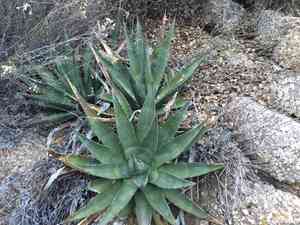
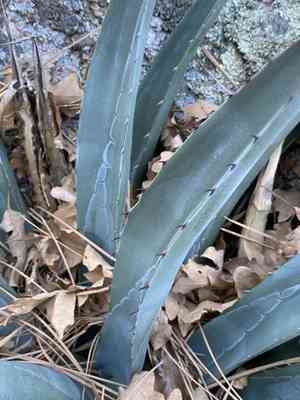
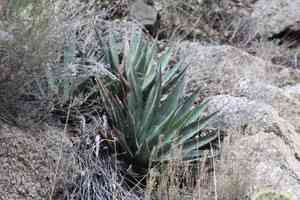

Quickly Identify Agave mckelveyana
1
Identifying Agave mckelveyana involves looking for its characteristic narrow, bluish-green leaves which are often straight or slightly curved with a sharp terminal spine. The edges of the leaves typically have numerous small teeth.
Scientific Classification of Agave mckelveyana
Phylum
Vascular plants
Class
Monocotyledons
Order
Asparagales
Family
Asparagus
Genus
Agaves
Species
Agave mckelveyana
Planting and Growing of Agave mckelveyana
Care Difficulty
Moderate
Watering Schedule
Every 2 days
Sunlight Requirements
Full sun
Sunshine Duration
6-12 hours
Ideal Temperature
60-80℉
Soil Type
Potting Mix, Peat Mix
Soil pH
6.5-7.5
Fertilizer Type
Balanced
Pruning Season
Spring, Summer
Pruning Area
Branches, Leaves
Pruning Frequency
2 times a year
Repotting Season
Spring
Pot Type
Plastic, Ceramic
 How to Water Agave mckelveyana?
The watering amount for Agave mckelveyana should follow the principle of deeply soaking the soil but allowing it to dry out completely in between. This helps mimic its natural, arid environment where rainfall is sporadic. Typically, 150 ml of water per session is optimal, ensuring the water reaches the root zone without oversaturating.
What are the symptoms of an underwatered Agave mckelveyana?
›
What should I do if my Agave mckelveyana is not getting enough water?
›
What are the symptoms of an overwatered Agave mckelveyana?
›
How to save an overwatered Agave mckelveyana?
›
 What Are the Sunlight Requirements for Agave mckelveyana?
Agave mckelveyana thrives in full sun to partial sun, needing at least 6-8 hours of sunlight per day. This range stimulates optimal growth, maintaining the plant's ability to store water and fuel photosynthesis efficiently, promoting resilience.
What is the ideal lighting solution?
›
How to maintain suitable light exposure?
›
Benefits of ideal light exposure?
›
 What Is the Ideal Temperature Range for Agave mckelveyana?
Agave mckelveyana thrives best in temperatures ranging from 60°F to 80°F. This range supports optimal growth, allowing the plant to maintain its structural integrity and metabolic functions. Temperatures above or below this range may not be ideal, affecting the plant's overall health.
 What Soil is Best for Agave mckelveyana?
Agave mckelveyana thrives in well-draining soil to prevent root rot. Its native desert environment means it's adapted to rapidly drying substrates that do not retain excessive moisture. While not a heavy feeder, Agave mckelveyana benefits from a moderate level of nutrients, supporting healthy growth. Minimal fertilization in spring leverages this requirement. The inclusion of gravel in the soil mix helps maintain drainage and mimics Agave mckelveyana's natural habitat, providing the gritty texture it prefers.
 How to Fertilize Agave mckelveyana?
Agave mckelveyana requires moderate fertilization. For liquid fertilizer, mix 1/4-strength balanced liquid fertilizer with water to avoid burning the roots. Apply approximately 250 ml per plant. For slow-release granules, apply around 50 grams per plant, spreading evenly in the soil.
 How to Prune Agave mckelveyana?
Use a clean, sharp pair of pruning shears to cut through the thick leaves of the Agave mckelveyana. Wearing gloves is essential to protect your skin from the plant's sharp edges and potential irritants. Carefully inspect the plant and identify any leaves that are withered, brown, or damaged. Trim these leaves at the base, close to the main stem, to promote new growth and prevent any disease from spreading. To maintain an attractive shape, gently trim the tips of the leaves that may be growing unevenly. Be cautious not to over-prune, as Agave mckelveyana is slow-growing and excessive cutting can stress the plant.
More About Pruning Techniques→
 How to Propagate Agave mckelveyana plant?
1
Use a well-draining soil mix, such as a cactus mix or a sandy loam, to ensure good aeration and prevent root rot. This is important for both seed propagation and offset division of Agave mckelveyana.
2
Scatter the seeds evenly over the soil surface in the seed tray and cover them lightly with a thin layer of soil or sand. Seed germination requires adequate light and warmth, so place the tray in a sunny location.
3
Gently separate the offsets from the parent plant, ensuring each has roots attached, and plant them in individual pots filled with the prepared soil mix. Ensure they are planted at the same depth as they were growing originally.
 How to Repot Agave mckelveyana plant?
1
Repot your Agave mckelveyana when you notice it has outgrown its current pot, evident by roots protruding from the drainage holes or the plant becoming top-heavy. It's also time if the soil no longer retains moisture well, indicating decomposition and a need for fresh soil.
2
Select a pot that is only slightly larger than your current one, ideally 1-2 inches wider in diameter. Ensure it has ample drainage holes to prevent root rot. Using a pot that is too large may retain excess moisture, leading to potential root problems.
3
Opt for a well-draining cactus or succulent soil mix, which typically includes a blend of sand, perlite, and organic matter. This type of soil allows for sufficient aeration and drainage, preventing waterlogged conditions that can harm your plant's roots.
Toxicity
ingestion, contact with sap
WARNING
The judgment on toxicity and danger is for reference only. We DO NOT GUARANTEE any accuracy of such judgment. Therefore, you SHALL NOT rely on such judgment. It is IMPORTANT TO SEEK PROFESSIONAL ADVICE in advance when necessary.
Learn More About Agave mckelveyana Diseases
Anthracnose
Bacterial Leaf Spot
Bacterial Soft Rot
Chemical Injury
Crown Gall
Cyst Nematode
Damping-off
Drought Stress
Fusarium Wilt
Gray Mold
Leaf Spot
Mosaic
Nutrient Deficiency
Nutrient Toxicity
Powdery Mildew
Root Rot
Root-knot Nematode
Rusts
Sooty Mold
Spider Mites
Temperature Stress
Thrips Damage
White Mold



