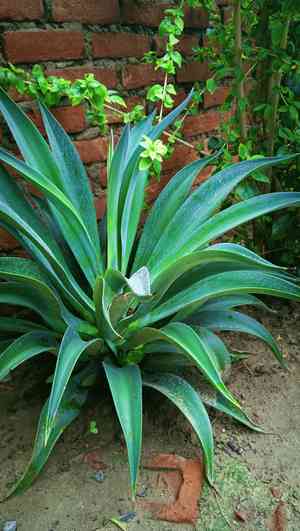
Agave demeesteriana (Agave demeesteriana)
Also known as: DeMeester's Agave, Century Plant
Agave demeesteriana, belonging to the Asparagaceae family, is a type of plant that produces flowers. Its natural habitat is said to be in the states of Sinaloa and Veracruz in Mexico, and it supposedly grows freely in Florida.
In This Article
Attributes of Agave demeesteriana
Lifespan
Agave demeesteriana is a perennial plant that often takes many years to bloom.
Plant Height
Up to 4 feet
Spread
Up to 4 feet
Leaf Color
Green
Flower Size
About 2 inches
Flower Color
Yellow
Images of Agave demeesteriana
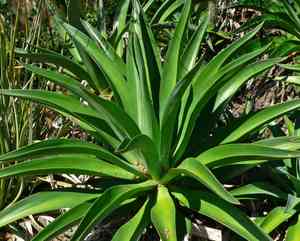
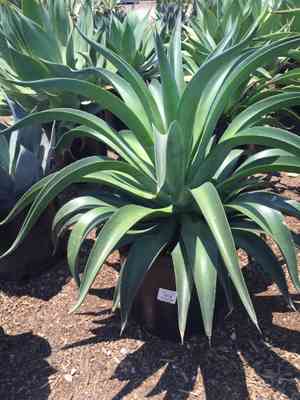
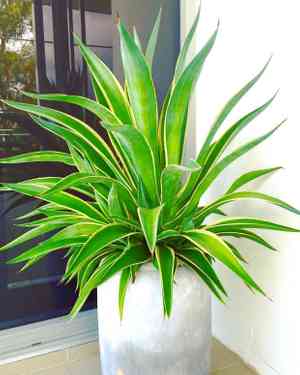
Quickly Identify Agave demeesteriana
1
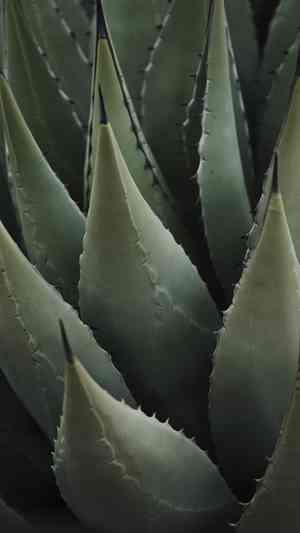
Look for broad, smooth, light green leaves with a rounded shape and no teeth along the edges. The plant forms a rosette and will produce a tall flower spike when mature.
Scientific Classification of Agave demeesteriana
Phylum
Angiosperms
Class
Monocots
Order
Asparagales
Family
Asparagaceae
Genus
Agave
Species
A. demeesteriana
Planting and Growing of Agave demeesteriana
Care Difficulty
Easy
Watering Schedule
Every 2 days
Sunlight Requirements
Full sun
Sunshine Duration
4-8 hours
Ideal Temperature
70-90℉
Soil Type
Potting Mix, Peat Mix
Soil pH
6.5-7.8
Fertilizer Type
Balanced
Pruning Season
Spring, Summer
Pruning Area
Branches, Leaves
Pruning Frequency
2 times a year
Repotting Season
Spring
Pot Type
Plastic, Ceramic
 How to Water Agave demeesteriana?
Agave demeesteriana doesn't demand copious amounts of water. A moderate watering of approximately 250 milliliters every two weeks should suffice. Overwatering can result in root rot and other diseases. Make certain that the soil is nearly dry before the next watering. It is better to under water than to over water to avoid any root complications.
What are the symptoms of an underwatered Agave demeesteriana?
›
What should I do if my Agave demeesteriana is not getting enough water?
›
What are the symptoms of an overwatered Agave demeesteriana?
›
How to save an overwatered Agave demeesteriana?
›
 What Are the Sunlight Requirements for Agave demeesteriana?
Agave demeesteriana does well under a full range of sun exposure from full sun to partial sun, preferably 6-10 hours of sun per day. The sun encourages the plant's bright coloring and keeps it healthy.
What is the ideal lighting for Agave demeesteriana?
›
How should I monitor the sunlight exposure?
›
What happens if the plant doesn't get the ideal sunlight?
›
 What Is the Ideal Temperature Range for Agave demeesteriana?
Agave demeesteriana thrives best in temperatures between 70°F and 90°F. These plants are native to warm, arid regions, and can handle heat quite well. They may suffer in colder temperatures, however, especially those outside of the acceptable tolerance range.
 What Soil is Best for Agave demeesteriana?
Agave demeesteriana requires well-drained soil to thrive. This species tends to rot if it sits in waterlogged soil. Therefore, providing a planting medium that allows for quick and efficient water runoff is key to its health and longevity. This plant is a survivor, easily enduring poor soil conditions that many other plants cannot tolerate. It can do well in a low nutrient soil, as long as other conditions are fulfilled like the right amount of sun exposure, ideal temperature and adequate draining capacity. Thought Clay soil is not fatal for Agave demeesteriana, it is not recommended due to poor drainage capabilities. Too much water retention can lead to root rot and other health issues for the plant.
 How to Fertilize Agave demeesteriana?
For Agave demeesteriana, use a balanced 10-10-10 liquid fertilizer. Dilute it in water until it is halved in concentration. Pour about a quart of this mixture for each square foot of soil. As for the slow-release fertilizer, use about 1 tablespoon per square foot of soil and blend it into the top layer.
 How to Prune Agave demeesteriana?
The optimal time to prune Agave demeesteriana is in the spring and summer, when the plant is in its active growing season. Begin by removing any leaves at the base of the plant that are yellowing, browning, or appear to be dying. Then move to the top of the plant and remove any leaves that are leaning or drooping. Finally, carefully inspect the rest of the agave. If you see any leaves or branches that are broken, diseased, or infested with insects, prune them off. When pruning, you have to be extremely careful not to damage the healthy parts of the plant. Damaging healthy tissue can lead to disease and infection.
 How to Propagate Agave demeesteriana plant?
1
Start by filling a seed tray with a well-draining soil mix. Sprinkle the seeds evenly over the surface and cover lightly with more soil. Keep the tray in a warm location and maintain consistent moisture.
2
For division propagation, the best time is spring or early summer when the plant is actively growing. Use a sharp blade to cut up the plant, ensuring each section has at least one growing point.
3
After sowing seeds or dividing, place the plant in a warm, lightly shaded location. Keep the soil lightly moist until new growth appears. Once established, cut back on watering and allow the soil to dry out between watering times.
 How to Repot Agave demeesteriana plant?
1
Agave demeesteriana typically indicates the need for repotting when its roots become visible on the surface of the soil or begin to push the plant out of its pot. This usually happens in the spring or summer, when the plant is most actively growing.
2
Choosing a pot for your Agave demeesteriana, consider drainage, a vital factor for succulents like this. Opt for a pot with ample drainage holes, ideally terra-cotta, which wicks away moisture from the soil. A pot too large can cause root rot due to water stagnation in soil.
3
A well-draining sandy loam soil mix is ideal for Agave demeesteriana. The soil must be coarse, which allows it to drain quickly after watering, preventing root rot and overwatering, common problems with this succulent.
Toxicity
Ingestion or contact with sap
WARNING
The judgment on toxicity and danger is for reference only. We DO NOT GUARANTEE any accuracy of such judgment. Therefore, you SHALL NOT rely on such judgment. It is IMPORTANT TO SEEK PROFESSIONAL ADVICE in advance when necessary.

