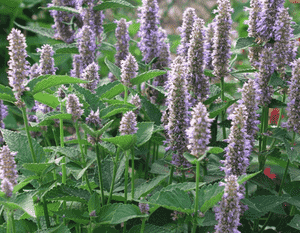
Anise hyssop (Agastache foeniculum)
Also known as: Blue giant hyssop
Russian Sage (Perovskia atriplicifolia) is a perennial herb known for its striking lavender flowers that grace the garden from early summer until the first frost. This drought-tolerant plant is deer-resistant and a favorite among bees and birds. Russian Sage typically grows to a height of 61 to 122 cm, adding both beauty and resilience to your landscape.
In This Article
Attributes of Anise hyssop
Lifespan
Perennial
Plant Type
Herb
Plant Height
61 cm to 1.2 m
Spread
30 cm
Leaf Color
Green
Flower Size
2.5 cm
Flower Color
Purple Lavender Blue Violet
Images of Anise hyssop
Quickly Identify Anise hyssop
1
Upright stem with quadrangular shape and vibrant green color.
2
Distinct anise or licorice aroma emitted by the foliage when crushed.
3
Ovate to broad-lanceolate leaves with coarsely toothed margins and white undersides.
4
Small, oblong nutlets with smooth texture and brown hairs at the tip.
5
Colorful, dense spikes of small tubular flowers in lavender to purple hues.
Scientific Classification of Anise hyssop
Phylum
Vascular plants
Class
Dicotyledons
Order
Lamiales
Family
Mint
Genus
Giant hyssops
Species
Anise hyssop
Planting and Growing of Anise hyssop
Care Difficulty
Easy
Watering Schedule
Every 2 days
Sunlight Requirements
Full sun
Sunshine Duration
6-10 hours
Ideal Temperature
65-75℉
Soil Type
Potting Mix, Peat Mix
Soil pH
6.5-7.5
Fertilizer Type
Balanced
Pruning Season
Spring, Summer
Pruning Area
Branches, Leaves
Pruning Frequency
2 times a year
Repotting Season
Spring
Pot Type
Plastic, Ceramic
 How to Water Anise hyssop?
Agastache foeniculum prefers a consistent moisture level, which means watering until the soil is thoroughly moistened, around 500 milliliters each time. Ensure water is evenly distributed and starts to drain from the bottom of the pot, indicating full saturation without waterlogging.
More About Watering Techniques→
What are the symptoms of an underwatered Anise hyssop?
›
What should I do if my Anise hyssop is not getting enough water?
›
What are the symptoms of an overwatered Anise hyssop?
›
How to save an overwatered Anise hyssop?
›
 What Are the Sunlight Requirements for Anise hyssop?
Agastache foeniculum thrives in full sun, ideally with 6 to 8 hours of direct light. This exposure fosters vigorous growth, enhances flowering, and strengthens its aromatic properties, enriching pollinator activity and the garden's biodiversity.
More About Sunlight Requirements Techniques→
Optimal Location
›
Balancing Light and Shade
›
Seasonal Adjustments
›
 What Is the Ideal Temperature Range for Anise hyssop?
The ideal temperature range for growing Agastache foeniculum is between 65°F and 75°F. These temperatures allow for optimal growth and development, providing the right conditions for photosynthesis and other metabolic processes.
 What Soil is Best for Anise hyssop?
Agastache foeniculum thrives in well-drained soil because it helps prevent root rot by ensuring that water doesn't accumulate around the plant roots. The percolation of water through the soil allows for healthy root development and keeps the plant from becoming waterlogged, promoting lush foliage and abundant flowering. This plant prefers soil with moderate fertility, which provides just enough nutrients without overwhelming it. Overly rich soil can lead to excessive vegetative growth at the expense of flowers. A balanced nutrient presence supports steady, sustainable growth and encourages vibrant blooms. Agastache foeniculum can tolerate a slightly alkaline soil pH up to 7.5, which helps in vital absorption of essential nutrients like calcium and magnesium. This pH level lessens the risk of nutrient lockout, thus maintaining plant health and boosting flower production.
More About Soil→
 How to Fertilize Anise hyssop?
Agastache foeniculum generally prefers a balanced fertilizer. You should use about half of the recommended amount on the fertilizer package to prevent over-fertilization. Applying too much can lead to excessive growth that weakens the plant.
More About Fertilizing Techniques→
 How to Prune Anise hyssop?
Inspect your Agastache foeniculum for any dead, diseased, or damaged stems. These are typically discolored or show signs of rot and should be removed promptly to maintain plant health. To encourage a fuller shape, prune the tips of stems just above a leaf node. This encourages branching and a bushier appearance, promoting additional flowering and a more aesthetic form. If your Agastache foeniculum grows too tall, cut back up to one-third of the plant's height. This not only controls size but also reinvigorates the plant, encouraging new growth at the base.
More About Pruning Techniques→
 How to Propagate Anise hyssop plant?
1
Fill the seed tray with a well-draining seed starting mix. Scatter Agastache foeniculum seeds on top and lightly cover them with the mix. Water gently to avoid displacing seeds.
2
Select a healthy stem of Agastache foeniculum and cut just below a leaf node to obtain a 4-6 inch cutting. Remove the lower leaves to expose the node and dip it in rooting hormone.
3
Dig around the Agastache foeniculum clump and gently lift it from the soil. Use a spade or knife to divide it into smaller sections, ensuring each division has roots and several shoots.
 How to Repot Anise hyssop plant?
1
Agastache foeniculum shows it's time for repotting when you see roots emerging from the drainage holes or if it appears root-bound, with growth seemingly stunted. The optimal period for repotting is in the mild climates of spring or autumn, allowing the plant to acclimate better in the growing season.
2
Opt for a pot slightly larger than the current one, ensuring it has adequate drainage holes to prevent waterlogging. A terracotta or clay pot is preferable, as it allows the soil to dry out between waterings, a boon for Agastache which thrives in well-drained conditions.
3
Choose a soil mix that offers ample drainage, like a blend containing perlite or coarse sand. This ensures that water flows freely, preventing root rot, an ailment this plant is susceptible to when sitting in waterlogged soil.



