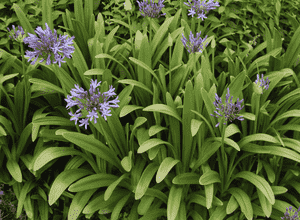
African-lily(Agapanthus praecox)

African-lily (Agapanthus praecox)

Also known as: Blue lily

Agapanthus praecox is a versatile plant species known for its open-faced flowers, which can be blue, purple, or white, and bloom during the summer. Commonly referred to as African-lily or lily of the Nile, these plants are not true lilies but belong to the amaryllis family.

Attributes of African-lily

Lifespan
Perennial
Plant Type
Herb
Plant Height
75 cm to 1.3 m
Spread
30 cm to 50 cm
Leaf Color
Green
Flower Size
5-8 cm
Flower Color
Blue White

ForwardPlant - Identify plants with a snap

Identify and diagnose plants, get toxicity alerts, and explore safety guides for all types of fungi.

Try for Free

Images of African-lily

African-lily(Agapanthus praecox)

Quickly Identify African-lily

1
Look for strap-shaped, arching leaves and spherical umbels of blue, violet, or white flowers. The flowers appear at the top of long, stout stems and bloom primarily in summer.

Scientific Classification of African-lily

Phylum
Vascular plants
Class
Monocotyledons
Order
Asparagus and allies
Family
Amaryllis
Genus
Lily of the Nile
Species
African-lily

Planting and Growing of African-lily

Care Difficulty
Easy
Watering Schedule
Every 4 days
Sunlight Requirements
Full sun
Sunshine Duration
4-8 hours
Ideal Temperature
65-77℉
Soil Type
Potting Mix, Peat Mix
Soil pH
6.5-7.5
Fertilizer Type
Balanced
Pruning Season
Spring, Summer
Pruning Area
Branches, Leaves
Pruning Frequency
2 times a year
Repotting Season
Spring
Pot Type
Plastic, Ceramic

water icon How to Water African-lily?

Agapanthus praecox appreciates a thorough soak rather than frequent small waterings. Ensure to saturate the soil with around 500 ml per session. Let the excess drain out to prevent root rot, aiming for moist but not waterlogged soil.
What are the symptoms of an underwatered African-lily?
What should I do if my African-lily is not getting enough water?
What are the symptoms of an overwatered African-lily?
How to save an overwatered African-lily?
More About Watering Techniques

sunlight icon What Are the Sunlight Requirements for African-lily?

Sunlight Requirements: Full sun, Partial sun
Duration of light: 6 to 8 hours daily
Agapanthus praecox prefers full to partial sun exposure. Ideal lighting ensures the plant blooms profusely, enhancing its flowering period and promoting healthy, lush leaf growth.
What is the most suitable lighting condition for Agapanthus praecox?
How can I ensure Agapanthus praecox gets the ideal light?
What are the benefits of ideal lighting for this plant?
More About Sunlight Requirements Techniques

temperature icon What Is the Ideal Temperature Range for African-lily?

Ideal Temperature: 65 ~ 77℉
For optimal growth of Agapanthus praecox, a temperature range between 65°F to 77°F is best. These temperatures mimic the plant’s native environment and support strong growth and vibrant blooms. Keeping the plant within this range also minimizes stress and promotes healthy foliage development.

soil icon What Soil is Best for African-lily?

Soil type: Loam, Sandy loam
Soil PH: 6.5 ~ 7.5
Agapanthus praecox thrives in well-drained soil that prevents waterlogging. Proper drainage helps the roots to breathe and prevents root rot, ensuring healthy growth and vibrant blooms. While well-drained, the soil should retain some moisture. This balance nourishes the plant during dry spells, supporting continuous growth and flowering, especially crucial in warm climates. A nutrient-rich soil supports the lush foliage and robust flower stalks of Agapanthus praecox. Incorporating organic matter, such as compost, enriches the soil, promoting overall vitality. More About Soil

fertilize icon How to Fertilize African-lily?

Fertilizer type: Balanced
For Agapanthus praecox, the fertilizer amount should be moderate to promote healthy growth without causing nutrient overload. When using liquid fertilizer, dilute it to half the recommended strength to avoid burning the plant. Apply approximately 1-2 teaspoons of fertilizer per 4 liters of water. More About Fertilizing Techniques

prune icon How to Prune African-lily?

Pruning Time: Spring, Autumn
Once flowering has finished, cut back the flower stalks to the base. This helps direct the plant's energy to developing new leaves and roots, preparing it for the next blooming cycle. In early Spring, inspect the plant for any dead or discolored leaves. Cut these back to where the foliage is green and healthy. Removing these leaves allows more light and air to reach the center of the plant, reducing potential pest issues. More About Pruning Techniques

propagate icon How to Propagate African-lily plant?

Propagate Time: Spring, Early summer
1
Begin by collecting seeds from a mature Agapanthus praecox flower. Sow the seeds in a potting mix, lightly covering them with soil. Ensuring moisture is key, as seeds need a consistently damp environment to germinate.
2
Using a sharp knife or pruners, gently divide the plant's root clump into smaller sections. Each section should have healthy roots and shoots. Carefully replant each division at the same depth they grew initially.
3
Ensure the newly planted seeds or divisions are in a location with bright, indirect sunlight. Water daily to maintain soil moisture without oversaturating. Monitor for new growth within a few weeks.
More About Propagating Techniques

repot icon How to Repot African-lily plant?

Repotting frequency: Every 2-3 years
1
Repotting Agapanthus praecox is necessary when you notice the roots are overcrowding or spiraling at the base. This usually happens every few years. Additionally, if your plant exhibits slow growth or its roots are emerging from the drainage holes, these are surefire signs it needs more room. Opt for spring or summer as these are growth periods for the plant, ensuring it recovers quickly from the repotting process.
2
The pot selection is crucial for Agapanthus praecox as it affects root growth and plant stability. Choose a pot that is one to two inches larger in diameter than the current one, ensuring it has drainage holes to prevent waterlogging. The material should be sturdy enough to support the plant but also porous to allow air circulation. A well-chosen pot encourages healthy growth and avoids root rot, allowing your Agapanthus to flourish.
3
Agapanthus praecox thrives in a well-draining, loamy soil mix that retains some moisture but never becomes compacted. This balance is critical for root health as it prevents water stagnation while providing necessary nutrients. Adding components like coarse sand or perlite helps enhance drainage. The right soil encourages strong growth and abundant flowering by supplying the roots with essential nutrients and the space to expand freely.

ForwardPlant - Identify plants with a snap

Find the best spots for them to optimize their health, simply using your phone.

Try for Free

Toxicity of African-lily

Is African-lily toxic to humans?

The African-lily is a hazardous plant that can trigger moderate reactions in individuals who consume or come into contact with it. The presence of saponin in its sap renders this plant perilous for humans, while the leaves, rhizomes, and roots also possess certain toxic qualities. When the sap is touched, it may cause symptoms such as rashes and skin irritation. If ingested, these symptoms can additionally occur in the oral cavity. Consuming the toxic parts of the plant can result in vomiting, abdominal pain, diarrhea, and feelings of nausea. Given that these attractive plants can flourish in residential gardens, children might be drawn to either handle or eat them.

Is African-lily toxic to cat?

The African lily presents a toxic hazard to felines. If cats accidentally consume the roots of the African lily, they become susceptible to poisoning. As a result of the plant's poisonous nature, affected cats may display various symptoms of physical distress, which can differ in intensity. Should you suspect that your cat has ingested any part of the African lily, it is essential to obtain prompt veterinary assistance to manage any health complications that might emerge from the poisoning.

Is African-lily toxic to dog?

The African-lily is recognized as toxic to dogs. Pets may inadvertently eat portions of the plant, especially the roots, which are highly poisonous. Should a dog consume any part of the African-lily, it may show signs like vomiting, diarrhea, nausea, or abdominal discomfort. It is vital for dog owners to keep a close watch on their pets and restrict access to African-lily to prevent unintentional ingestion. If a dog does ingest this plant, prompt veterinary attention is critical to effectively address any potential poisoning.

Identify toxic plants for your safety

Learn which plants are harmful to you and your pets, and make informed choices for a safer home!

Try for Free
WARNING
The judgment on toxicity and danger is for reference only. We DO NOT GUARANTEE any accuracy of such judgment. Therefore, you SHALL NOT rely on such judgment. It is IMPORTANT TO SEEK PROFESSIONAL ADVICE in advance when necessary.
More About Toxic Techniques

