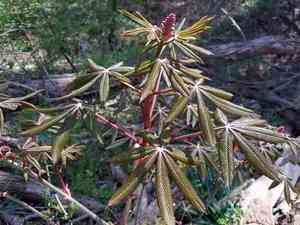
Aesculus × carnea (Aesculus × carnea)
Also known as: Red Horse Chestnut, Rubin Chestnut
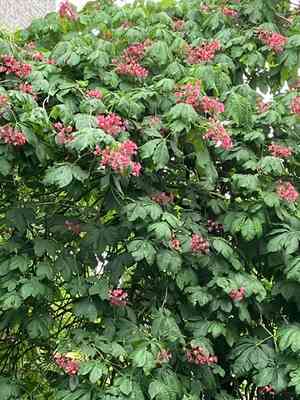
The Aesculus × carnea, also referred to as the red horse-chestnut, is a medium-sized artificial hybrid tree which originates from a mixture of A. pavia (also known as red buckeye) and A. hippocastanum (better known as horse-chestnut). While its first emergence is vague, it is believed to have first appeared in Germany prior to the year 1820. Today, this tree is a common sight in sprawling gardens, spacious parks, and even in London's Hyde Park owing to its popularity. The characteristics of Aesculus × carnea fall somewhere between its parent species, apart from its distinctive red colored flowers it retains from A. pavia. The tree blooms vividly in spring, showcasing its flowers borne in plumes on the ends of its branches, while the fall season sees it producing tough, leathery fruit capsules. When fully mature, this tree can grow to a height of 40 feet (approximately 12 meters) and spread out to a width of 30 feet (roughly 9 meters), forming a round head that provides a densely shaded area beneath. Its leaves, dark green in color, are deciduously palmately compound with each one divided into five large leaflets with toothed edges.
Attributes of Aesculus × carnea
Images of Aesculus × carnea
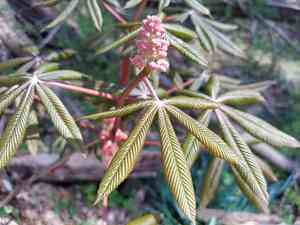
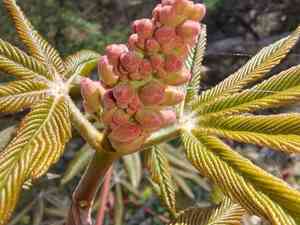
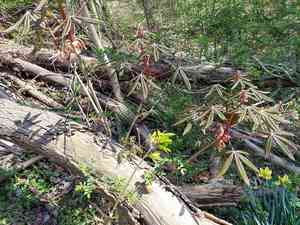
Quickly Identify Aesculus × carnea
Scientific Classification of Aesculus × carnea
Planting and Growing of Aesculus × carnea
 How to Water Aesculus × carnea?
 What Are the Sunlight Requirements for Aesculus × carnea?
 What Is the Ideal Temperature Range for Aesculus × carnea?
 What Soil is Best for Aesculus × carnea?
 How to Fertilize Aesculus × carnea?
 How to Prune Aesculus × carnea?
 How to Propagate Aesculus × carnea plant?
 How to Repot Aesculus × carnea plant?
Toxicity
Ingestion

