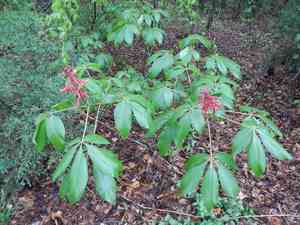
Red buckeye (Aesculus pavia)
Also known as: Woolly buckeye
Aesculus pavia, known as the red buckeye or firecracker plant, is a flowering shrub or small tree indigenous to the southeastern and midwestern United States. It stands out with its vibrant red flowers that bloom in spring, attracting hummingbirds and butterflies.
**Key Points**:
- **Common Names**: Red buckeye, firecracker plant.
- **Attracts**: Pollinators such as hummingbirds and butterflies.
- **Toxicity**: Seeds and other parts are poisonous if ingested.
- **Uses**: Primarily ornamental, can also be used to make soap.
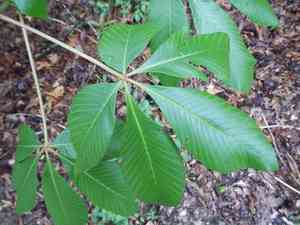
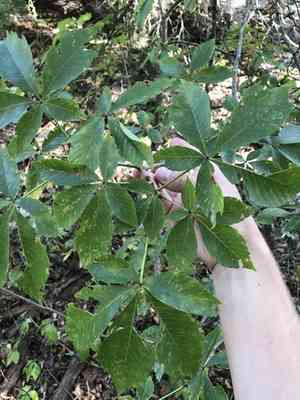
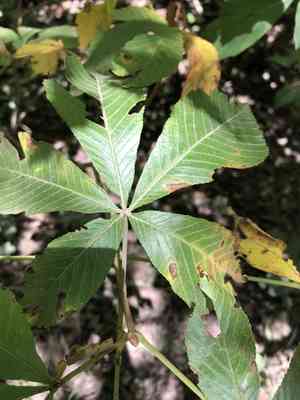
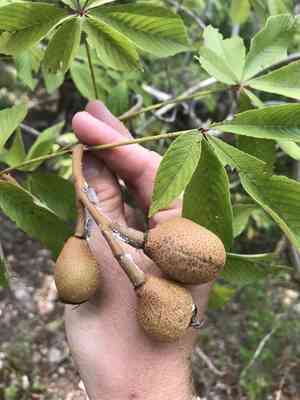
The plant typically reaches heights of 10-20 feet and has palmate leaves with five leaflets. Its smooth, round capsules contain 1-3 toxic seeds known as buckeyes.
Attributes of Red buckeye
Images of Red buckeye
Quickly Identify Red buckeye
Scientific Classification of Red buckeye
Planting and Growing of Red buckeye
 How to Water Red buckeye?
 What Are the Sunlight Requirements for Red buckeye?
 What Is the Ideal Temperature Range for Red buckeye?
 What Soil is Best for Red buckeye?
 How to Fertilize Red buckeye?
 How to Prune Red buckeye?
 How to Propagate Red buckeye plant?
 How to Repot Red buckeye plant?
Toxicity of Red buckeye
Is Red buckeye toxic to humans?
Every component of the red buckeye is infused with toxic glycosides and saponins, leading to severe health complications. Ingesting significant quantities of this plant can result in a variety of symptoms, including disorientation, muscle cramps, agitation, depression, gastrointestinal distress, colicky pain, nausea, diarrhea, oral irritation and swelling, weakness, paralysis, and in some cases, coma. It appears that humans may accidentally consume the seeds, and the leaves can also be unwittingly ingested when brewed into tea, which is a primary factor for poisoning incidents. Another risk involves small children placing parts of the plant in their mouths, underscoring the need to keep them away from this tree.
Is Red buckeye toxic to cat?
The red buckeye is highly poisonous to cats, presenting a significant threat to these animals since consuming any portion of the plant can lead to toxicity. Following ingestion, affected cats might display various symptoms of serious physical distress, potentially signifying more profound health complications. It is crucial to seek immediate veterinary care if there is any suspicion of red buckeye poisoning in a cat. Vigilant observation and swift intervention can help reduce the dangers linked to this plant's toxicity.
Is Red buckeye toxic to dog?
Red buckeye presents a significant toxicity threat to dogs. Ingesting any part of this plant can result in poisoning. Dog owners must remain alert, as all components of red buckeye are toxic, and ingestion risks arise when a dog chews or eats any segment of the plant. Signs of poisoning may include gastrointestinal distress, lethargy, dilated pupils, and potentially more serious symptoms due to its high toxicity. If you believe your dog has consumed red buckeye, it is crucial to obtain immediate veterinary assistance to secure the best possible outcome for your pet.



