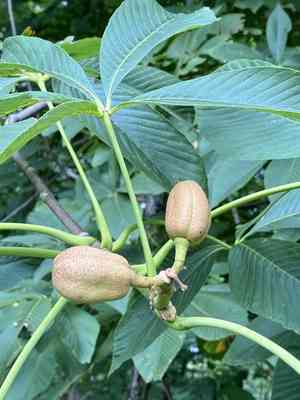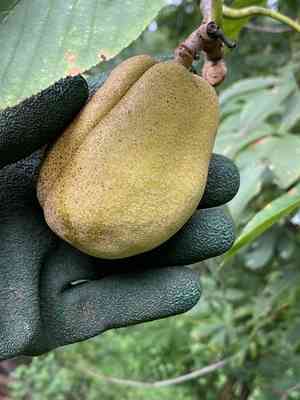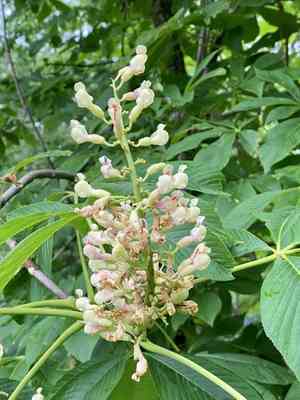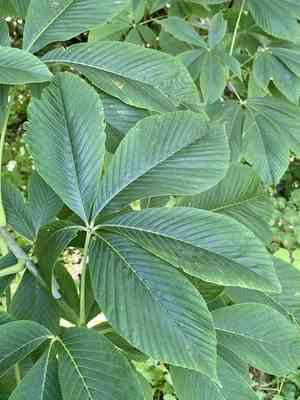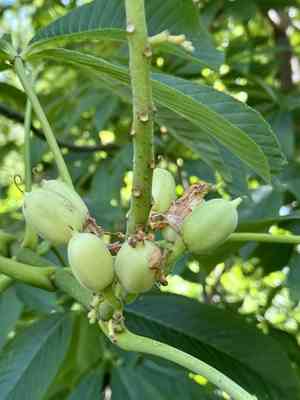
Yellow Buckeye(Aesculus flava)

Yellow Buckeye (Aesculus flava)

Also known as: Common Buckeye

The American yellowwood (Cladrastis kentukea) is a tree species that originates from the eastern United States. It thrives in well-drained soils found in forests and along riverbanks. Known for its stunning, fragrant yellow blossoms, the American yellowwood is frequently grown as an ornamental tree.

Attributes of Yellow Buckeye

Lifespan
Perennial
Plant Type
Tree
Plant Height
12 m to 18 m
Spread
8 m to 11 m
Leaf Color
Green Yellow Red
Flower Size
8 cm to 15 cm
Flower Color
Yellow Green

PlantJoy - Identify plants with a snap

Identify and diagnose plants, get toxicity alerts, and explore safety guides for all types of fungi.

Try for Free

Images of Yellow Buckeye

Yellow Buckeye(Aesculus flava)

Quickly Identify Yellow Buckeye

1
Palmate leaves divided into 5 oblong leaflets, turning vibrant yellow in autumn.
2
Creamy yellow flowers in erect panicles up to 6 inches (15 cm) long.
3
Smooth, leathery capsule fruit containing 1-3 dark brown nuts with a pale scar.
4
Stout stem with orangish lenticels, and large orangish-brown terminal buds.
5
Trunk evolves from smooth light gray to rugged, scaly textured bark with overlapping plates.

Scientific Classification of Yellow Buckeye

Phylum
Vascular plants
Class
Dicotyledons
Order
Sapindales
Family
Soapberry
Genus
Buckeye
Species
Yellow Buckeye

Planting and Growing of Yellow Buckeye

Care Difficulty
Hard
Watering Schedule
Every 2 days
Sunlight Requirements
Partial sun
Sunshine Duration
4-8 hours
Ideal Temperature
60-75℉
Soil Type
Potting Mix, Peat Mix
Soil pH
6.5-7.5
Fertilizer Type
Balanced
Pruning Season
Spring, Summer
Pruning Area
Branches, Leaves
Pruning Frequency
2 times a year
Repotting Season
Spring
Pot Type
Plastic, Terracotta

water icon How to Water Yellow Buckeye?

Aesculus flava, commonly known as the yellow buckeye, requires thorough watering to ensure moisture reaches down to the root zone. It's crucial to water deeply, allowing the soil to absorb around 1000 ml each time. This prevents shallow root growth and promotes robust overall health.
What are the symptoms of an underwatered Yellow Buckeye?
What should I do if my Yellow Buckeye is not getting enough water?
What are the symptoms of an overwatered Yellow Buckeye?
How to save an overwatered Yellow Buckeye?

sunlight icon What Are the Sunlight Requirements for Yellow Buckeye?

Sunlight Requirements: Partial sun, Full sun
Duration of light: 4 to 6 hours
Partial to full sun allows Aesculus flava to maintain vibrant foliage and optimal growth. Sufficient light exposure ensures healthy flowering and strong vegetative development.
What is the ideal lighting for Aesculus flava?
What can be done to provide ideal lighting?
What are the benefits of ideal lighting?
More About Sunlight Requirements Techniques

temperature icon What Is the Ideal Temperature Range for Yellow Buckeye?

Ideal Temperature: 60 ~ 75℉
The ideal temperature range for Aesculus flava, also known as yellow buckeye, is between 60°F and 75°F. This range ensures optimal growth and health, allowing the plant to photosynthesize efficiently and maintain existing structures such as leaves and branches. Within this range, the plant can achieve the most effective nutrient uptake and water regulation, providing the best conditions for flourish.

soil icon What Soil is Best for Yellow Buckeye?

Soil type: Loam, Sandy loam
Soil PH: 6.5 ~ 7.5
Aesculus flava thrives best in well-drained soil, which allows adequate air circulation and prevents waterlogging. Proper drainage ensures healthy root systems, reducing the risk of root rot and promoting vigorous growth. This plant prefers nutrient-rich soils that provide a steady supply of essential minerals and nutrients, facilitating robust leaf growth and improving overall plant vitality. Utilizing organic amendments can be beneficial. While Aesculus flava can tolerate temporary drought, it benefits from consistently moist soil, especially during dry spells. Ensuring moderate moisture helps in sustaining its lush foliage and vivid autumn colors.

fertilize icon How to Fertilize Yellow Buckeye?

Fertilizer type: Balanced
Aesculus flava, commonly known as the Yellow Buckeye, requires a balanced fertilization routine to ensure healthy growth. Typically, a balanced fertilizer such as 10-10-10 (N-P-K) is recommended. Use about 1 pound of fertilizer per year for each inch of trunk diameter. This amount should be distributed around the root zone evenly.

prune icon How to Prune Yellow Buckeye?

Pruning Time: Spring, Summer
Begin by inspecting the tree for any signs of dead or damaged branches. Use sharp pruning shears to trim these back to the healthy wood. Next, focus on cutting back any overlapping branches, ensuring they don't compete for sunlight. Prune to maintain an open and balanced canopy, which can support good airflow and sunlight penetration. Always make clean cuts at a slight angle to prevent water from settling on the cut surface, which helps avoid disease. More About Pruning Techniques

propagate icon How to Propagate Yellow Buckeye plant?

Propagate Time: Spring
1
Collect seeds from mature Aesculus flava trees in the autumn. Ensure the seeds are fully developed by selecting those that have fallen naturally to the ground or show signs of mature coloration.
2
Stratify the collected seeds by placing them in a moist medium such as sand or peat moss, and then storing them in a refrigerator for 60-90 days. This mimics natural winter conditions necessary for breaking dormancy.
3
After stratification, sow the seeds in a seed tray filled with sterile potting mix. Cover lightly with soil and ensure they are kept moist. Place the tray in a warm location with indirect sunlight.
More About Propagating Techniques

repot icon How to Repot Yellow Buckeye plant?

Repotting frequency: Every 2-3 years
1
Aesculus flava should be repotted when you notice roots starting to emerge from the drainage holes or the plant's growth rate noticeably slows down despite good care. These are strong indicators that your plant has outgrown its current container.
2
Select a pot that is one size larger than the current one, approximately 2 inches in diameter larger. Ensure it has proper drainage to prevent water logging, which can cause root rot. A slightly heavier pot can also provide more stability for this tree.
3
Opt for a well-draining potting mix rich in organic matter. This will emulate the plant's natural habitat and provide the essential nutrients while preventing water from pooling around the roots, ensuring healthy and sustained growth.

PlantJoy - Identify plants with a snap

Find the best spots for them to optimize their health, simply using your phone.

Try for Free

Toxicity of Yellow Buckeye

Is Yellow Buckeye toxic to humans?

Yellow Buckeye is known to be a toxic plant that poses dangers to humans who consume it. The consequences of ingesting this plant can be quite severe, though some individuals may effectively eliminate the toxins without complications. This can be attributed to the fact that the saponins responsible for the toxic properties of the seeds are not readily absorbed by the human body. Additionally, the leaves and fruits of the plant contain harmful alkaloids. Symptoms that can arise from consuming the seeds include vomiting, diarrhea, weakness, paralysis, dilated pupils, and even depression. Despite its popularity as an ornamental plant, it poses a risk of accidental ingestion by children; furthermore, adults may intentionally consume the seeds without adequately preparing them.

Is Yellow Buckeye toxic to cat?

The Yellow Buckeye presents a potential risk to the health of cats, demonstrating mild toxicity levels. A feline may encounter this toxin from yellow Buckeye if it ingests significant quantities of various plant parts including stems, fruits, leaves, or seeds. If consumed, the cat could display negative health effects that signal physical discomfort or general unease. Therefore, it is crucial for cat owners to pursue prompt veterinary assistance to secure the best possible outcome for their beloved pet.

Is Yellow Buckeye toxic to dog?

The Yellow Buckeye is categorized as having a moderate level of toxicity to dogs. Dogs can suffer poisoning if they ingest significant quantities of its stems, fruits, leaves, or seeds. After consuming any parts of the Yellow Buckeye, a dog may show signs such as gastrointestinal disturbances, weakness, or enlarged pupils. It is vital for dog owners to keep a close eye on their pets and prevent them from accessing Yellow Buckeye to minimize the risk of poisoning. If a dog does consume any part of the Yellow Buckeye, it is crucial to obtain prompt veterinary attention to ensure the best outcome for the pet.

Identify toxic plants for your safety

Learn which plants are harmful to you and your pets, and make informed choices for a safer home!

Try for Free
WARNING
The judgment on toxicity and danger is for reference only. We DO NOT GUARANTEE any accuracy of such judgment. Therefore, you SHALL NOT rely on such judgment. It is IMPORTANT TO SEEK PROFESSIONAL ADVICE in advance when necessary.
More About Toxic Techniques