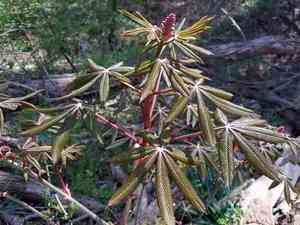
Aesculus × carnea(Aesculus × carnea)

Aesculus × carnea (Aesculus × carnea)

Also known as: Red Horse Chestnut, Rubin Chestnut

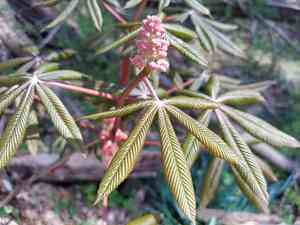
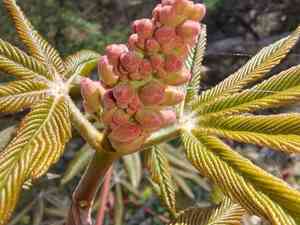
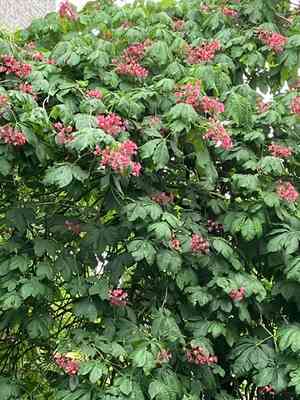
The Aesculus × carnea, also referred to as the red horse-chestnut, is a medium-sized artificial hybrid tree which originates from a mixture of A. pavia (also known as red buckeye) and A. hippocastanum (better known as horse-chestnut). While its first emergence is vague, it is believed to have first appeared in Germany prior to the year 1820. Today, this tree is a common sight in sprawling gardens, spacious parks, and even in London's Hyde Park owing to its popularity. The characteristics of Aesculus × carnea fall somewhere between its parent species, apart from its distinctive red colored flowers it retains from A. pavia. The tree blooms vividly in spring, showcasing its flowers borne in plumes on the ends of its branches, while the fall season sees it producing tough, leathery fruit capsules. When fully mature, this tree can grow to a height of 40 feet (approximately 12 meters) and spread out to a width of 30 feet (roughly 9 meters), forming a round head that provides a densely shaded area beneath. Its leaves, dark green in color, are deciduously palmately compound with each one divided into five large leaflets with toothed edges.

Attributes of Aesculus × carnea

Lifespan
Perennial
Plant Height
20-25m
Spread
15-20m
Leaf Color
Green in Summer; Yellowish in Autumn
Flower Size
0.8-1.2cm
Flower Color
Red

ForwardPlant - Identify plants with a snap

Identify and diagnose plants, get toxicity alerts, and explore safety guides for all types of fungi.

Try for Free

Images of Aesculus × carnea

Aesculus × carnea(Aesculus × carnea)

Quickly Identify Aesculus × carnea

1
Look for palmately compound leaves with 5 to 7 leaflets, smooth bark, and showy pink flowers in upright clusters.

Scientific Classification of Aesculus × carnea

Phylum
Magnoliophyta
Class
Magnoliopsida
Order
Sapindales
Family
Sapindaceae
Genus
Aesculus
Species
A. × carnea

Planting and Growing of Aesculus × carnea

Care Difficulty
Moderate
Watering Schedule
Every 4 days
Sunlight Requirements
Full sun
Sunshine Duration
4-6 hours
Ideal Temperature
50-70℉
Soil Type
Potting Mix, Peat Mix
Soil pH
6-7.5
Fertilizer Type
Balanced
Pruning Season
Spring, Summer
Pruning Area
Branches, Leaves
Pruning Frequency
2 times a year
Repotting Season
Spring
Pot Type
Plastic, Ceramic

water icon How to Water Aesculus × carnea?

The Aesculus × carnea requires ample hydration, about 1000 milliliters of water each time. The top soil should be thoroughly wet, ensuring the moisture seeps well into the roots. Always ensure that the water is not left standing as this could lead to waterlogging and root rot.
What are the symptoms of an underwatered Aesculus × carnea? ›
What should I do if my Aesculus × carnea is not getting enough water? ›
What are the symptoms of an overwatered Aesculus × carnea? ›
How to save an overwatered Aesculus × carnea? ›

sunlight icon What Are the Sunlight Requirements for Aesculus × carnea?

Sunlight Requirements: Full sun, Partial sun
Duration of light: 6-8 hours per day
The ideal light range for Aesculus × carnea is full to partial sun – about 6-8 hours per day. This supports the plant’s robust growth, encourages high bloom yield and consistent, rich leaf color.
What is the ideal lighting for Aesculus × carnea? ›
How can this lighting condition be achieved? ›
What benefits can we get from this lighting condition? ›

temperature icon What Is the Ideal Temperature Range for Aesculus × carnea?

Ideal Temperature: 50 ~ 70℉
The ideal temperature range for Aesculus x carnea is between 50°F and 70°F. This range promotes optimal growth and blossoming of the tree. It's advisable to maintain this temperature for a healthy plant.

soil icon What Soil is Best for Aesculus × carnea?

Soil type: Loam, Clay soil, Calcareous soil
Soil PH: 6 ~ 7.5
Aesculus × carnea prefers well-drained soil as it allows access to necessary oxygen, maximizes root growth, and prevents issues such as root rot and diseases caused by waterlogged conditions. Increasing the content of organic matter like humus in the soil promotes moist retention, provides nutrients, and enhances the soil structure, which can be beneficial for the development of Aesculus × carnea. Aesculus × carnea thrives best in moderately fertile soil. Too much fertility can lead to a disproportionately rapid growth of foliage at the expense of the flowers and overall plant health.

fertilize icon How to Fertilize Aesculus × carnea?

Fertilizer type: Balanced
Typically, a half-strength solution of a balanced, water-soluble fertilizer (such as 15-15-15) suits Aesculus × carnea well. Liquid fertilizer can be applied to the soil every four weeks from early spring to late summer.

prune icon How to Prune Aesculus × carnea?

Pruning Time: Spring, Autumn
Ensure the tools like pruning saws, loppers, and shears are sharp and clean. Sterilize them before use to prevent the spread of disease. Remember the saying 'less is more' while starting to prune. Patience is needed. While it's tempting to chop off more than needed, it will harm your tree in the long run. While pruning, wear appropriate safety gear, including gloves, safety glasses, and sturdy footwear. Be cautious of falling branches.

propagate icon How to Propagate Aesculus × carnea plant?

Propagate Time: Spring
1
The seeds of Aesculus x carnea have a hard coat which requires scarification to improve germination. Soak the seeds in water for a day.
2
Sow seeds in a moist seed compost, cover them lightly with compost or vermiculite.
3
Keep the seed tray in a cold frame or similar environment until germination, which should occur in the spring. Transplant to larger pots when seedlings are large enough to handle.

repot icon How to Repot Aesculus × carnea plant?

Repotting frequency: Once every two years
1
Aesculus × carnea, or Red Horse-chestnut, should primarily be repotted during its dormancy period, which lies in Spring and Autumn. This gives the plant enough time to establish in the new pot before its rapid growth phase. Signals which indicate repotting include stunted growth and water pooling on the soil surface.
2
Choosing the right pot for your Red Horse-chestnut is essential. Consider a larger pot than the previous one. Ensure it has plenty of drainage holes to prevent waterlogging. A porous clay pot can also benefit the plant by allowing roots to breathe and promoting healthier growth.
3
Using a well-draining soil, rich in organic matter is ideal for Red Horse-chestnut. A combination of loam and compost can provide the necessary nutrients and ensure good drainage to prevent root rot.

ForwardPlant - Identify plants with a snap

Find the best spots for them to optimize their health, simply using your phone.

Try for Free

Toxicity

Ingestion

Identify toxic plants for your safety

Learn which plants are harmful to you and your pets, and make informed choices for a safer home!

Try for Free
WARNING
The judgment on toxicity and danger is for reference only. We DO NOT GUARANTEE any accuracy of such judgment. Therefore, you SHALL NOT rely on such judgment. It is IMPORTANT TO SEEK PROFESSIONAL ADVICE in advance when necessary.