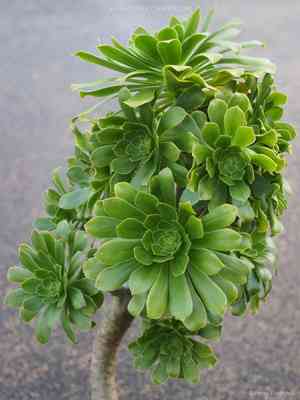
Tree aeonium (Aeonium arboreum)
Also known as: Irish rose, Desert pinwheel rose
Aeonium arboreum, commonly known as tree aeonium, tree houseleek, or Irish rose, is a succulent subshrub species native to the Canary Islands. It's often cultivated as an ornamental plant in gardens. Due to its subtropical nature, it requires greenhouse conditions in cooler climates. In its natural habitat, it thrives in shaded areas and on weathered volcanic soils.
In This Article
Attributes of Tree aeonium
Lifespan
Perennial
Plant Type
Succulent, Shrub
Plant Height
50 cm to 2 m
Spread
90 cm to 1.5 m
Leaf Color
Green
Flower Size
10 cm to 15 cm
Flower Color
Yellow
Images of Tree aeonium
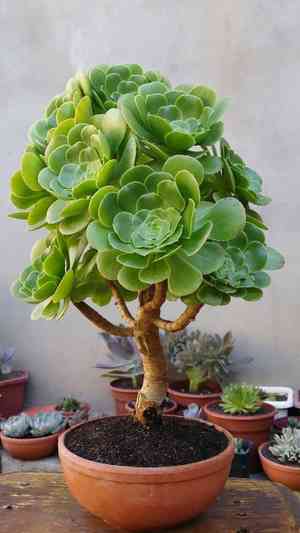
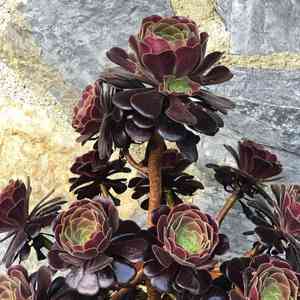
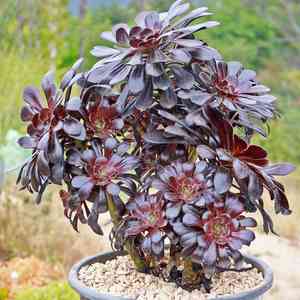
Quickly Identify Tree aeonium
1
Branched stems with green rosettes at terminal ends.
2
Yellow flowers in elongated clusters from mid spring to early summer.
3
Resilient to temperatures as low as 27 degrees Fahrenheit (-3 degrees Celsius).
Scientific Classification of Tree aeonium
Phylum
Vascular plants
Class
Dicotyledons
Order
Saxifrages, stonecrops and allies
Family
Stonecrop
Genus
Tree houseleeks
Species
Tree aeonium
Planting and Growing of Tree aeonium
Care Difficulty
Easy
Watering Schedule
Every 2 days
Sunlight Requirements
Full sun
Sunshine Duration
4-6 hours
Ideal Temperature
60-75℉
Soil Type
Potting Mix, Peat Mix
Soil pH
6.5-7.5
Fertilizer Type
Balanced
Pruning Season
Spring, Summer
Pruning Area
Branches, Leaves
Pruning Frequency
2 times a year
Repotting Season
Spring
Pot Type
Plastic, Terracotta
 How to Water Tree aeonium?
Aeonium arboreum prefers a moderate watering regimen. Water thoroughly so that the moisture reaches the root zone but ensure the soil dries out completely between waterings. It requires about 250 ml of water per session.
More About Watering Techniques→
What are the symptoms of an underwatered Tree aeonium?
›
What should I do if my Tree aeonium is not getting enough water?
›
What are the symptoms of an overwatered Tree aeonium?
›
How to save an overwatered Tree aeonium?
›
 What Are the Sunlight Requirements for Tree aeonium?
Partial to full sun conditions are ideal, offering Aeonium arboreum balanced light exposure which enhances its growth, color, and overall health.
More About Sunlight Requirements Techniques→
What type of light does Aeonium arboreum prefer?
›
How can you ensure Aeonium arboreum receives ideal light exposure?
›
What are the benefits of ideal lighting for Aeonium arboreum?
›
 What Is the Ideal Temperature Range for Tree aeonium?
For optimal growth of Aeonium arboreum, the ideal temperature range is between 60°F and 75°F. This range provides the best conditions for photosynthesis and metabolic activity, helping your plant thrive. In this range, you will notice a vibrant growth rate and healthy leaves. Maintaining this temperature is crucial, especially during the growing seasons in spring and fall.
 What Soil is Best for Tree aeonium?
Aeonium arboreum thrives in well-draining soil, which is crucial to prevent root rot. The plant's succulence allows it to store water, thus emphasizing the need for soil that dries out quickly. While Aeonium arboreum is not too demanding in terms of nutrients, it benefits from a soil that provides enough nutrition to support its growth during the active season, particularly in spring and fall. Proper soil aeration is important for Aeonium arboreum to ensure that the roots can breathe. This is commonly achieved through sandy or loamy soils that allow for adequate airflow.
More About Soil→
 How to Fertilize Tree aeonium?
Aeonium arboreum requires only a modest amount of fertilizer to thrive due to its naturally efficient nutrient use. When using liquid fertilizer, a dilution to half the recommended strength is typically sufficient, applying approximately 500 ml per plant. For slow-release fertilizers, one or two pellets mixed into the soil per plant should offer ample nourishment without overwhelming the roots.
 How to Prune Tree aeonium?
Identify the branches or rosettes that have become too long, leggy, or are not aesthetically pleasing. Use sharp, sterilized scissors or pruning shears to make clean cuts at a slight angle, just above a leaf node or bud. This encourages new growth to sprout. Remove any dead, dying, or damaged branches to improve airflow and sunlight exposure to the remaining parts of the plant. Don't forget to wear gloves if you have sensitive skin, as the sap can cause irritation.
 How to Propagate Tree aeonium plant?
1
Select a healthy stem and trim a cutting about 3 to 4 inches long. Allow the cut end to callous over for a few days before planting. This reduces the risk of rotting once placed in the soil.
2
For seed propagation, prepare a shallow container with a well-draining succulent soil mix. Lightly sprinkle the seeds on the surface and gently press them into the soil without covering them completely as they need light for germination.
3
Place the cuttings or seed container in a bright, indirect light location. Water sparingly to keep the soil barely moist, as too much water can hinder root growth or promote fungal issues.
 How to Repot Tree aeonium plant?
1
Look for signs like roots growing out of the drainage holes, soil compacted and no longer absorbing water, or a growth slump. Opt to repot every couple of years as Aeonium arboreum is generally slow-growing, enabling it to flourish without frequent change.
2
Select a pot slightly larger than the current one, preferably made of clay with drainage holes to enhance soil aeration and prevent waterlogging. A well-sized pot encourages healthy root development while discouraging root rot.
3
Choose a well-draining soil mix, such as a cactus or succulent mix. This kind of soil prevents water from pooling around the roots, reducing the risk of root rot while maintaining just enough moisture to support growth.



