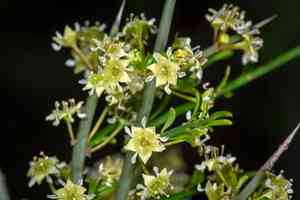
California prickbush (Adolphia californica)
Also known as: Spineshrub
Cholla cactus (Cylindropuntia spp.) is frequently seen on rocky slopes, in dry canyons, and along roadsides. Its sharp spines make it unsuitable for home gardens, but it serves excellently as a deterrent plant in vegetation restoration efforts.
In This Article
Attributes of California prickbush
Lifespan
Perennial
Plant Type
Shrub
Plant Height
1 m
Spread
30 cm to 1.5 m
Leaf Color
Glossy green
Flower Size
6 mm
Flower Color
White Yellow Green
Images of California prickbush
Quickly Identify California prickbush
1
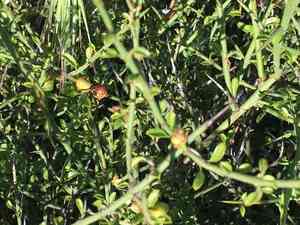
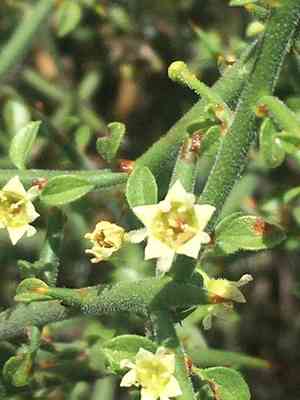
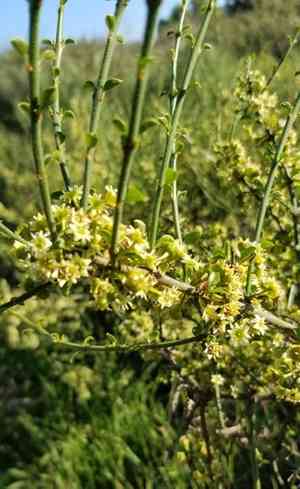
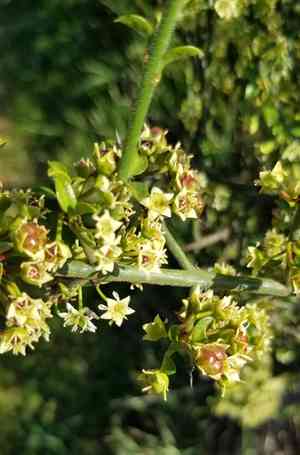
Adolphia californica can be identified by its spiny branches and small, glossy green leaves. The plant produces small white to pale yellow flowers, typically clustered at the ends of branches. The shrub is often low and spreading, making it distinguishable in its native habitats.
Scientific Classification of California prickbush
Phylum
Vascular plants
Class
Dicotyledons
Order
Rosales
Family
Buckthorn
Genus
Adolphia
Species
California prickbush
Planting and Growing of California prickbush
Care Difficulty
Hard
Watering Schedule
Every 2 days
Sunlight Requirements
Full sun
Sunshine Duration
6-10 hours
Ideal Temperature
68-77℉
Soil Type
Potting Mix, Peat Mix
Soil pH
6.5-7.5
Fertilizer Type
Balanced
Pruning Season
Spring, Summer
Pruning Area
Branches, Leaves
Pruning Frequency
2 times a year
Repotting Season
Spring
Pot Type
Terracotta, Plastic
 How to Water California prickbush?
Adolphia californica, also known as California prickbush, requires moderate watering. The key is to mimic its native habitat's arid conditions, so water until the soil is moist but not soggy, approximately 500 milliliters each time.
What are the symptoms of an underwatered California prickbush?
›
What should I do if my California prickbush is not getting enough water?
›
What are the symptoms of an overwatered California prickbush?
›
How to save an overwatered California prickbush?
›
 What Are the Sunlight Requirements for California prickbush?
Adolphia californica flourishes under conditions of full sun to partial sun, gaining benefits such as optimal growth rates, vivid foliage colors, and higher chances of flowering.
More About Sunlight Requirements Techniques→
How much sun does Adolphia californica need?
›
Where should I position this plant to meet its lighting needs?
›
What are the benefits of providing ideal lighting for Adolphia californica?
›
 What Is the Ideal Temperature Range for California prickbush?
The ideal temperature range for Adolphia californica is between 68°F and 77°F. Maintaining consistent temperatures within this range supports optimal photosynthesis and growth. The plant thrives best in such climates where there are no significant temperature fluctuations.
 What Soil is Best for California prickbush?
Adolphia californica thrives best in well-drained soil because it prevents waterlogging, which can lead to root rot. Ensuring good drainage means healthier roots and a more robust plant overall. A soil rich in organic matter and nutrients supports the growth of Adolphia californica by providing essential elements. Organic amendments like compost can enhance soil fertility and promote vigorous growth. Maintaining moderate soil moisture is crucial for the optimal growth of Adolphia californica. Too much or too little water can stress the plant. Consistent moisture levels help sustain steady growth and blooming.
 How to Fertilize California prickbush?
Adolphia californica typically requires a balanced fertilization approach. When using liquid fertilizer, apply it at half the strength recommended on the label to avoid root burn. For slow-release fertilizers, use approximately 1 tablespoon per square foot, evenly distributed around the root zone. Excessive fertilization can lead to rapid, weak growth which might not survive environmental stress well.
 How to Prune California prickbush?
Begin the pruning process by cutting away any branches that seem out of place or disrupt the plant's natural form. Pay attention to maintaining symmetry and proportion. Focus on shaping the bush by trimming back branches that are growing too long. This will not only enhance its aesthetic appeal but also stimulate new growth along the trimmed branches. Once pruning is complete, water the plant adequately and consider applying a balanced fertilizer to support its recovery. Clean up any fallen debris to prevent pests and disease.
More About Pruning Techniques→
 How to Propagate California prickbush plant?
1
Begin by soaking the seeds in water for 24 hours to help break dormancy and promote germination. This is particularly useful for seeds with tough outer coats.
2
Plant the seeds in a well-draining potting mix, covering them lightly with soil. Ensure the seeds are spaced adequately to allow for air circulation and root growth.
3
Select healthy, non-flowering stems and cut them just below a node using pruning shears. Remove the lower leaves to prevent them from rotting in the soil.
 How to Repot California prickbush plant?
1
Signs that Adolphia californica needs repotting include roots visibly growing through drainage holes or circling the pot, slow growth despite proper care, or when the plant appears top-heavy. Ideally, repot in spring or autumn to minimize stress.
2
Select a pot that is 1-2 inches wider in diameter than the current one. It should have adequate drainage holes to prevent waterlogging, which can lead to root rot. A slightly larger pot will give the roots space to grow, promoting healthier plant development.
3
Use a well-draining sandy soil mix, as Adolphia californica thrives in conditions similar to its native desert habitat. This type of soil prevents water accumulation, ensuring that the roots remain healthy and oxygenated, reducing the risk of fungal issues.



