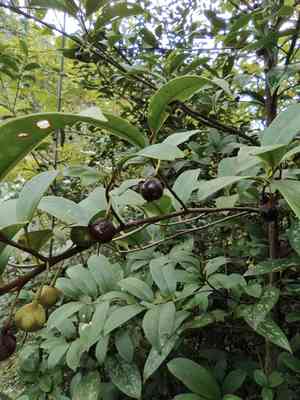
Millet's adinandra (Adinandra millettii)
Also known as: None
Millet's Adinandra (Adinandra millettii) is a rare shrub or small tree found in evergreen forested mountain slopes. It is seldom seen in cultivation but is notable for its adaptability and hardiness. In the autumn, it produces small, understated white flowers.
In This Article
Attributes of Millet's adinandra
Lifespan
Perennial
Plant Type
Tree, Shrub
Plant Height
2 m to 16 m
Spread
1 to 3 meters
Leaf Color
Green Blue
Flower Size
1 to 2 centimeters
Flower Color
White Pink Orange
Quickly Identify Millet's adinandra
1
The plant can be identified by its glossy leaves and small, delicate white flowers.
Scientific Classification of Millet's adinandra
Phylum
Vascular plants
Class
Dicotyledons
Order
Heathers and allies
Family
Pentaphylacaceae
Genus
Adinandra
Species
Millet's adinandra
Planting and Growing of Millet's adinandra
Care Difficulty
Easy
Watering Schedule
Every 2 days
Sunlight Requirements
Partial sun
Sunshine Duration
6-10 hours
Ideal Temperature
68-77℉
Soil Type
Potting Mix, Peat Mix
Soil pH
5.5-7
Fertilizer Type
Balanced
Pruning Season
Spring, Summer
Pruning Area
Branches, Leaves
Pruning Frequency
2 times a year
Repotting Season
Spring
Pot Type
Plastic, Ceramic
 How to Water Millet's adinandra?
Adinandra millettii requires a careful balance of watering. Each time, provide around 500 ml of water. The aim is to soak the soil thoroughly without letting it become waterlogged. Water until you see excess draining from the pot's base. This ensures the root system is fully quenched without drowning.
What are the symptoms of an underwatered Millet's adinandra?
›
What should I do if my Millet's adinandra is not getting enough water?
›
What are the symptoms of an overwatered Millet's adinandra?
›
How to save an overwatered Millet's adinandra?
›
 What Are the Sunlight Requirements for Millet's adinandra?
Adinandra millettii ideally requires partial sun or full shade, receiving 4 to 6 hours of diffuse sunlight. Such lighting provides ample energy for photosynthesis, promoting healthy leaf development and overall vigor.
Preferred Setting
›
Solution Details
›
Resulting Benefits
›
 What Is the Ideal Temperature Range for Millet's adinandra?
For optimal growth, Adinandra millettii prefers a consistent temperature range between 68°F and 77°F. These temperatures mimic the warm, humid conditions of its natural habitat, supporting healthy photosynthesis and growth.
 What Soil is Best for Millet's adinandra?
Adinandra millettii thrives in well-drained soil to prevent root rot. Good drainage allows oxygen availability for roots, facilitating healthy growth and nutrient uptake. While good drainage is essential, maintaining some soil moisture is crucial. Regular watering helps in sustaining the soil's moisture level, which supports the plant's hydration needs. Incorporating organic matter into the soil enhances nutrient availability, improving the overall fertility of the soil and promoting robust plant health and vigor.
 How to Fertilize Millet's adinandra?
Adinandra millettii appreciates a balanced approach to fertilizer application. Use a 1:1:1 NPK ratio liquid fertilizer at half strength, applying about 100 mL per plant each time during the growing season.
 How to Prune Millet's adinandra?
Start by examining the plant for any dead, diseased, or damaged branches, and remove them using sterilized tools. Next, trim away any overly long shoots that disturb the plant's balanced shape. Always cut back to a bud or a lateral branch to maintain a natural appearance. For Adinandra millettii, shaping is vital as it tends to elongate; hence, focus on maintaining a compact form. Ensure you use sharp, clean pruning shears or scissors when pruning Adinandra millettii to make clean cuts that heal quickly. Sterilize your tools before and after use to prevent the spread of diseases. A simple wipe with a cloth soaked in alcohol or a bleach solution can sterilize your tools effectively.
More About Pruning Techniques→
 How to Propagate Millet's adinandra plant?
1
Collect seeds from mature plants and clean them thoroughly to remove any pulp or debris that may inhibit germination. Pre-soak seeds in water for 24 hours to improve germination rates.
2
Prepare a well-draining potting mix composed of equal parts of peat moss, perlite, and vermiculite. This mix provides good drainage and retains enough moisture to support new roots.
3
Select healthy, non-flowering stems and cut them to about 4-6 inches in length. Remove the leaves from the lower half to reduce water loss and potential rotting.
 How to Repot Millet's adinandra plant?
1
Adinandra millettii should be repotted when you notice roots growing out of the drainage holes or the plant becoming root-bound. Spring or early summer is the ideal time as this is when the plant exhibits new growth. This ensures that the plant can quickly recover and adapt to the new potting environment.
2
Opt for a pot that is 1-2 inches larger in diameter than the current one. This provides adequate space for roots to expand while avoiding excessive soil that could lead to waterlogging. Choose pots with good drainage to ensure they do not retain excess moisture, which can cause root rot.
3
Use a well-draining potting mix, which typically consists of a blend of peat, perlite, and organic matter. This mix promotes proper aeration and moisture retention, tailored to the plant’s needs, preventing waterlogged conditions and encouraging healthy root development.
Learn More About Millet's adinandra Diseases
Anthracnose
Bacterial Leaf Spot
Bacterial Soft Rot
Bacterial Wilt
Black Spot
Chemical Injury
Crown Gall
Cyst Nematode
Damping-off
Downy Mildew
Drought Stress
Fusarium Wilt
Gray Mold
Leaf Curl
Leaf Spot
Mosaic
Nutrient Deficiency
Nutrient Toxicity
Powdery Mildew
Root Rot
Root-knot Nematode
Rusts
Sooty Mold
Spider Mites
Temperature Stress
Thrips Damage
White Mold



