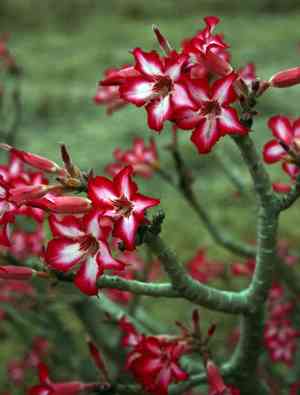
Adenium multiflorum(Adenium multiflorum)

Adenium multiflorum (Adenium multiflorum)

Also known as: Impala Lily, Desert Rose

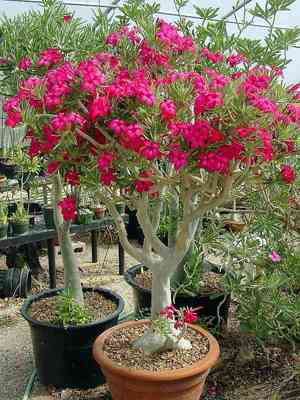
Adenium multiflorum, also known as the impala lily, is a short succulent tree native to the central and eastern regions of Southern Africa. This plant, which can be either deciduous or evergreen, is usually found in its native dry woods or grasslands, and generally grows to a height of 0.5–3 meters. As part of the Apocynaceae family, A. multiflorum produces a milky latex filled with toxic alkaloids, particularly Cardiac glycosides, which are used in arrow and fish stunning poisons. Its leaves are simple, beside each other, with smooth rims and the flowers bloom in winter, taking on a variety of colors such as red, pink, white or a blend of colors. The fruit of this plant is a two-capsule arrangement housing long brown seeds, covered in grooves and hair. Its planting condition requirements include full sun exposure and exceptional drainage, and while it can endure drought well, it is vulnerable to the tobacco whitefly. A. multiflorum is often employed as an indoor bonsai plant, but can also be cultivated outdoors in USDA hardiness zones 10 and 11. It is occasionally categorized as a variety or subspecies of Adenium obesum.

Attributes of Adenium multiflorum

Lifespan
Perennial
Plant Height
60 - 120 cm
Spread
40 - 50 cm
Leaf Color
Green
Flower Size
5 - 6 cm
Flower Color
White to Pink

ForwardPlant - Identify plants with a snap

Identify and diagnose plants, get toxicity alerts, and explore safety guides for all types of fungi.

Try for Free

Images of Adenium multiflorum

Adenium multiflorum(Adenium multiflorum)

Quickly Identify Adenium multiflorum

1
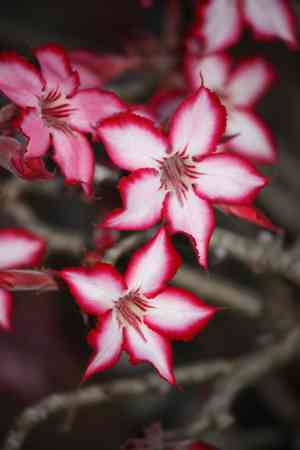
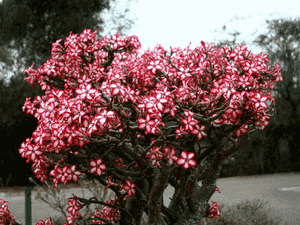
The plant can be identified by its swollen succulent stem resembling a bonsai trunk, bright pink to red flowers with a white center, and glossy dark green leaves.

Scientific Classification of Adenium multiflorum

Phylum
Magnoliophyta
Class
Magnoliopsida
Order
Gentianales
Family
Apocynaceae
Genus
Adenium
Species
A. multiflorum

Planting and Growing of Adenium multiflorum

Care Difficulty
Easy
Watering Schedule
Every 2 days
Sunlight Requirements
Full sun
Sunshine Duration
6-10 hours
Ideal Temperature
65-85℉
Soil Type
Potting Mix, Peat Mix
Soil pH
6.1-7.8
Fertilizer Type
Balanced
Pruning Season
Spring, Summer
Pruning Area
Branches, Leaves
Pruning Frequency
2 times a year
Repotting Season
Spring
Pot Type
Plastic, Ceramic

water icon How to Water Adenium multiflorum?

The Adenium multiflorum prefers a moderate amount of water, typically about 250 milliliters per watering. Overwatering can lead to root rot, so keep the plant in well-draining soil and make sure that excess water doesn't stay in the plant saucer for long. It's better to error on the side of underwatering rather than overwatering this plant.
What are the symptoms of an underwatered Adenium multiflorum?
What should I do if my Adenium multiflorum is not getting enough water?
What are the symptoms of an overwatered Adenium multiflorum?
How to save an overwatered Adenium multiflorum?

sunlight icon What Are the Sunlight Requirements for Adenium multiflorum?

Sunlight Requirements: Full sun
Duration of light: 6-8 hours a day
The ideal light range for an Adenium multiflorum would be in full to partial sunlight for the majority of the day. This helps the plant to produce energy for growth and bloom

temperature icon What Is the Ideal Temperature Range for Adenium multiflorum?

Ideal Temperature: 65 ~ 85℉
Adenium multiflorum or Desert Rose prefers a temperature between 65°F to 85°F. Temperatures within this range stimulate growth and bloom in the plant. While the plant can tolerate a lower minimum temperature, it thrives best within this ideal range.

soil icon What Soil is Best for Adenium multiflorum?

Soil type: Sandy soil, Loam, Acidic soil
Soil PH: 6.1 ~ 7.8
Adenium multiflorum needs well-drained soil, preferably sandy or loamy, to grow robustly. It promotes better water flow preventing root rot and diseases that thrive in soaking wet conditions. Enhanced soil drainage fosters healthier root growth for a robust plant system. Adenium multiflorum prefers a soil pH of 6.1 to 7.8. This plays a significant role in nutrient absorption. An appropriate pH ensures the availability of essential nutrients and boosts overall plant health. Maintaining this pH range avoids nutrient lockout, enhancing the plant's vitality. For a flourishing growth, Adenium multiflorum needs a nutrient-rich soil. It ensures constant nutrient supply towards metabolic activities of the plant. Compost or organic matter supplementation enhances the soil's nutritional value, facilitating the plant's active growth and blooming stage.

fertilize icon How to Fertilize Adenium multiflorum?

Fertilizer type: Balanced
For liquid fertilizer, Adenium Multiflorum should be fed about a 1/2 teaspoon per gallon of water every two weeks. For slow-release fertilizer, apply about a tablespoon of granules around the base of the plant, avoiding the stem, every 3 months.

prune icon How to Prune Adenium multiflorum?

Pruning Time: Summer
Begin by removing any dead or yellowing leaves and stems. This will help the plant to focus energy on new growth. For the Adenium multiflorum, you should also prune to shape the plant for a desired look. Start from the top and work your way down, trimming away any branches that are growing out of the desired shape. Leave some leaves on each branch to help the plant with photosynthesis. After pruning, clean the pruning wounds with a disinfectant to prevent disease.

propagate icon How to Propagate Adenium multiflorum plant?

Propagate Time: Spring, Early summer
1
Choose a healthy Adenium multiflorum plant. The chosen parent plant plays a vital role in the success of propagation. It's necessary to select a disease-free and vigorous plant.
2
For seed propagation, collect the seeds from mature plant pods. For cutting propagation, cut a healthy branch from the parent plant. The cut should be done at an angle, and it's better to cut a branch which is not more than 3 inches.
3
Germinate seeds in a seed tray or plant the cutting in a pot filled with well-draining soil. Ensure indirect sunlight for better growth.

repot icon How to Repot Adenium multiflorum plant?

Repotting frequency: Every 2-3 years
1
The optimum time to repot Adenium multiflorum is during warmer months when the plant isn’t actively flowering but is still growing. This gives the roots time to establish in their new pot before blooming season starts again. Signs that your plant may need repotting include a decline in growth, water not absorbing quickly, or the roots starting to extend out of the drainage hole.
2
Choose a planter with enough depth for the roots to grow. The pot should have good drainage to prevent water stagnation. A ceramic or clay pot is ideal as it provides great insulation for root system and earthy tones highlight the natural beauty of Adenium multiflorum.
3
A well-draining sandy loam soil is perfect for Adenium multiflorum. It supports the good drainage and aeration needed for Adeniums to thrive. The addition of a bit of river sand or perlite can help improve drainage further.

ForwardPlant - Identify plants with a snap

Find the best spots for them to optimize their health, simply using your phone.

Try for Free

Toxicity

Ingestion

Identify toxic plants for your safety

Learn which plants are harmful to you and your pets, and make informed choices for a safer home!

Try for Free
WARNING
The judgment on toxicity and danger is for reference only. We DO NOT GUARANTEE any accuracy of such judgment. Therefore, you SHALL NOT rely on such judgment. It is IMPORTANT TO SEEK PROFESSIONAL ADVICE in advance when necessary.